Why Home Records Matter More Than You Think
Most homeowners keep some documents — maybe the closing paperwork shoved in a drawer or a stack of appliance manuals on a shelf. But disorganized records have real costs. When you go to sell your home, buyers and their agents will ask for proof of major repairs, permit sign-offs, and appliance ages. When you file a homeowner's insurance claim, adjusters want documentation of what you owned and what work had been done. Without records, you're negotiating from memory — and that's a weak position.
Think of your home file the same way you'd think of a vehicle's service history. A car with documented maintenance history commands more confidence and often more money. Your home is no different. See our guide to what first-time owners often miss for more on building smart habits early.
The Core Documents Every Homeowner Should Keep
Not all paperwork carries equal weight. Focus first on documents that are difficult or impossible to replace:
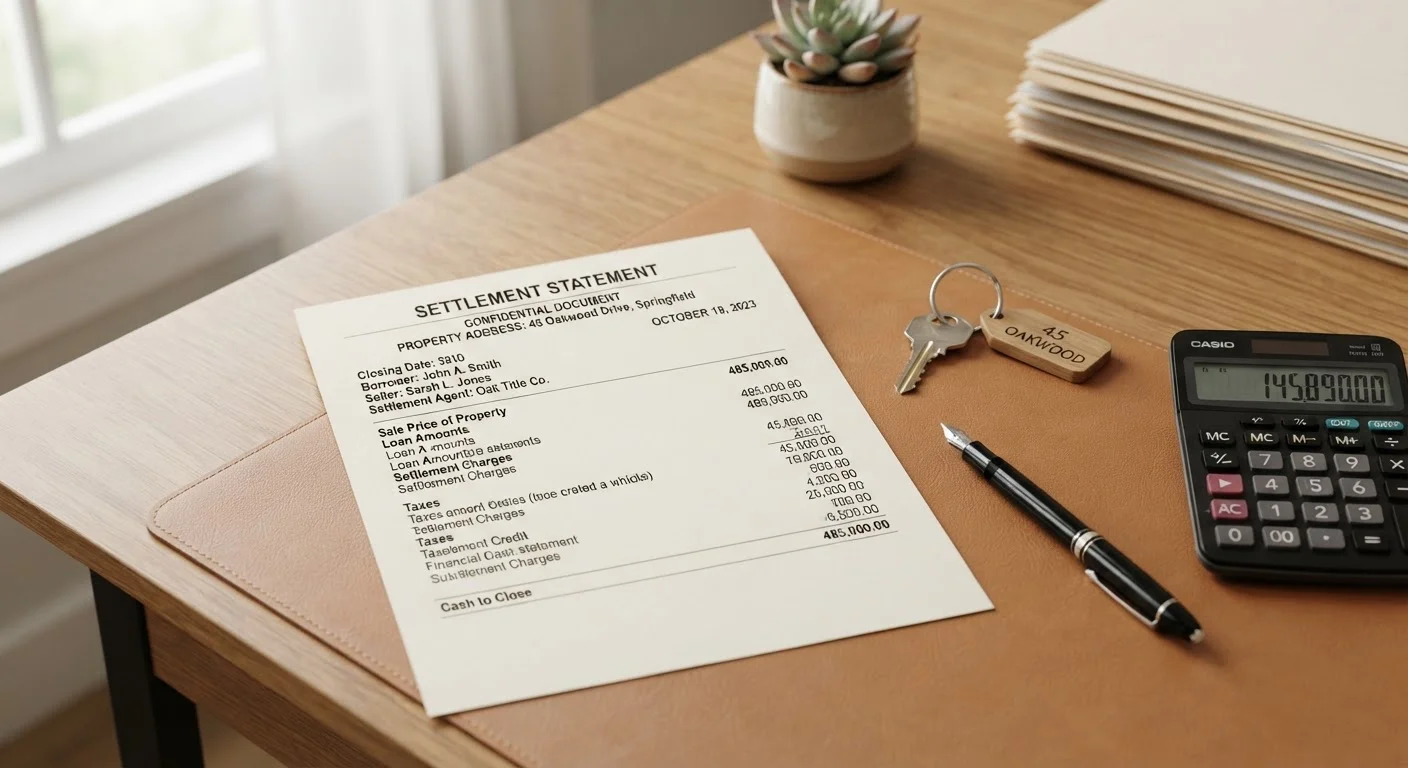
- Closing documents: The deed, title insurance policy, and settlement statement are foundational. Store originals somewhere fireproof. For more on what these documents mean, see understanding title and deed documents.
- Permits and inspection reports: Any permitted work — additions, electrical upgrades, HVAC replacements — should have a corresponding permit and final inspection sign-off from your local building department. These prove the work was legally completed to code.
- Contractor receipts and invoices: Date, scope of work, contractor name, and total paid. A short written description of what was done is more useful than a dollar amount alone.
- Appliance warranties and manuals: Keep purchase receipts alongside warranty registration cards or confirmation emails. Warranties are often voided without proof of purchase or proper installation documentation.
- Utility and maintenance records: Annual HVAC tune-up receipts, plumbing service records, and pest inspection reports build a credible maintenance timeline.
- Homeowner's insurance policy: Keep both the declarations page and full policy language accessible — not just the summary card.
Start your home file on closing day, not years later.
The closing package contains foundational documents — the deed, settlement statement, title insurance policy, and survey — that you'll reference for as long as you own the property. Starting a filing habit on day one prevents the chaotic catch-up that happens when homeowners try to reconstruct records before a sale.
Always request a copy of the permit and final inspection sign-off after any permitted work.
Permitted work that passes inspection confirms the job met local building codes. Without that documentation, future buyers, appraisers, or insurance adjusters may question whether the work was done properly — or done at all.
Photograph major systems and improvements before and after work is done.
Visual records supplement written ones. A dated photo of your roof before and after replacement, or your basement before waterproofing, helps support insurance claims and provides proof of condition that words alone can't convey.
Keep a running home improvement log with dates, costs, and contractors.
Memory fades quickly, especially across years of ownership. A simple log — even a spreadsheet or notes app — lets you answer buyer or insurer questions accurately without hunting through a pile of loose receipts.
Back up all home records digitally and store copies off-site.
Physical records are vulnerable to the same disasters they're meant to help you recover from — fire, flood, or storm damage. A digital backup stored in the cloud or emailed to yourself ensures records survive even if the originals are destroyed.
Building a System That You'll Actually Use
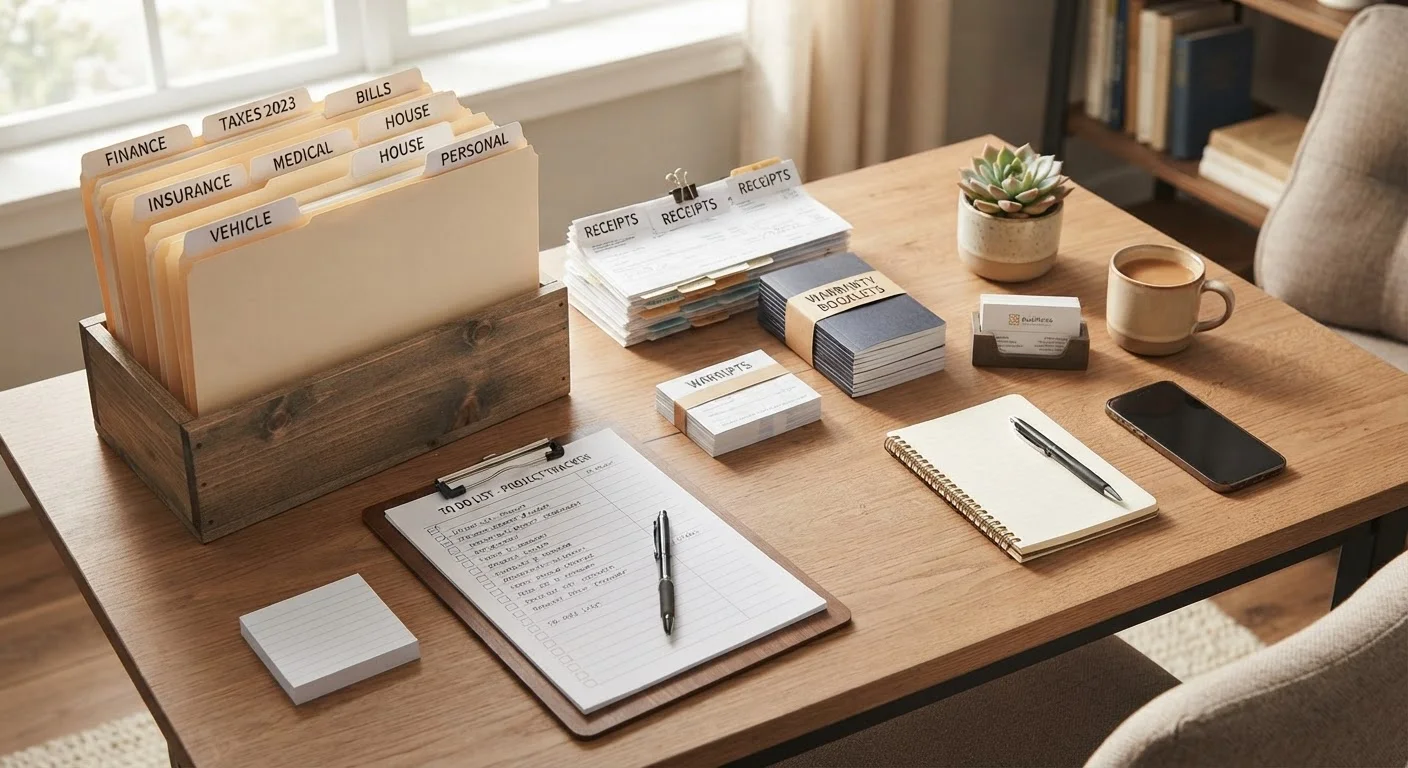
The best filing system is one you'll maintain consistently. There's no single right method — a physical accordion folder, a dedicated drawer with labeled manila envelopes, or a cloud-based folder structure all work. The key is consistency and redundancy.
A practical approach: create two parallel systems — one physical folder for original documents and one digital folder (cloud-synced) with scanned or photographed copies. Label folders by category: Closing & Legal, Permits & Inspections, Appliances & Warranties, Contractors & Repairs, Insurance, and Utilities & Maintenance. Scan documents on the same day you receive them before they get lost in a pile.
Records That Pay Off at Sale Time
When the time comes to sell, your documentation file becomes a marketing asset. Buyers feel more confident in a home when the seller can hand over a clear history: here's when the roof was replaced, here are the permits for the deck addition, here's three years of HVAC maintenance. That transparency reduces buyer hesitation and can support your asking price.
Capital improvements — projects that add value or extend the useful life of your home — may also affect your tax basis when you sell. Keeping receipts for these projects is a financial consideration worth discussing with a qualified tax professional, since the rules around home sale exclusions and cost basis are specific to individual circumstances. See our buyer's preparation checklist for a look at the documentation buyers typically expect to see.
This article provides general information for educational purposes only and is not legal, financial, or tax advice. Consult a qualified professional for guidance specific to your situation.