
Why Misconceptions About Homelessness Persist
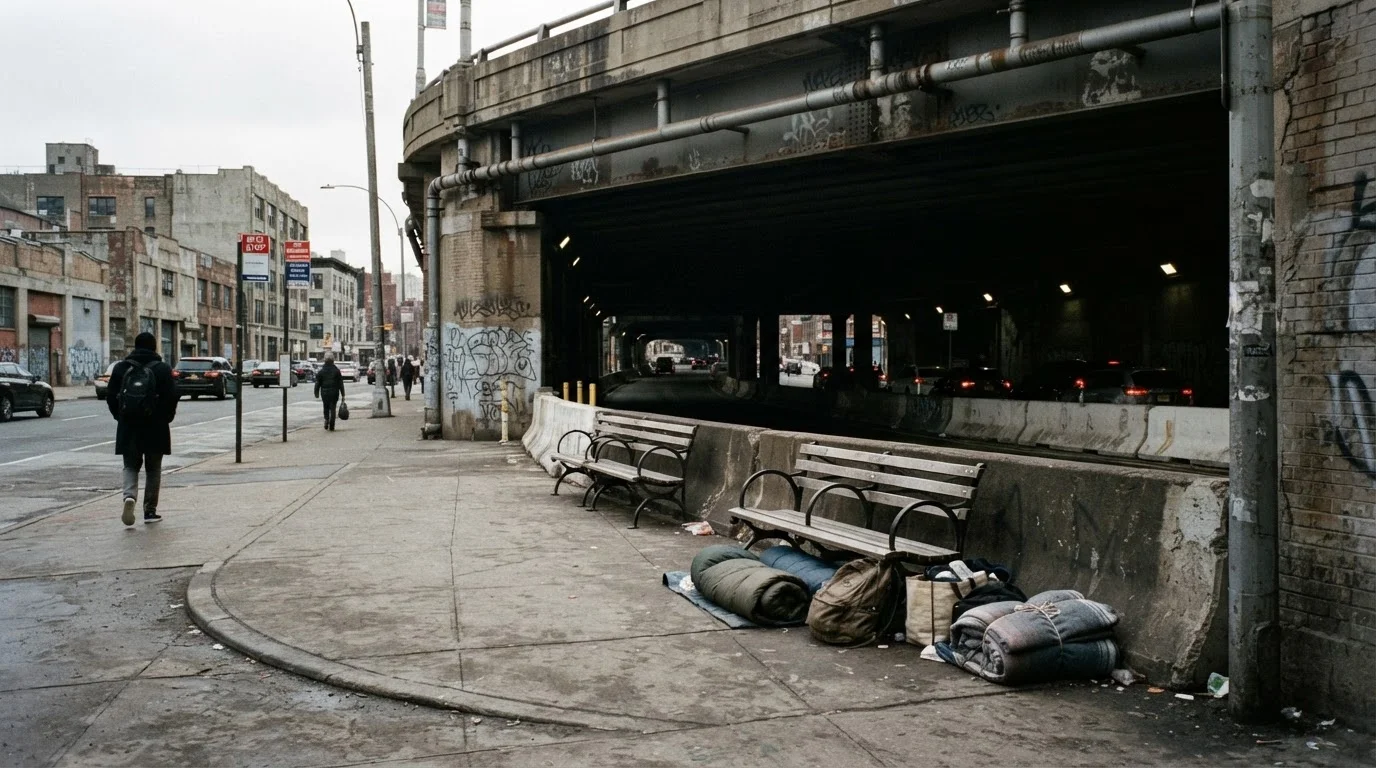
Public understanding of homelessness in America is often shaped by the most visible manifestations of the crisis — encampments in city centers, individuals sleeping on transit systems — rather than by the full picture that data provides. This visibility gap creates fertile ground for myths that, when widely held, influence policy in ways that can make the problem harder to solve.
Homelessness intersects with housing policy, mental health systems, the labor market, and the criminal justice system. That complexity means simple narratives — whether blaming individuals or blaming government — tend to leave out crucial context. What follows draws on research from federal agencies, academic studies, and nonprofit organizations that work directly with homeless populations to correct some of the most pervasive misconceptions.
Myth
Homelessness is primarily caused by personal choices — addiction, mental illness, or unwillingness to work.
Fact
Structural factors, including housing unaffordability, job loss, medical debt, and domestic violence, are consistently identified as primary drivers of homelessness in research.
Individual circumstances can increase vulnerability, but they rarely operate in isolation. The National Alliance to End Homelessness notes that a lack of affordable housing is the most significant structural driver — when housing costs consume the majority of a low-income household's budget, a single unexpected expense can trigger a crisis. Many people experiencing homelessness hold jobs; the problem is that wages in many regions have not kept pace with rising rents. Framing homelessness as a product of personal failure obscures the policy conditions that make stability difficult to achieve. For related context on how structural forces shape economic outcomes, see our coverage on social mobility in the United States.
Myth
Most homeless people are chronically homeless and live on the streets indefinitely.
Fact
The majority of people who experience homelessness do so for a relatively short period. Chronic homelessness — defined by HUD as continuous homelessness for at least a year, or repeated episodes — represents a minority of the overall population experiencing homelessness.
According to HUD's annual reports, chronically homeless individuals make up roughly a quarter or less of the total sheltered and unsheltered homeless population in any given year. The larger group experiences what researchers call transitional homelessness — a temporary crisis episode tied to a specific precipitating event such as eviction, job loss, or the end of a relationship. Conflating all homelessness with the most visible chronic cases distorts public understanding and skews policy responses away from the prevention and rapid rehousing approaches that evidence supports for transitional cases.
Myth
Mental illness is the root cause of homelessness.
Fact
While mental illness is more prevalent among people experiencing homelessness than in the general population, research shows that homelessness itself exacerbates or triggers mental health conditions — the causal arrow runs in both directions.
Studies consistently find that the trauma, instability, and deprivation of homelessness worsen mental health outcomes, meaning that what observers see on the street often reflects the consequences of housing loss rather than its cause. Additionally, most people with serious mental illness are not homeless. The broader relationship between poverty, access to mental health care, and housing stability is complex. Misrepresenting mental illness as the singular driver can contribute to stigma and deflect attention from housing supply and income support solutions that research identifies as effective. For perspective on mental health misconceptions more broadly, see widely held mental health myths, corrected.
Myth
Homelessness is an urban problem that doesn't affect rural or suburban communities.
Fact
Homelessness exists in every U.S. state and across rural, suburban, and urban geographies — though it looks different and is harder to count outside cities.
In rural areas, people without stable housing are more likely to stay in overcrowded shared housing, camp on private land, or live in vehicles — situations that are largely invisible to street counts. The U.S. Interagency Council on Homelessness has documented homelessness across Appalachia, the rural South, and farm-worker communities in Western states. The concentration of homeless services in cities can create the misleading impression that cities produce homelessness, when in reality many individuals migrate to urban areas specifically to access the shelters and services absent in their home communities.
Myth
Providing housing to homeless individuals without conditions only enables bad behavior.
Fact
Housing First — an evidence-based approach that provides stable housing without prerequisites such as sobriety or treatment compliance — has been shown in multiple studies to achieve higher housing retention rates than treatment-first models.
Research published in peer-reviewed journals and government evaluations, including analyses of programs in U.S. cities, Canada, and Europe, has found that Housing First participants remain housed at higher rates and show comparable or better outcomes on substance use and mental health measures compared to those placed in treatment-first programs. The underlying logic is straightforward: stable housing creates the platform from which people can more effectively address other challenges. This does not mean services are withheld — Housing First programs actively connect residents with health and social services — but participation is voluntary rather than a condition of shelter.
What the Evidence Points Toward
Across studies and jurisdictions, researchers consistently find that homelessness is best addressed through interventions targeting its structural roots: affordable housing availability, living-wage employment, accessible mental health and substance use treatment, and robust social safety nets. The myths examined here share a common thread — they locate the problem entirely within the individual, making collective and policy-level solutions seem irrelevant or misguided.
Stereotypes Can Influence Policy Outcomes
When public discourse frames homelessness primarily as a behavioral or moral failure, it tends to shift political support toward punitive measures — such as anti-camping ordinances — rather than housing and service investments. Research from organizations including the Urban Institute suggests that criminalization approaches increase costs to local governments without reducing homelessness. Policies grounded in accurate data generally produce better outcomes than those built on misconception.
Understanding who actually experiences homelessness — veterans, families with children, working adults, youth aging out of foster care — challenges the monolithic image that dominates public debate. Better-informed public understanding tends to support more effective, evidence-grounded policy responses. For a related look at how economic structures shape individual opportunity, the article on social mobility in the United States provides useful broader context.
This article is for informational and educational purposes only. Statistics and program descriptions reflect publicly available research; readers seeking the most current data should consult the U.S. Department of Housing and Urban Development and peer-reviewed sources directly.