What an Executive Order Actually Is
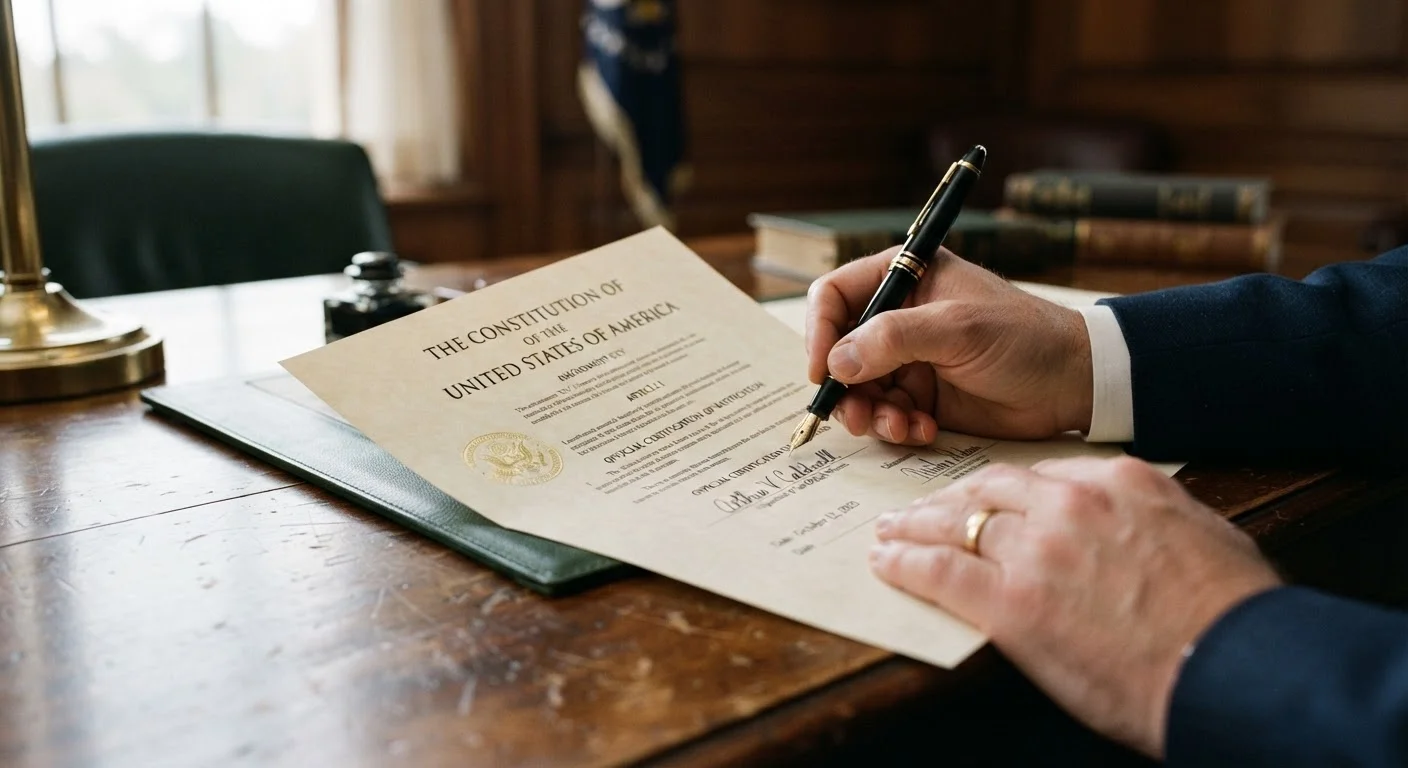
An executive order is a signed, written directive from the President of the United States that instructs federal agencies, departments, and employees on how to carry out their duties. It carries the force of law within the executive branch — meaning federal workers are legally required to follow it — but it is not a law passed by Congress.
The authority to issue executive orders is implied by Article II of the Constitution, which vests executive power in the president and directs the president to "take care that the laws be faithfully executed." Presidents have used this authority since George Washington. Most modern orders are also grounded in specific powers granted by existing statutes — laws Congress has already passed that give the president discretion over certain decisions.
Each order is numbered, published in the Federal Register, and becomes part of the permanent legal record. For a deeper look at how the branches interact when a president acts unilaterally, see The Separation of Powers.
What Presidents Can Do With Executive Orders
Within defined boundaries, executive orders give presidents considerable flexibility to direct policy without waiting for Congress.
Allow swift action without congressional approval
When Congress is gridlocked or slow to act, a president can use executive orders to implement policy changes within the executive branch immediately, without negotiating legislation.
Legally binding on all federal agencies
Federal departments and employees must comply with a valid executive order, giving it real operational force across the government's vast bureaucracy.
Flexible tool for managing executive branch operations
Presidents can use orders to reorganize agencies, establish priorities, set standards for federal contractors, or coordinate interagency work without new laws.
Part of a transparent, public legal record
All executive orders are published in the Federal Register, making them publicly accessible and subject to scrutiny by the press, courts, and public.
Common uses include directing federal agencies to prioritize certain enforcement actions, reorganizing how government offices operate, establishing task forces or advisory councils, and setting policy on federal contracts, hiring, or land management. Presidents have used orders to desegregate the military, create the national security framework, and adjust immigration enforcement priorities — all without new legislation.
The Real Limits: What Presidents Cannot Do
Executive orders do not give presidents unlimited power. The system of checks and balances places firm constraints on what an order can accomplish.
Cannot override existing federal law
An executive order that conflicts with a law passed by Congress has no legal standing. Courts will strike it down if challenged, as the president's authority derives from, not supersedes, federal statute.
Subject to judicial review and injunction
Federal courts can block an order from taking effect while legal challenges proceed, sometimes freezing policy for months or years regardless of the president's intent.
Easily reversed by the next administration
Because orders are not legislation, a successor president can rescind them on day one in office, making executive-order-based policy inherently unstable across administrations.
Cannot appropriate new federal spending
Only Congress holds the power of the purse under the Constitution. A president cannot use an executive order to create or allocate new federal funding.
Risk of overreach and constitutional challenge
When orders venture into areas the Constitution reserves for Congress — such as creating new criminal law or levying taxes — they face near-certain legal challenge and potential nullification.
Courts are the most immediate check. Federal judges can issue injunctions — temporary blocks — against executive orders while lawsuits proceed, and can ultimately strike down orders they find unconstitutional or outside the president's statutory authority. Congress, meanwhile, can pass legislation that explicitly overrides an order's policy direction, or it can cut off funding to programs an order creates. The Supreme Court's 1952 ruling in Youngstown Sheet & Tube Co. v. Sawyer remains a foundational precedent establishing that presidents cannot seize powers the Constitution grants to Congress, even by executive order.
Congressional Override: How It Works
Congress cannot directly cancel an executive order by a simple vote, but it can pass legislation that overrides the policy an order establishes. The president can veto that legislation, but Congress may override the veto with a two-thirds majority in both chambers. In practice, this is a high bar, which is why executive orders often remain in effect even when lawmakers disagree with them.
How Long Do Executive Orders Last?
One of the most important things to understand about executive orders is their impermanence. Because they are issued by one president, they can be revoked, amended, or replaced by the next — on the first day of a new administration if desired. This makes major policy shifts anchored entirely in executive orders vulnerable to rapid reversal.
An order can also be superseded by an act of Congress. If lawmakers codify a policy into statute — actual legislation — a future president cannot undo it through a simple executive order. This is why policy advocates on all sides often push for legislative action rather than relying solely on presidential directives.