How the U.S. Government Is Structured
The United States federal government rests on a foundation of three separate but interconnected branches, each granted distinct powers under the Constitution.
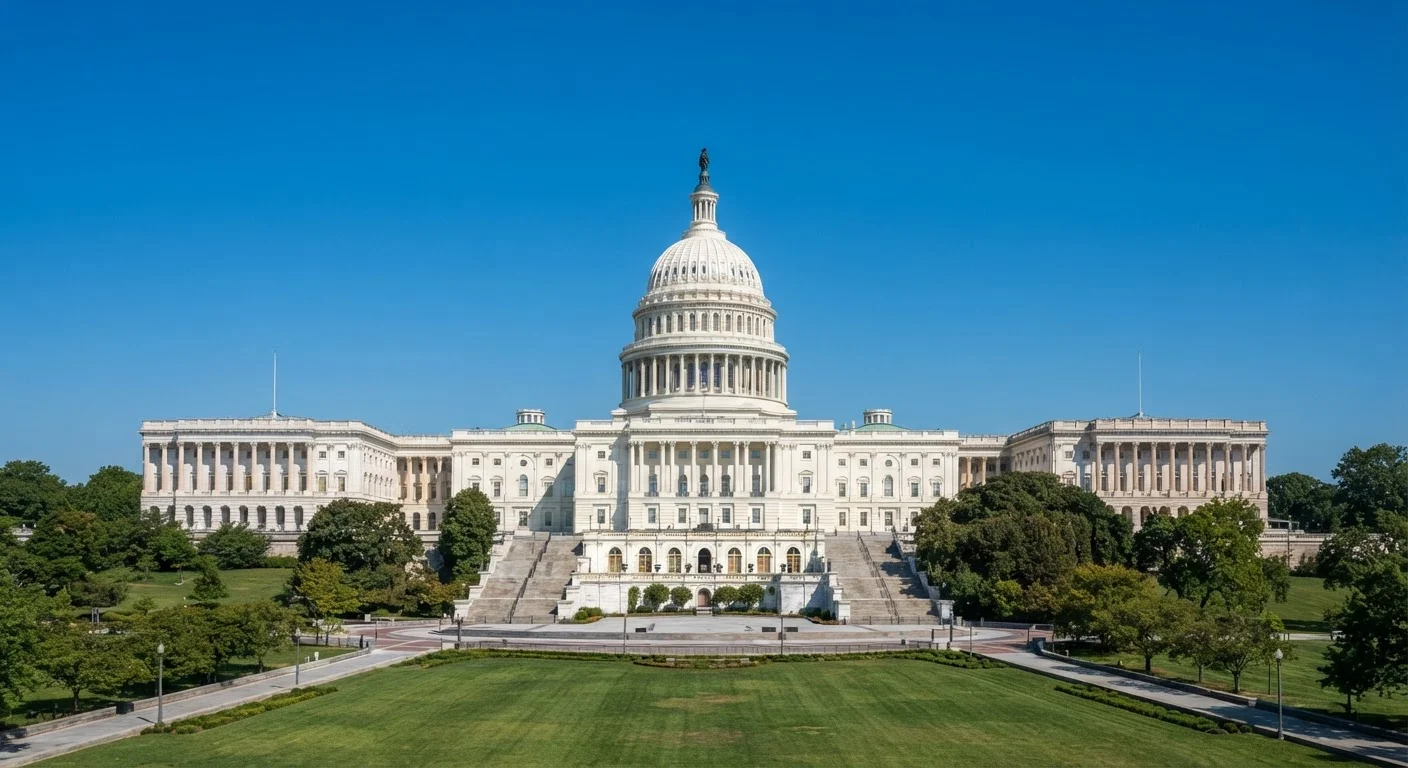
The legislative branch — Congress — is responsible for writing and passing federal laws. It has two chambers: the House of Representatives, where seats are allocated by state population, and the Senate, where every state sends exactly two senators regardless of size. Both chambers must agree on the same version of a bill before it advances.
The executive branch is led by the President, who signs bills into law, commands the armed forces, and oversees federal agencies. The Vice President and Cabinet secretaries also belong to this branch and help carry out policy across areas like defense, education, and health.
The judicial branch, anchored by the Supreme Court, reviews whether laws and government actions align with the Constitution. Its rulings set binding legal precedent that can reshape policy nationwide.
This design — known as separation of powers — means no single branch can act without some accountability to the others. Congress can reject presidential nominees; the courts can strike down legislation; the President can veto bills. These built-in tensions are intentional.
Separation of Powers
The constitutional design that divides government authority among three branches so that no single branch holds unchecked control.
Bill
A written proposal for a new law introduced by a member of Congress; it must pass both the House and Senate and receive presidential approval to become law.
Electoral College
The system used to elect the U.S. president, in which each state is assigned a number of electors; winning 270 of 538 electoral votes is required to win.
Veto
The president's power to reject a bill passed by Congress, which then returns to Congress for a potential override vote.
Primary Election
A preliminary vote within a political party that determines which candidate will represent that party in the general election.
Midterm Election
A federal election held two years into a presidential term, in which all House seats and a portion of Senate seats are contested.
Political Parties and What They Represent
The United States has two dominant political parties: the Democratic Party and the Republican Party. While their platforms evolve over time, each generally represents a broad coalition of voters, interest groups, and ideological traditions.
Democrats have historically favored expanded federal programs in areas such as healthcare, social safety nets, and environmental regulation. Republicans have generally emphasized lower taxes, reduced federal spending, and a more limited role for the federal government in domestic affairs. Both parties contain internal factions with sometimes sharply different priorities.
Third parties — such as the Green Party, Libertarian Party, and others — do run candidates and occasionally win local or state offices, but structural features of the American electoral system make it very difficult for them to win federal races consistently.
Party platforms matter because they signal what a candidate or officeholder is likely to prioritize. Reading a party's platform is a practical way to anticipate how its members may vote on legislation.
How Elections Work
Federal elections in the U.S. follow a set constitutional calendar. Presidential elections occur every four years. Congressional elections happen every two years — all 435 House seats and roughly one-third of Senate seats are contested in each cycle. Midterm elections, held between presidential elections, often serve as a referendum on the sitting president's performance.
The path to a general election typically begins with primary elections, where registered voters within a party select their preferred candidate. Primary rules vary widely by state.
For the presidency, the Electoral College — not the national popular vote — determines the winner. Each state is assigned a number of electors equal to its total congressional delegation. Most states use a winner-take-all system. A candidate must reach 270 electoral votes to win. This system means a candidate can win the popular vote nationwide but still lose the presidency if they do not carry enough states — something that has happened several times in U.S. history.
Voter registration is required in nearly every state before casting a ballot. Deadlines and rules differ by state, so checking your state's official election authority well in advance of any election is essential.
From Proposal to Law: How Policy Gets Made
Understanding how a policy idea becomes enforceable law demystifies much of what appears in political headlines.
It begins when a member of Congress introduces a bill — a formal written proposal for new law. The bill is assigned to a relevant committee, where it may be studied, amended, or allowed to stall. If the committee advances it, the full chamber debates and votes. The same process then plays out in the other chamber, often with further changes.
Once both chambers pass identical text, the bill goes to the President. A presidential signature makes it law; a veto sends it back to Congress. Congress can override a veto, but doing so requires a two-thirds majority in both the House and Senate — a high bar that is rarely met.
Beyond legislation, the executive branch issues executive orders and regulations that carry legal weight without a congressional vote, though they remain subject to judicial review. Understanding these channels explains why political battles don't end when a bill fails — there are often other levers of power in play.
Track a Bill in Real Time
Congress.gov, the official legislative database maintained by the Library of Congress, lets you search any bill by number or keyword and see exactly where it stands in the legislative process. Bookmarking it is one of the simplest ways to move from watching political news passively to understanding what is actually being debated on Capitol Hill.
How to Follow Politics Without Getting Lost
Once you understand the basic structure of government, the next challenge is navigating political coverage. News organizations, social media, and political actors all frame events differently — and those choices shape what readers understand about what's happening.
A few practical habits help. First, seek out primary sources when possible: the text of a bill, a lawmaker's official statement, or data from a nonpartisan government agency like the Congressional Budget Office. Second, look for news outlets that distinguish clearly between news reporting and opinion or editorial content. Third, when a story presents statistics, consider where the numbers come from and what they measure.
For a deeper look at how framing and sourcing affect political stories, see Reading Political News Without Getting Misled. And when political discussions become heated — online or in person — Talking Across Political Divides: What Actually Works draws on communication research to offer grounded guidance.
Following politics doesn't require choosing a side. It requires building enough context to evaluate what public officials are actually doing — and what it means for everyday life.