The Real Question Behind Every Home Repair
When something breaks or needs updating in your home, the first instinct is often to Google a tutorial and grab a toolbox. And sometimes that's exactly the right call. But the decision to DIY or hire a professional isn't just about confidence — it's about safety, legal compliance, cost exposure, and long-term impact on your home's value.
The distinction between a manageable weekend project and a job that requires a licensed contractor isn't always obvious. A loose cabinet handle and a tripped circuit breaker both feel like small problems, but they sit in very different risk categories. Understanding those categories is the foundation of smart homeownership.
If you want a broader picture of what maintenance tasks come up throughout the year, the seasonal home maintenance calendar is a useful place to start building that mental map.
Tasks That Are Generally Safe to DIY
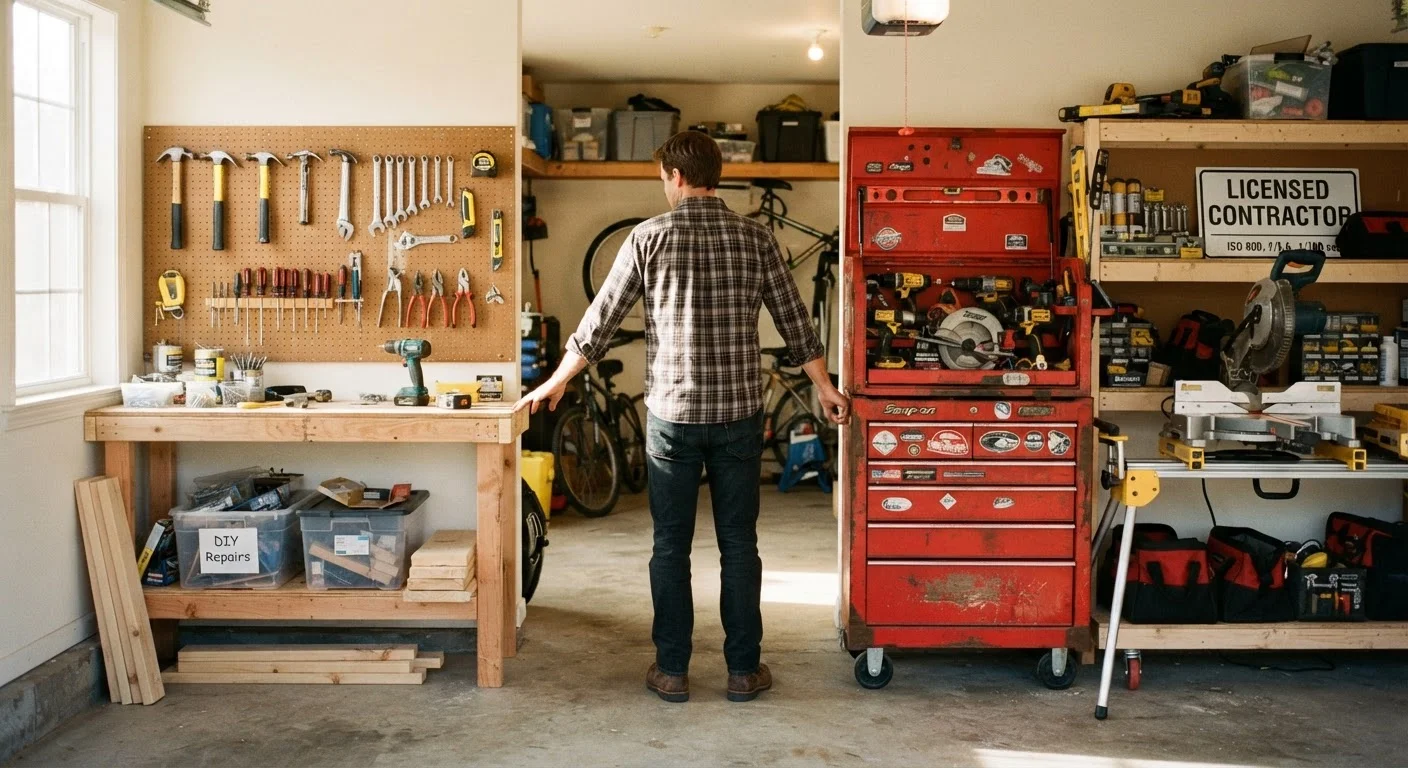
Certain repairs involve low voltage, no structural risk, and no permit requirements — making them reasonable targets for a capable homeowner willing to do the research. Common examples include:
- Painting interior walls and trim — low risk, forgiving, easily redone
- Replacing faucet aerators, showerheads, or toilet flappers — basic plumbing with no pipe modifications
- Installing or replacing light fixtures on existing, properly wired circuits (after turning off the breaker and confirming with a non-contact voltage tester)
- Caulking windows, tubs, and door frames — prevents moisture intrusion with minimal risk
- Patching drywall holes under a few inches in diameter
- Replacing outlet covers, switch plates, or cabinet hardware
The unifying trait of these tasks: mistakes are visible, reversible, and unlikely to cause injury or compound into larger structural or safety problems. Even so, always read the manufacturer's instructions, use the right tools, and stop if you encounter something unexpected.
Start Small to Build Confidence
If you're new to home repair, begin with genuinely low-stakes tasks — caulking a tub, replacing a showerhead, or painting a single room. Each successful project builds the skill set and judgment you'll need for slightly more complex work later. Don't jump to a complex task simply because a tutorial made it look easy.
When You Should Call a Licensed Professional
Several categories of home repair are regulated for good reason. Errors in these areas can cause fires, gas leaks, structural failure, flooding, or health hazards — and in many jurisdictions, performing this work without a license is illegal.
- Electrical panel work — adding circuits, replacing breakers, or upgrading service require a licensed electrician in virtually every U.S. jurisdiction
- Gas line work — connecting or modifying gas lines to appliances, water heaters, or furnaces is strictly regulated and highly dangerous if done incorrectly
- Structural modifications — removing or altering walls, especially load-bearing ones, without an engineer's input can compromise your home's integrity
- Main plumbing line work — tapping into supply or drain lines that run through walls or under slabs typically requires a licensed plumber
- Roofing replacement — improper installation voids manufacturer warranties and can lead to leaks and hidden water damage
- HVAC installation or major repairs — refrigerant handling requires EPA certification; improper installs affect efficiency and air quality
Beyond safety, these projects usually require permits and inspections. As explained in the guide to permits, inspections, and code compliance, unpermitted work can create serious legal and financial problems — particularly when you sell. A buyer's home inspection may flag it, and you could be required to remedy it at significant cost.
How to Compare the True Cost of Each Option
DIY looks cheaper at first glance, but the calculation is more nuanced than materials vs. labor quotes. Consider:
| DIY | Licensed Professional | |
|---|---|---|
| Upfront cost | Lower (materials only) | Higher (labor + materials) |
| Time investment | High — research, execution, cleanup | Low for homeowner |
| Risk of costly mistakes | Higher without experience | Lower with licensed expertise |
| Permit & code compliance | Homeowner's responsibility | Contractor typically manages |
| Warranty protection | May void appliance warranties | Usually preserves warranties |
| Suitable project types | Cosmetic, low-risk repairs | Electrical, gas, structural, roofing |
Before starting any project, get at least one professional estimate. Even if you decide to DIY, knowing the professional cost helps you gauge whether your approach is actually saving money — or just deferring an expense. And if a DIY job goes wrong, the cost to fix it professionally often exceeds what the original quote would have been.
Having funds set aside specifically for unexpected repairs changes the calculus significantly. The home emergency fund guide walks through how to size that reserve based on your home's age and condition.
A Framework for Making the Call
When you're unsure which path to take, run through these questions before touching anything:
- Is there a permit required? Check with your local building department. If yes, professional involvement is almost always the safer route.
- Does this involve electricity, gas, or structure? If yes, default to a licensed contractor unless the task is clearly minor (like swapping a light switch on a confirmed dead circuit).
- What happens if I make a mistake? If the answer involves injury, flooding, fire, or major property damage — hire out.
- Do I have the right tools and knowledge — not just enthusiasm? Watching a video is not the same as having hands-on experience. Be honest.
- Will a DIY repair affect a warranty? Many appliance and system warranties require professional installation.
A good rule of thumb: if a licensed professional would need to undo and redo your work before the job could pass inspection, you've gone too far. When genuinely uncertain, a paid consultation — often $75–$150 for a brief visit — gives you an expert read on scope and risk before you commit to either path.
This article is for general informational purposes only. Home repair regulations vary by state and municipality. Always verify local permit and licensing requirements with your local building authority before beginning any project.