Why Your Tracking Method Matters
A budget is only as useful as your ability to stick with it. Before choosing between paper and a spreadsheet, it helps to understand that the format of your budget can directly influence whether you maintain it. Research in behavioral economics suggests that the act of physically writing information reinforces memory and attention — a principle that applies to financial tracking just as it does to note-taking.
That said, the right tool is deeply personal. If you dread opening a notebook or find handwriting slow, the friction alone may cause you to abandon your budget entirely. Conversely, if spreadsheet formulas feel intimidating, a blank grid can become a source of avoidance rather than accountability.
For a broader look at how different budgeting philosophies compare, see Budgeting Methods Compared for a side-by-side look at envelope, pay-yourself-first, and proportional approaches.
Budgeting by Hand: The Case for Pen and Paper
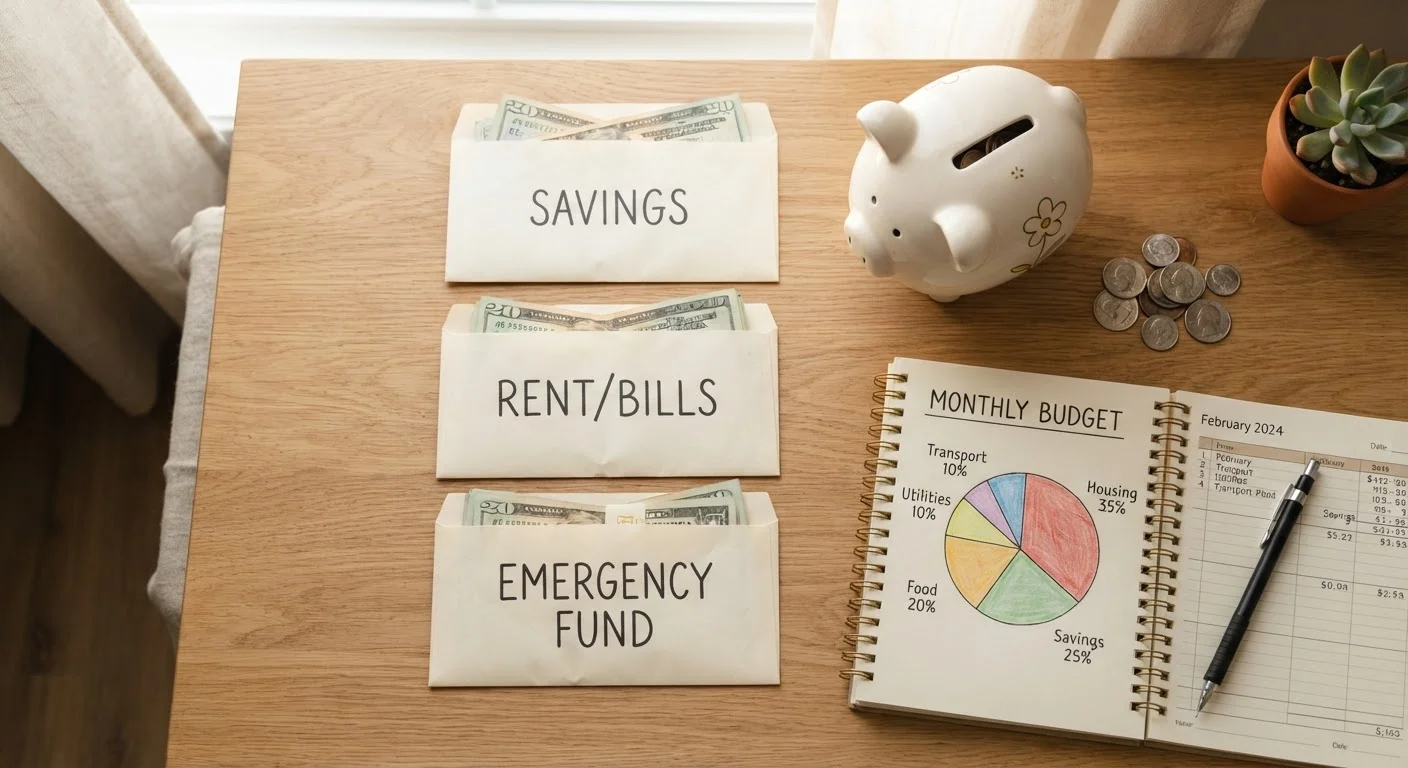
Writing your budget by hand creates a deliberate, low-distraction process. There are no pop-up notifications, no software updates, and no need for an internet connection. Many people report a stronger sense of ownership over their finances when they physically record each transaction.
Strengthens mindful awareness of each transaction
Writing a number down by hand forces a brief pause of deliberate attention that tapping a keyboard rarely replicates, helping you notice patterns in your spending more readily.
No software, device, or internet required
A notebook and pen work anywhere, making it accessible to anyone regardless of technical skill or device availability.
Low risk of over-complication
Paper budgets tend to stay simple by necessity, which can prevent the analysis-paralysis that elaborate spreadsheet systems sometimes create.
Proven for beginners building new habits
Starting on paper removes the learning curve of spreadsheet software, letting you focus entirely on the financial concepts rather than the tool.
The limitations are real, however. Arithmetic errors can slip through unnoticed unless you check your math carefully. Revising a hand-drawn budget — say, when an expense changes mid-month — often means crossing out and rewriting, which can make your ledger hard to read over time. Paper records are also vulnerable to loss or damage, and there is no built-in search function when you need to find a figure from three months ago.
Manual arithmetic increases error risk
Without formulas to check your math, a single addition mistake can silently throw off your entire monthly total, potentially leading to misinformed spending decisions.
Difficult to update without creating clutter
Mid-month changes mean crossing out figures or rewriting sections, making your records harder to read and less useful for spotting trends over time.
No easy search, sort, or scenario modeling
Finding a specific entry from a prior month or testing a 'what-if' spending change requires flipping through pages and recalculating by hand.
Physical records can be lost or damaged
Unlike digital files, a paper ledger has no automatic backup — a spill, a fire, or a misplaced notebook means your financial records are gone.
For freelancers or anyone with variable income, budgeting on an irregular income can feel especially cumbersome on paper, since projections and what-if scenarios require repeated manual recalculation.
Using a Spreadsheet: Efficiency and Flexibility
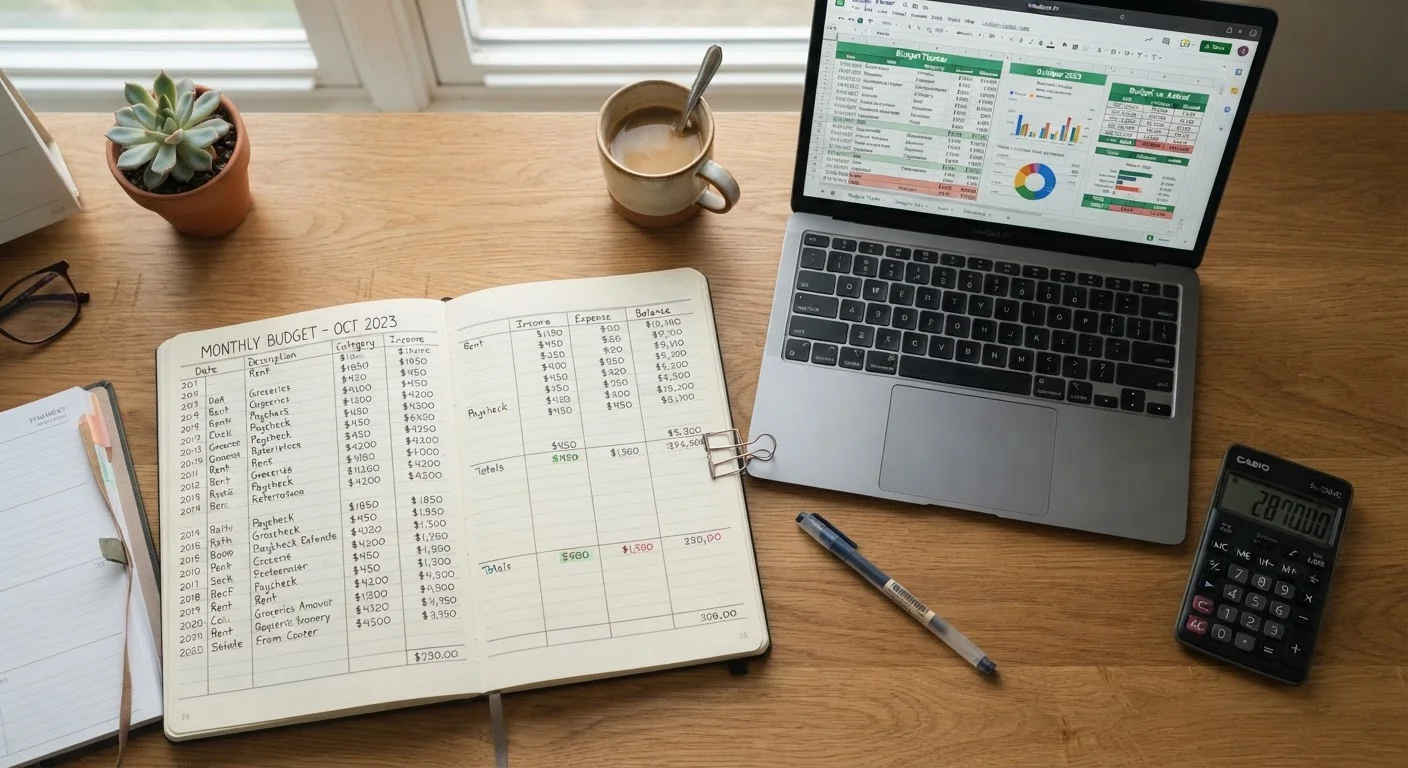
A well-built spreadsheet can automate the arithmetic that consumes so much time in a paper budget. Enter a number once and the rest of the sheet updates instantly. Color-coded categories, conditional formatting that flags overspending, and charts that visualize monthly trends are all achievable with standard tools available in widely used programs.
~1 in 3
Americans who track spending regularly
Surveys by the National Foundation for Credit Counseling have consistently found that only a minority of U.S. adults actively monitor their spending on a regular basis, regardless of the method used.
65%
Adults who say budgeting reduces financial stress
According to general findings cited by financial wellness researchers, a majority of people who maintain any active budget — paper or digital — report lower anxiety about money compared with those who do not.
Spreadsheets also make it straightforward to run scenarios — for example, modeling what happens to your savings rate if you cut a recurring subscription or increase your grocery allocation. This kind of dynamic planning is difficult to replicate with pen and paper.
The trade-offs are worth acknowledging. Building a functional template requires some upfront time and basic formula knowledge. A poorly designed sheet — one with broken references or missing categories — can produce misleading totals. And because entering data on a screen requires fewer physical cues, some users find it easier to rush through entries without truly absorbing what they are recording.
For practical strategies on keeping either system grounded in real numbers, Tracking Your Spending Without Losing Your Mind covers low-friction approaches suited to both methods.
Spreadsheet Templates Can Help You Start
Many household-name productivity software providers offer free, pre-built budget templates. Using a ready-made template means you can begin tracking without building formulas from scratch, which significantly lowers the barrier for first-time spreadsheet budgeters. Look for templates that include income, fixed expenses, variable expenses, and a summary section. Even a simple three-column layout — category, budgeted amount, actual amount — is enough to get meaningful results.
Choosing the Right Fit — or Combining Both
There is no universal answer here, and that is not a hedge — it is the honest reality of personal finance. Your ideal tracking method depends on how you process information, how complex your finances are, and how much time you are willing to invest in setup versus ongoing maintenance.
A practical starting point: try one method for a full month before switching. Many people who feel drawn to paper find that the discipline it requires is exactly what they needed to break careless spending habits. Others discover that spreadsheet automation removes enough friction that they actually track more consistently.
Some individuals end up using a hybrid: jotting down daily transactions in a small notebook and transferring totals to a spreadsheet weekly. This captures the mindfulness benefit of handwriting while retaining the calculation power of a digital tool.
If you are still weighing which overarching budgeting philosophy to pair with your chosen format, the 50/30/20 rule vs. zero-based budgeting is a useful next step in building out your full approach.
This article is for general informational and educational purposes only and does not constitute personalized financial advice. Consult a qualified financial professional for guidance tailored to your individual circumstances.