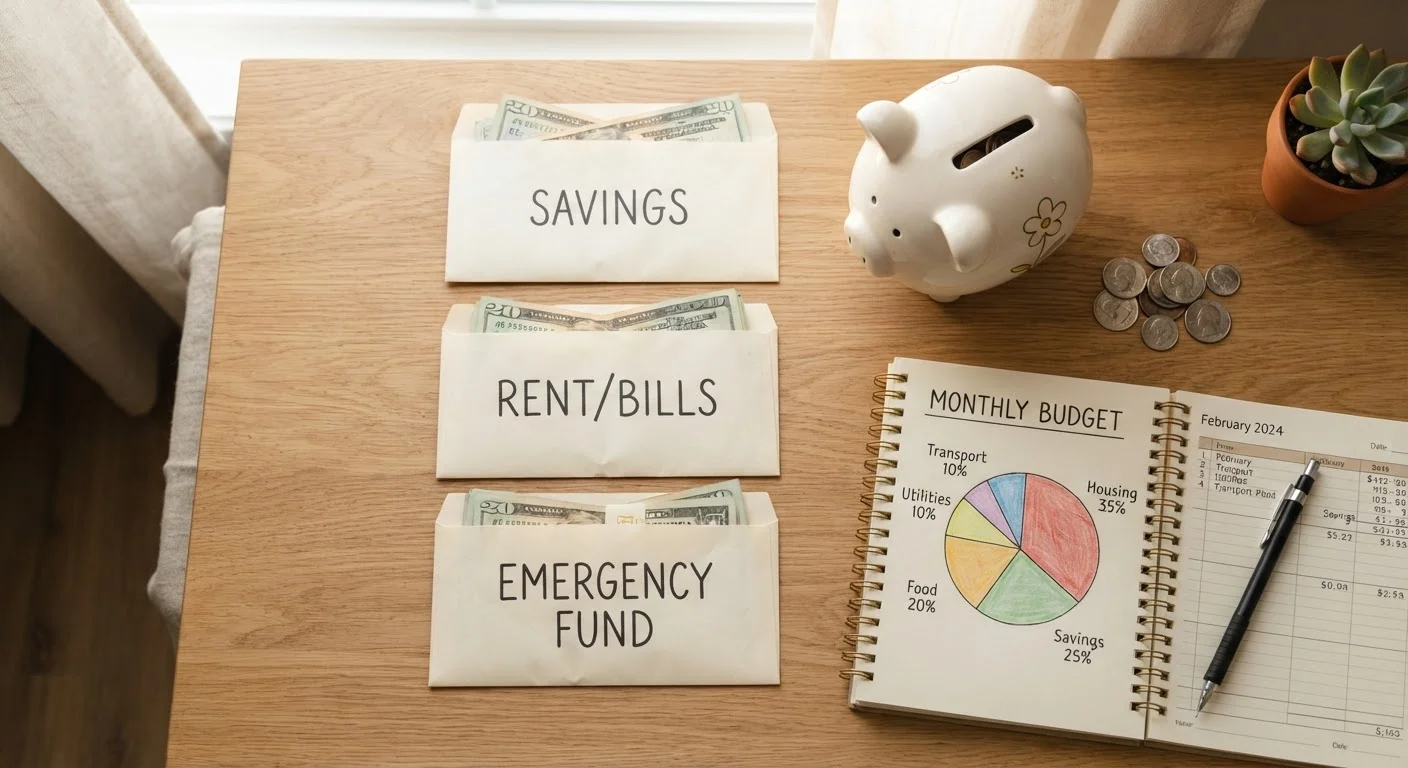

How Each Budgeting Method Actually Works
Before comparing these two approaches, it helps to understand what each one actually asks you to do — because the mechanics are quite different.
The 50/30/20 rule is a proportional budgeting framework. After calculating your monthly after-tax income, you allocate 50% to needs (rent, groceries, utilities, insurance), 30% to wants (dining out, subscriptions, entertainment), and 20% to savings and debt repayment. The categories are broad by design, giving you flexibility without micromanagement. If you're still learning the difference between necessary and discretionary spending, the guide to fixed vs. variable expenses can help you classify costs before applying the percentages.
Zero-based budgeting (ZBB) takes a different approach entirely. You begin each month with your expected income and work downward, assigning a dollar amount to every category — housing, food, transportation, savings, debt, entertainment — until the running total reaches zero. Income minus all planned expenses equals zero. Nothing is left unaccounted for. If your plans change mid-month, you manually reallocate from one category to another. This method requires building a fresh plan each month, which is both its strength and its greatest demand.
| Criterion | 50/30/20 Rule | Zero-Based Budgeting |
|---|---|---|
| Setup complexity | Low — three simple categories | High — every expense line itemized |
| Monthly time required | Minimal — periodic check-ins | Significant — rebuilt each month |
| Flexibility | High — broad buckets allow wiggle room | Moderate — requires manual reallocation |
| Spending visibility | Category-level only | Dollar-level, highly granular |
| Best income type | Stable, predictable income | Any income, including irregular |
| Debt payoff focus | Built into 20% savings bucket | Explicitly assigned each month |
| Suitable for beginners | Yes — low learning curve | Moderate — requires financial discipline |
For a broader look at how these approaches compare to other popular methods, see the comparison of envelope, pay-yourself-first, and proportional budgets.
Time Investment and Ongoing Effort
The practical difference between these two methods shows up most clearly in how much time they demand once you've started.
With the 50/30/20 rule, the setup is quick. Calculate your take-home pay, multiply by the three percentages, and you have your spending targets. Ongoing maintenance is light — a monthly check to confirm you're within each category is often enough. Many people find this approach sustainable precisely because it doesn't require rebuilding a plan from scratch each cycle.
Zero-based budgeting is more labor-intensive. Every new month starts with a blank slate. You list your income, project each expense category, and balance everything to zero before the month begins. Mid-month adjustments require revisiting the plan when unexpected costs arise. This upfront work pays off in visibility and control, but it is a genuine ongoing commitment. Tools like budgeting apps or a well-structured spreadsheet can reduce friction — see the comparison of budgeting by hand versus using a spreadsheet for practical guidance on tracking methods.
If you've never budgeted before, starting with the simpler 50/30/20 framework and graduating to zero-based budgeting later is a reasonable path. The ground-up guide for financial beginners walks through that foundation step by step.
Strengths, Limitations, and Who Each Method Suits
No budgeting method is perfect for everyone. Each has genuine advantages alongside real trade-offs.
50/30/20 strengths: Simple to set up, easy to remember, and forgiving of minor spending fluctuations. The broad categories reduce decision fatigue and work well for people with stable incomes and relatively predictable expenses.
50/30/20 limitations: The fixed percentages don't flex easily around high-cost-of-living areas where housing alone may consume well over 50% of income. The broad categories can also obscure specific overspending — you might stay within the 30% wants bucket overall while a single habit quietly drains your finances.
Zero-based budgeting strengths: Exceptional transparency. Every dollar has a purpose, making it harder to lose track of discretionary spending. It's especially effective for people paying down debt, managing irregular income, or rebuilding finances after a financial setback.
Zero-based budgeting limitations: Time-consuming and can feel rigid when life is unpredictable. The monthly rebuild process is a barrier for people who won't maintain it consistently — an abandoned zero-based budget provides no benefit over no budget at all.
High Cost-of-Living Areas May Require Adjustments
In cities where housing costs frequently exceed half of a typical paycheck, the 50% needs target in the 50/30/20 rule can be difficult to hit. In these situations, some financial educators suggest adjusting the percentages — for example, 60/20/20 — to reflect local realities. What matters most is that your savings and debt repayment goals remain protected regardless of how you recalibrate the other categories.
Once you've chosen a method and run it for a few months, a structured review is worth scheduling. The monthly budget reset checklist provides a practical framework for catching drift and resetting your numbers with intention.
This article is for general informational and educational purposes only and does not constitute personalized financial advice. Please consult a qualified financial adviser for guidance tailored to your individual circumstances.