
What a Credit Score Is Actually Measuring
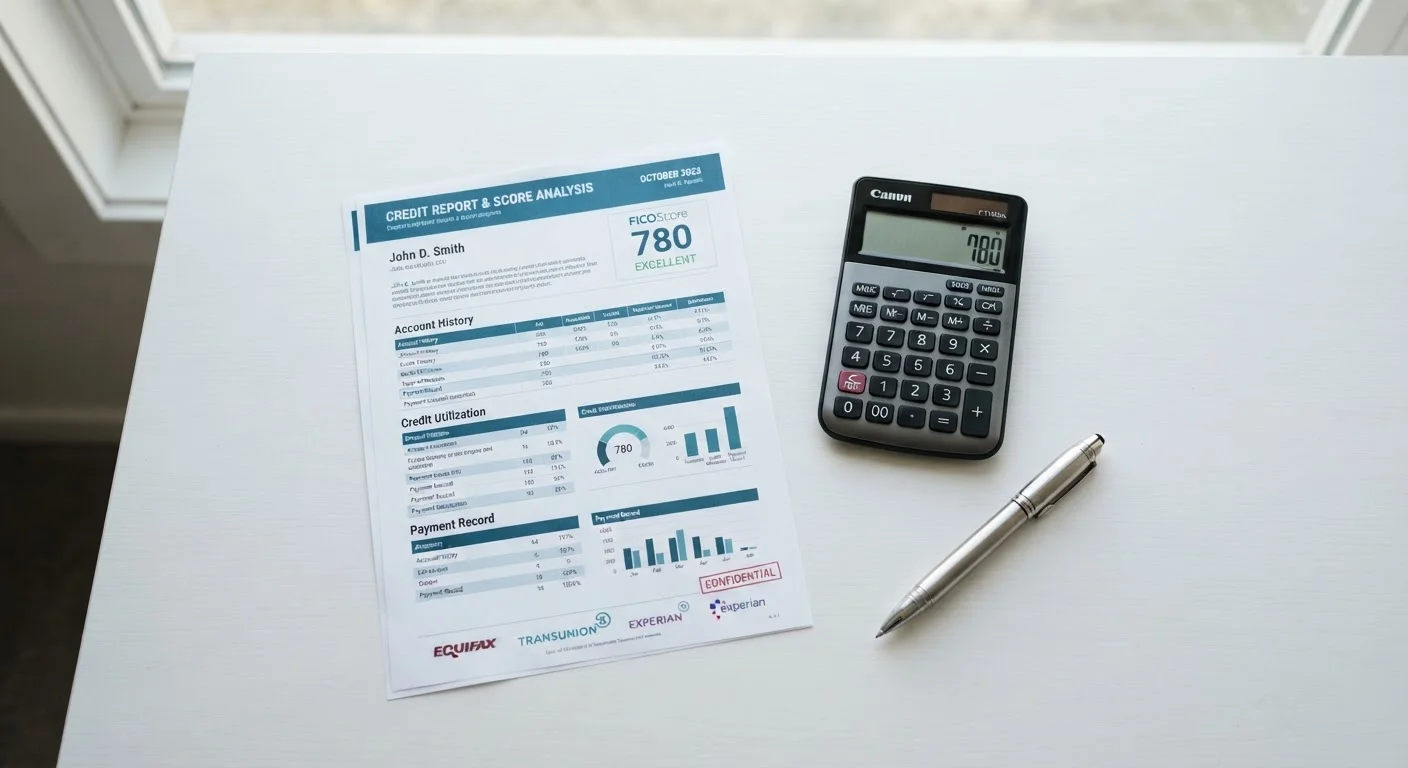
A credit score doesn't measure your wealth, your income, or your financial ambition. It measures one specific thing: the statistical likelihood that you will repay borrowed money on time. Every number in the score is derived from your past credit behavior as recorded by the three major credit bureaus — Equifax, Experian, and TransUnion.
Lenders use the score as a shorthand risk signal. Rather than reading through years of financial history, a creditor can see a single number and quickly estimate whether lending to you is likely to be profitable or risky. For a deeper look at how credit scores interact with debt more broadly, see our comprehensive credit and debt guide.
The Five Factors That Build Your Score
Under the FICO scoring model — the most commonly used by U.S. lenders — your score is calculated from five weighted categories:
- Payment history (35%): Whether you've paid bills on time. A single missed payment, especially on a major account, can cause a notable score drop.
- Amounts owed / Credit utilization (30%): How much of your available revolving credit you're currently using. Keeping this ratio below 30% is widely recommended; below 10% is better still.
- Length of credit history (15%): How long your accounts have been open. This includes the age of your oldest account, your newest account, and the average age across all accounts.
- Credit mix (10%): Whether you have experience with different types of credit — revolving credit (like credit cards) and installment loans (like auto or student loans).
- New credit / Hard inquiries (10%): How recently and how often you've applied for new credit. Multiple applications in a short window can signal financial stress to lenders.
35%
Portion of FICO Score from payment history
Payment history is the single largest component of a FICO Score, according to FICO's published scoring criteria.
30%
Portion of FICO Score from credit utilization
The amounts owed category, which includes credit utilization ratio, is the second-largest factor in FICO Score calculations.
300–850
Standard FICO Score range
FICO Scores run from 300 at the lowest to 850 at the highest, with most lenders considering 670 or above as a favorable starting point.
Understanding these factors also helps when reviewing your annual credit report, where each of these elements is documented in detail.
Why Lenders Care — and What They Do With the Number
A credit score reduces complexity for lenders who evaluate thousands of applications. It allows them to set interest rates that reflect the level of risk they're taking on. Borrowers with higher scores are statistically less likely to default, so lenders compete for their business with lower rates. Borrowers with lower scores represent more risk, so lenders either decline the application or charge a higher rate to compensate.
This dynamic has real financial consequences. Even a modest difference in credit score tiers can translate into meaningfully different interest rates on a mortgage — potentially costing or saving tens of thousands of dollars over the loan's life. See how this plays out in practice in our article on what your credit score does to your mortgage rate.
Credit scores are also used beyond traditional lending — by landlords reviewing rental applications, insurers setting premiums in some states, and occasionally employers in specific industries (though the latter is regulated and varies by state).
Common Misconceptions About Credit Scores
Several widespread beliefs about credit scores are either incomplete or flat-out wrong:
- "Carrying a balance helps my score." This is a persistent myth. Carrying a credit card balance from month to month does not improve your score — it only costs you interest. Paying in full each month is better for both your score and your finances.
- "Closing old accounts cleans up my credit." Closing an old account can actually hurt your score by shortening your average credit history and reducing your total available credit, which pushes up your utilization ratio.
- "Income affects the score." Your income is not a factor in any major credit scoring model. A high earner with missed payments will have a lower score than a moderate earner with a spotless payment record.
Check Your Credit Report for Free
You're entitled to a free credit report from each of the three major bureaus through AnnualCreditReport.com, the official federally mandated source. Reviewing your report regularly helps you spot errors that could be unfairly dragging down your score. Errors are more common than many consumers realize and can be disputed directly with the bureau.
Your debt-to-income ratio — while not part of your credit score — is another number lenders frequently evaluate. Learn more in our explainer on understanding your debt-to-income ratio.
This article is for general informational and educational purposes only and does not constitute personalized financial or credit advice. Consult a qualified financial adviser or credit counselor for guidance specific to your situation.