How Compound Interest Actually Works
The concept is simpler than it sounds. Suppose you deposit $1,000 into a savings account that earns 5% interest per year. After year one, you have $1,050 — that $50 is your interest. Now in year two, you earn 5% not just on your original $1,000, but on the full $1,050. That gives you $52.50 in interest instead of $50. The difference seems small at first, but it accelerates sharply over decades.
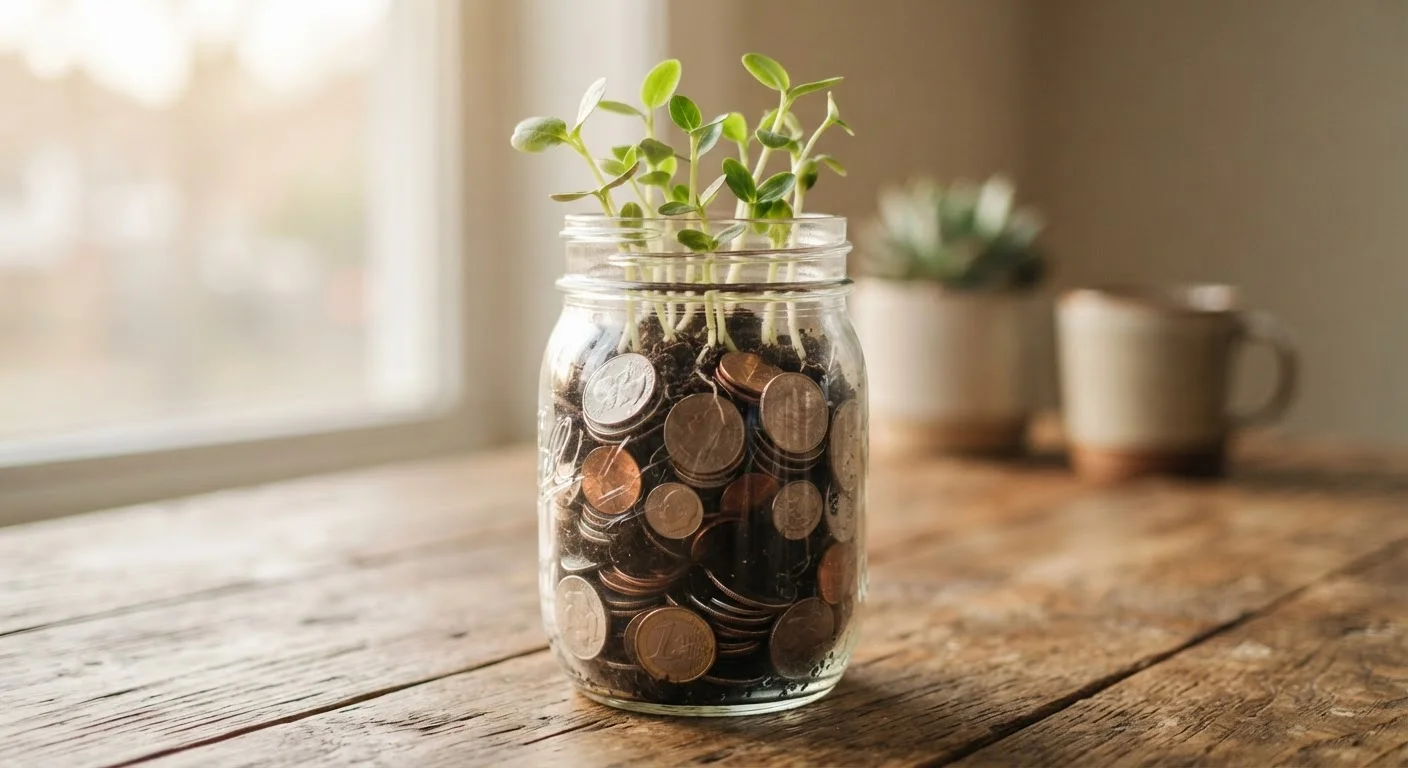
This is why compound interest is often described as interest on interest. Each compounding period, your base grows a little larger, and the next round of interest is calculated on that larger base. The cycle repeats continuously, producing exponential — not linear — growth over time.
For a deeper grounding in how these ideas fit into your broader financial picture, see Saving and Investing for Beginners.
Rule of 72
Years to double your money estimate
Divide 72 by your annual interest rate to estimate how many years it takes for your money to double — a widely taught financial rule of thumb.
~$33,000
Approximate value of $10,000 at 6% over 20 years
Based on standard compound interest calculations with annual compounding and no additional contributions — actual results vary by account type and rate.
24%+
Average APR on credit card accounts carrying balances
According to the Federal Reserve's consumer credit data, average credit card interest rates on accounts assessed interest have reached historically high levels in recent years.
Why Starting Early Matters So Much
The single most powerful lever in compounding is time. Consider two people who each invest $5,000 per year. Person A starts at age 25 and stops contributing at 35 — just 10 years of deposits. Person B starts at 35 and contributes every year until age 65 — 30 years of deposits. Assuming the same rate of return, Person A often ends up with more money at retirement despite contributing far less. This is the power of an early start, sometimes called a head start premium.
The reason is that the money deposited earliest has the most time to compound. Each additional year of compounding adds proportionally more to the final balance. Waiting even five years to start saving can cost tens of thousands of dollars in lost compounding — not because of missed contributions, but because of missed time.
This principle applies equally to retirement accounts, college savings plans, and general investment accounts. The underlying math doesn't change, though returns on investments are never guaranteed and carry risk. For foundational vocabulary around investing, our plain-language glossary of stocks, bonds, and mutual funds is a useful reference.
When Compounding Works Against You
Compound interest is not always your friend. On the borrowing side, it's the mechanism that makes high-interest debt — especially credit card balances — so difficult to escape. When you carry a balance, interest charges are added to what you owe. The next billing cycle, interest is calculated on that larger total. Fees and penalties can compound this further.
A $3,000 credit card balance at a 24% annual rate, left unpaid with only minimum payments, can take years to eliminate and cost far more than the original purchases. This is the same mathematical process working in reverse — compounding amplifies losses just as it amplifies gains.
Understanding this dynamic is essential when evaluating options like debt consolidation. Debt consolidation has real trade-offs worth understanding before making any decisions. Similarly, mortgage loans involve compounding interest built into monthly payment schedules — your mortgage statement reflects exactly how interest and principal interact each month.
This article is for general informational and educational purposes only and does not constitute personalized financial advice. Consult a qualified financial professional before making decisions about your specific situation.