
Why Movement Needs Change — Not Stop — With Age
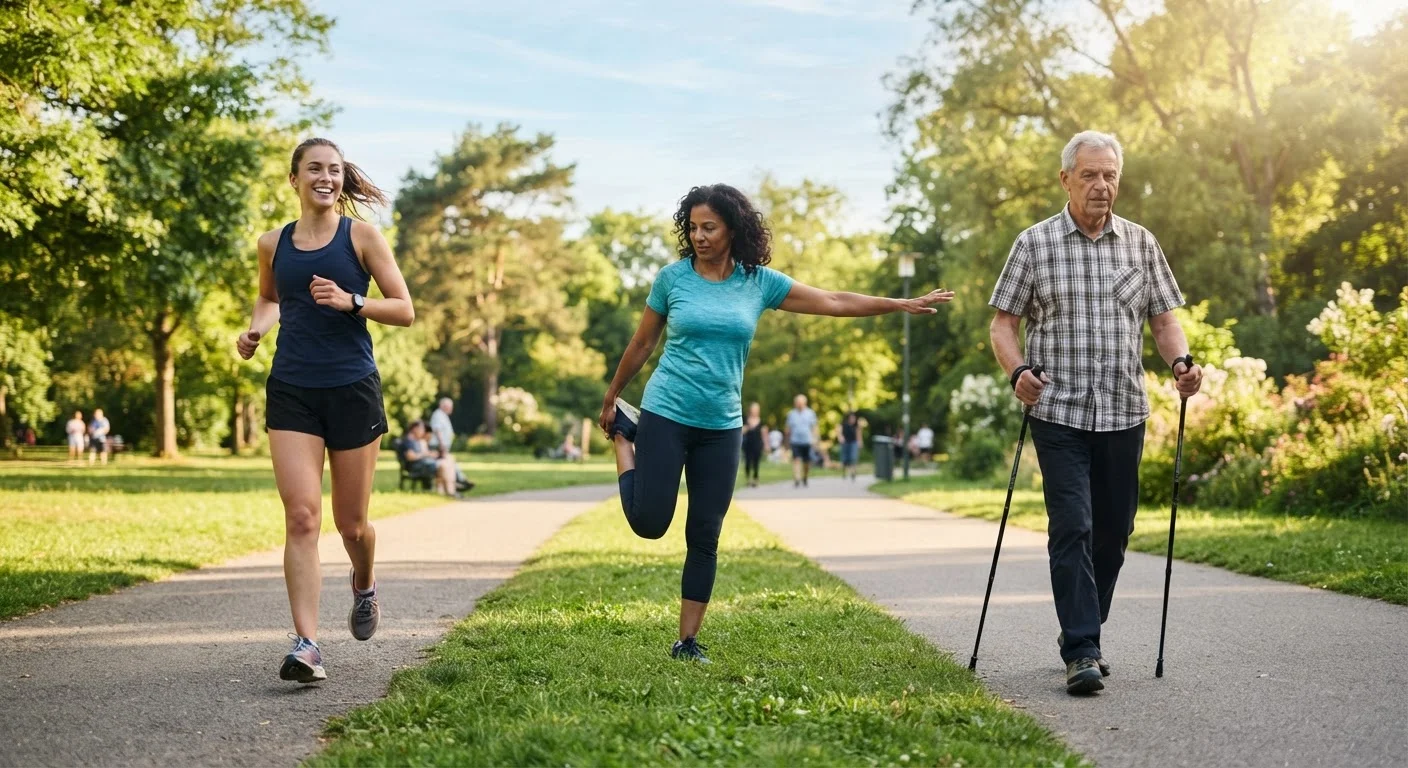
Physical activity doesn't have a single ideal form that works forever. What helps a 25-year-old build endurance may look very different from what keeps a 65-year-old mobile and injury-free. That's not a limitation — it's how the body works. Adapting movement to your current life stage is a strategy, not a compromise.
The core principle is consistent across the lifespan: regular movement protects health. Cardiovascular fitness, muscle mass, bone density, balance, and cognitive function all respond positively to appropriate physical activity. What changes is the type, intensity, and recovery emphasis that makes the most sense at each stage.
For a broader look at how everyday movement contributes to health outside of formal exercise, see how NEAT and non-exercise activity shape your health.
This Is General Information, Not Medical Advice
The movement principles in this article reflect general public health guidance and are intended for educational purposes only. Individual health conditions, medications, injuries, and fitness levels vary widely. Always consult a qualified healthcare provider before starting or significantly changing an exercise routine — especially if you have a chronic condition, are pregnant, or are recovering from injury or illness.
Young Adulthood (Roughly Ages 18–35): Build the Foundation
This stage offers a strong physiological window for building aerobic capacity and muscle mass. Recovery is typically faster, and the body adapts relatively quickly to new training stimuli. The risk, however, is overtraining or ignoring mobility — patterns that create problems later.
Key movement priorities at this stage:
- Aerobic base: Running, cycling, swimming, or any sustained activity that elevates heart rate. Meeting the recommended 150 minutes per week of moderate-intensity activity supports cardiovascular health both now and long-term.
- Resistance training: Building muscle now creates a buffer against the natural loss that begins in the 30s. Compound movements — squats, deadlifts, rows — engage multiple muscle groups efficiently.
- Mobility and flexibility: Often neglected, but consistent stretching and joint mobility work prevents the tightness that accumulates from desk jobs and sedentary patterns.
| Weekly aerobic activity target (adults) | 150–300 minutes of moderate intensity (U.S. Department of Health and Human Services Physical Activity Guidelines for Americans) |
| Recommended muscle-strengthening days | 2 or more days per week (U.S. Physical Activity Guidelines for Americans) |
| Balance training recommendation (older adults) | Included as a distinct component of weekly activity (U.S. Physical Activity Guidelines, 2nd edition) |
| Muscle mass loss rate after 30 (without training) | Approximately 3–8% per decade (Research summary published in Current Opinion in Clinical Nutrition & Metabolic Care) |
| Falls leading to injury (adults 65+) | Falls are a leading cause of injury-related death in this group (Centers for Disease Control and Prevention) |
| Physical inactivity — U.S. adults | Roughly 1 in 4 adults report no leisure-time physical activity (CDC National Center for Health Statistics) |
Middle Adulthood (Roughly Ages 35–60): Maintain and Protect
Muscle loss accelerates without intervention during this period, and recovery takes longer. Hormonal shifts — particularly around perimenopause and menopause — can affect bone density, body composition, and energy levels. This is when consistency matters more than intensity.
Movement priorities shift toward:
- Sustained strength training: Two or more sessions per week of resistance work remains one of the strongest tools for preserving muscle and supporting metabolic health.
- Lower-impact cardiovascular options: Walking, cycling, swimming, and elliptical training reduce joint stress while maintaining fitness. Building a sustainable walking habit is a practical starting point for many people during this stage.
- Longer recovery windows: Training smart means spacing sessions to allow tissue repair. Soreness that lingers beyond 48 hours is a signal to scale back.
People managing chronic conditions should work with their healthcare provider to identify safe intensity ranges before increasing training load.
Older Adulthood (60 and Beyond): Prioritize Function and Fall Prevention
For adults in their 60s, 70s, and beyond, functional fitness becomes the central goal. The ability to carry groceries, get up from a chair, navigate stairs, and maintain balance are direct markers of independence and quality of life. The U.S. Physical Activity Guidelines specifically call out balance training as a distinct priority for older adults — separate from aerobic or strength work.
Key priorities:
- Balance training: Tai chi, single-leg standing exercises, and yoga have research support for reducing fall risk. Even simple balance drills done daily can make a measurable difference.
- Continued strength work: Resistance training at this stage slows sarcopenia (age-related muscle loss) and supports bone density. Chair-based exercises, resistance bands, and light weights are all appropriate entry points.
- Walking as medicine: Regular walking remains one of the most evidence-supported activities across all older adult populations, with benefits spanning cardiovascular health, mood, and cognitive function.
- Flexibility and joint care: Gentle stretching and range-of-motion exercises help preserve mobility that makes all other daily movement easier.
Special populations — including those with osteoporosis, heart conditions, or recent surgeries — should receive individualized guidance from a healthcare professional before beginning or modifying activity programs.
This article is for informational purposes only and is not medical advice. Consult a qualified healthcare provider for guidance specific to your health situation.