Same Molecule, Very Different Story
At the chemical level, sucrose is sucrose and fructose is fructose — whether that molecule came from an apple or a can of soda. So why does nutrition science treat them differently? The answer lies not in the sugar itself, but in what surrounds it.
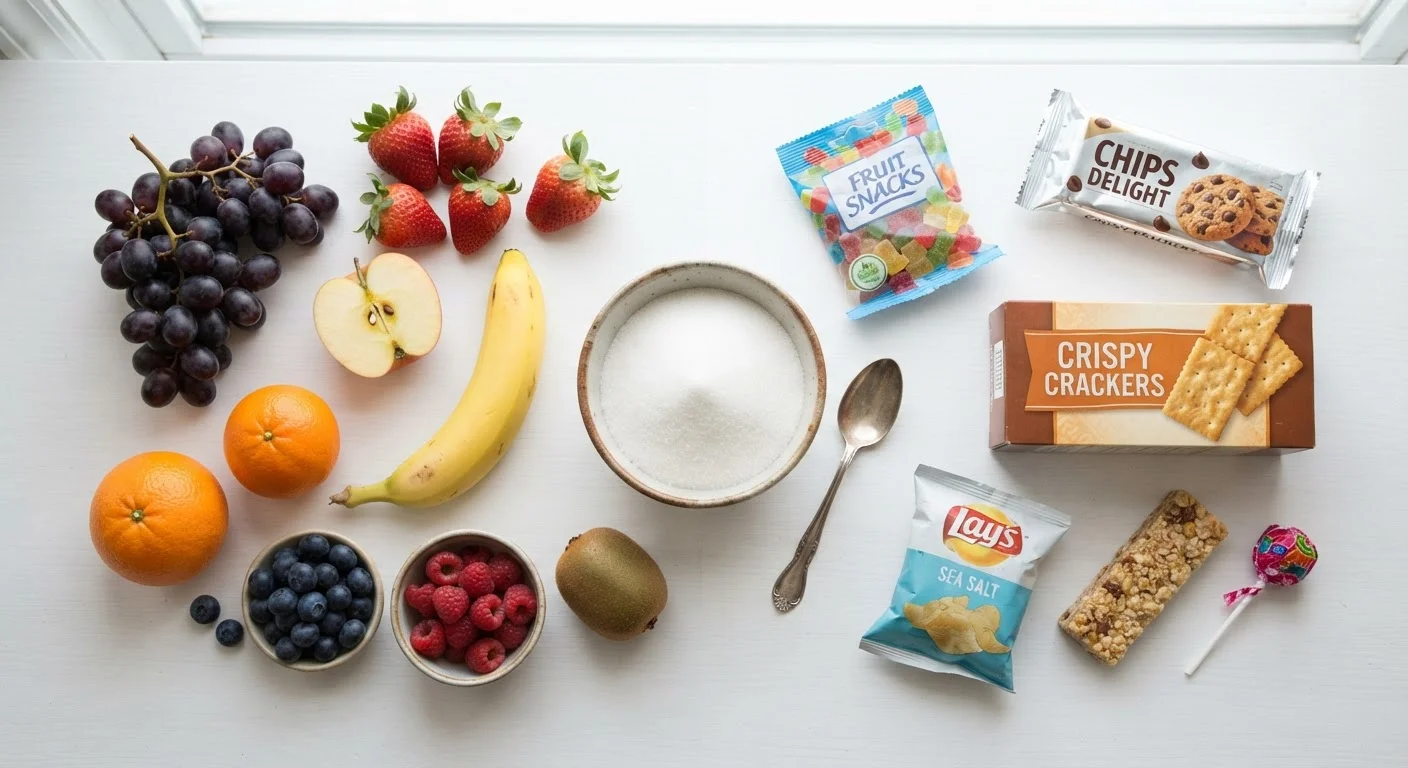
Natural sugars exist within a food matrix. In a whole orange, fructose and glucose travel alongside dietary fiber, water, vitamin C, potassium, and a range of phytonutrients. That matrix slows digestion, blunts the rate at which sugar enters the bloodstream, and delivers genuinely useful micronutrients in the same package. Added sugars, by contrast, are incorporated into food during manufacturing or preparation — think corn syrup in a soft drink or cane sugar stirred into yogurt. They arrive stripped of the fiber and nutrients that would otherwise accompany them.
This is the core distinction the nutrition community has built policy around, and it's why the U.S. Food and Drug Administration updated the Nutrition Facts label to require a separate Added Sugars line beneath total sugars. For a deeper look at how to interpret what's on that label, see how to read an ingredient list.
How Each Type Affects the Body
When you eat a piece of whole fruit, the fiber physically slows gastric emptying — meaning sugar is released into your bloodstream more gradually. Insulin demand is moderated, and you're likely to feel fuller sooner. Research consistently links whole fruit consumption with neutral to favorable health outcomes, even though fruit contains meaningful amounts of sugar.
Added sugars work differently in practice. Beverages are the clearest example: liquid sugar has virtually no fiber, minimal satiety effect, and delivers a rapid glucose spike. A 12-ounce sweetened soft drink can contain 35–40 grams of added sugar — close to or exceeding a full day's recommended limit — without triggering the fullness signals a comparable number of calories from whole food would produce.
| Criterion | Natural Sugar | Added Sugar |
|---|---|---|
| Origin | Occurs inherently in whole foods | Added during processing or cooking |
| Common sources | Fruit, dairy, some vegetables | Soft drinks, sweets, packaged foods |
| Accompanying nutrients | Fiber, vitamins, minerals, water | Little to none |
| Absorption rate | Slowed by food matrix | Typically faster; no fiber buffer |
| Label disclosure | Counted in Total Sugars only | Listed separately as Added Sugars |
| Dietary guidance limits | No specific population-level cap | Under 10% of daily calories (U.S. guidelines) |
Excess added sugar intake over time has been associated in population studies with higher risks of weight gain, dental caries, elevated triglycerides, and cardiovascular markers — though diet is complex and no single food or nutrient operates in isolation. The evidence is strong enough that major health bodies, including the American Heart Association and the Dietary Guidelines for Americans, have established specific limits for added sugars. Natural sugars in whole foods carry no such population-level advisories.
This article is for general informational purposes only and does not constitute medical or dietary advice. Consult a qualified healthcare professional for guidance specific to your health situation.
Where Added Sugar Hides — and How to Find It
Added sugar isn't limited to obviously sweet foods. It appears in bread, pasta sauce, salad dressings, flavored yogurts, protein bars, and condiments. Manufacturers use dozens of names for it: high-fructose corn syrup, evaporated cane juice, dextrose, maltose, agave nectar, and more. A food marketed as "natural" or "wholesome" can still carry substantial added sugars — a distinction worth keeping in mind when health labels mislead more than they inform.
The revised U.S. Nutrition Facts label makes this more transparent. Look for the indented Includes X g Added Sugars line under Total Sugars. This figure tells you specifically how much sugar was added in processing, separate from whatever occurs naturally in the ingredients. For anyone trying to meet the guideline of keeping added sugars below 10% of daily caloric intake, this line is the most actionable number on the panel. The what packaging language actually means guide offers additional context on navigating product claims.
Understanding this distinction also connects to broader patterns of food processing — much like how refining grains strips away nutritional value. In both cases, processing removes the components that make a food work well in the body.