
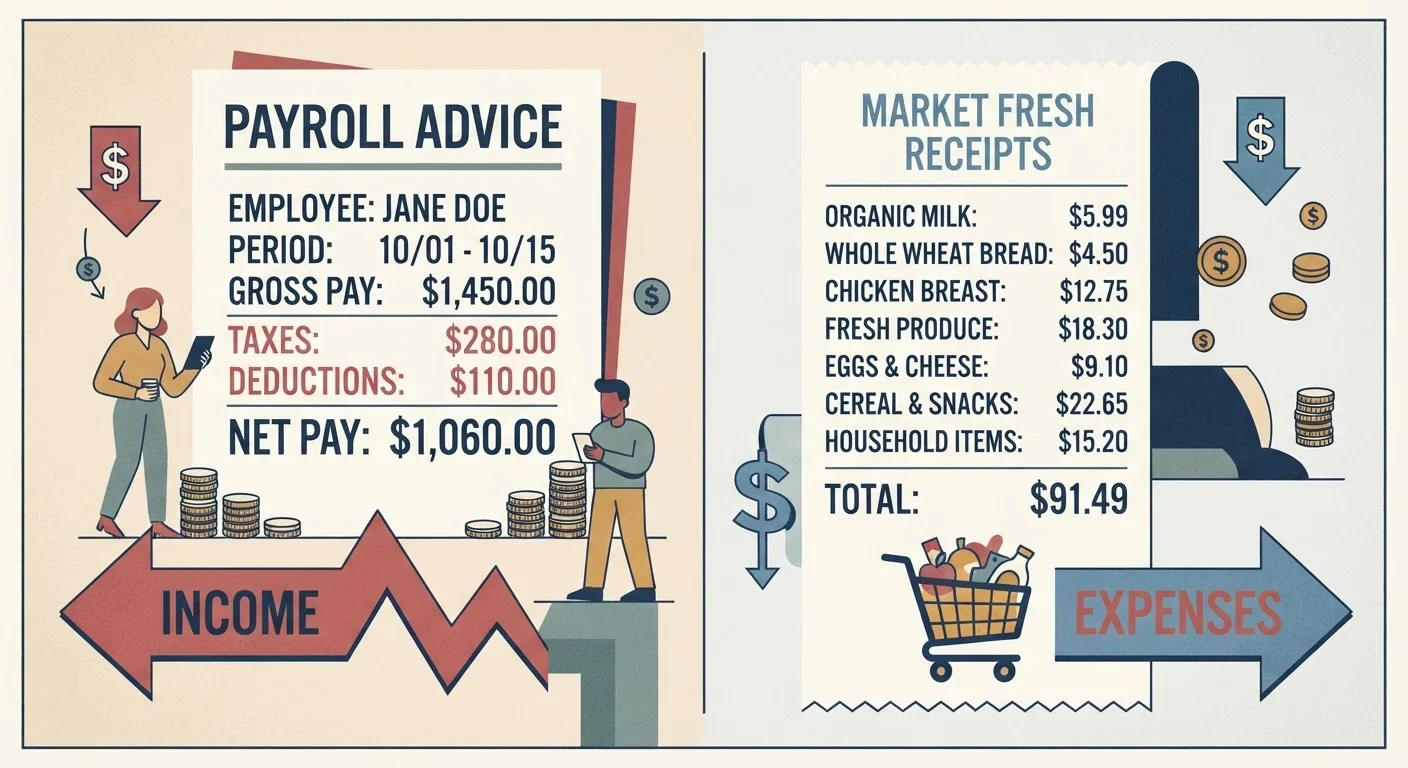
The Gap Between Your Paycheck and Your Grocery Bill
Many American workers have experienced a version of the same puzzle in recent years: their employer gave them a raise, yet their bank account tells a different story. Rent still stings. Groceries cost more. Filling a gas tank feels like a small financial decision. That disconnect isn't imaginary — it has a name, and it's rooted in the relationship between two major economic forces: inflation and wage growth.
Inflation refers to the general rise in prices across the economy over time. Wage growth, by contrast, measures how much more workers are earning — typically expressed as a year-over-year percentage change. On the surface, rising wages sound like unambiguously good news. In practice, whether they actually improve a worker's life depends almost entirely on how they compare to inflation at the same moment.
Economists use a concept called real wages to cut through the confusion. Real wages adjust nominal (face-value) earnings for inflation, showing what a paycheck can actually buy. When real wages are positive, workers are gaining purchasing power. When they're negative — meaning inflation is outpacing pay increases — workers are effectively taking a pay cut even if the number on their stub went up.
| Criterion | Inflation | Wage Growth |
|---|---|---|
| What it measures | Rise in price of goods and services | Increase in worker earnings over time |
| Primary data source (U.S.) | Consumer Price Index (CPI), BLS | Employment Cost Index, Average Hourly Earnings, BLS |
| Effect when rising | Purchasing power decreases | Take-home pay increases nominally |
| Who feels it most | Lower-income households, fixed-income earners | Varies widely by sector and income level |
| Key limitation | Basket averages don't match every household | Nominal gains can be erased by inflation |
| Combined metric | Real wages = wage growth minus inflation | Real wages = wage growth minus inflation |
Why the Numbers Don't Always Match the Experience
National wage and inflation figures are averages, and averages can hide enormous variation. The Bureau of Labor Statistics tracks inflation through the Consumer Price Index (CPI), which measures price changes across a broad basket of goods and services. But that basket reflects average spending — it doesn't perfectly match what any individual household actually buys.
A retiree on a fixed income spends a larger share on healthcare and housing than a young professional who commutes by bike and cooks at home. A rural family's budget looks different from an urban renter's. When energy prices spike, low-income households — which spend a higher proportion of income on gas and utilities — feel the impact more acutely than higher earners who can absorb the hit. This is why the same headline inflation number can register very differently depending on who you ask. Economic headlines don't always tell the full story — the same is true of both wage and price figures.
Wage growth figures carry similar blind spots. Aggregate data can reflect strong gains at the top of the income distribution while middle- and lower-wage workers see more modest increases. Sector and regional differences are also significant: workers in technology or finance may see faster pay growth than those in retail, food service, or caregiving — industries that employ a large share of American workers. For a broader view of how these disparities compound over time, economists' data on the wealth gap offers important context.
~9.1%
Peak U.S. inflation rate (June 2022)
The Bureau of Labor Statistics reported the CPI reached a four-decade high in mid-2022, before gradually declining in subsequent months.
Negative
Real wage growth for much of 2021–2022
Federal Reserve and BLS data showed that nominal wage gains during that stretch were repeatedly outpaced by consumer price increases, resulting in real wage declines.
~30%
Share of income spent on housing by renters
The U.S. Census Bureau's American Community Survey consistently finds renters spend a disproportionately large share of income on housing, amplifying their sensitivity to shelter inflation.
What This Means for Everyday Financial Decisions
Understanding the difference between nominal and real wages isn't just academic — it has direct implications for how workers evaluate job offers, negotiate raises, and plan household budgets. A 4% raise sounds appealing, but if inflation is running at 5%, accepting it means agreeing to a real-terms pay reduction. Workers who understand this dynamic are better positioned to advocate for themselves.
It also shapes how economists and policymakers interpret labor market health. Strong nominal wage growth can coexist with worker hardship if prices are rising faster. Conversely, even modest wage increases can meaningfully improve living standards during periods of low or stable inflation. Economic downturns add another layer of complexity: recessions often suppress wage growth while inflation can remain elevated, squeezing workers from both sides.
The relationship between these two forces also intersects with broader structural questions about who benefits from economic growth. Gig and contract workers face additional vulnerabilities, since their income fluctuates and they typically lack the employer-provided benefits — health insurance, retirement contributions — that form a significant part of total compensation for traditional employees.
For most Americans, the practical takeaway is straightforward: a raise is only as good as what it can buy. Tracking real wage trends — not just the dollar figure — gives a more honest picture of whether a household is moving forward, treading water, or quietly falling behind.
This article is for general informational and educational purposes only and does not constitute financial or economic advice. Readers should consult a qualified financial professional for guidance specific to their personal circumstances.