
The Decision That Changed Admissions
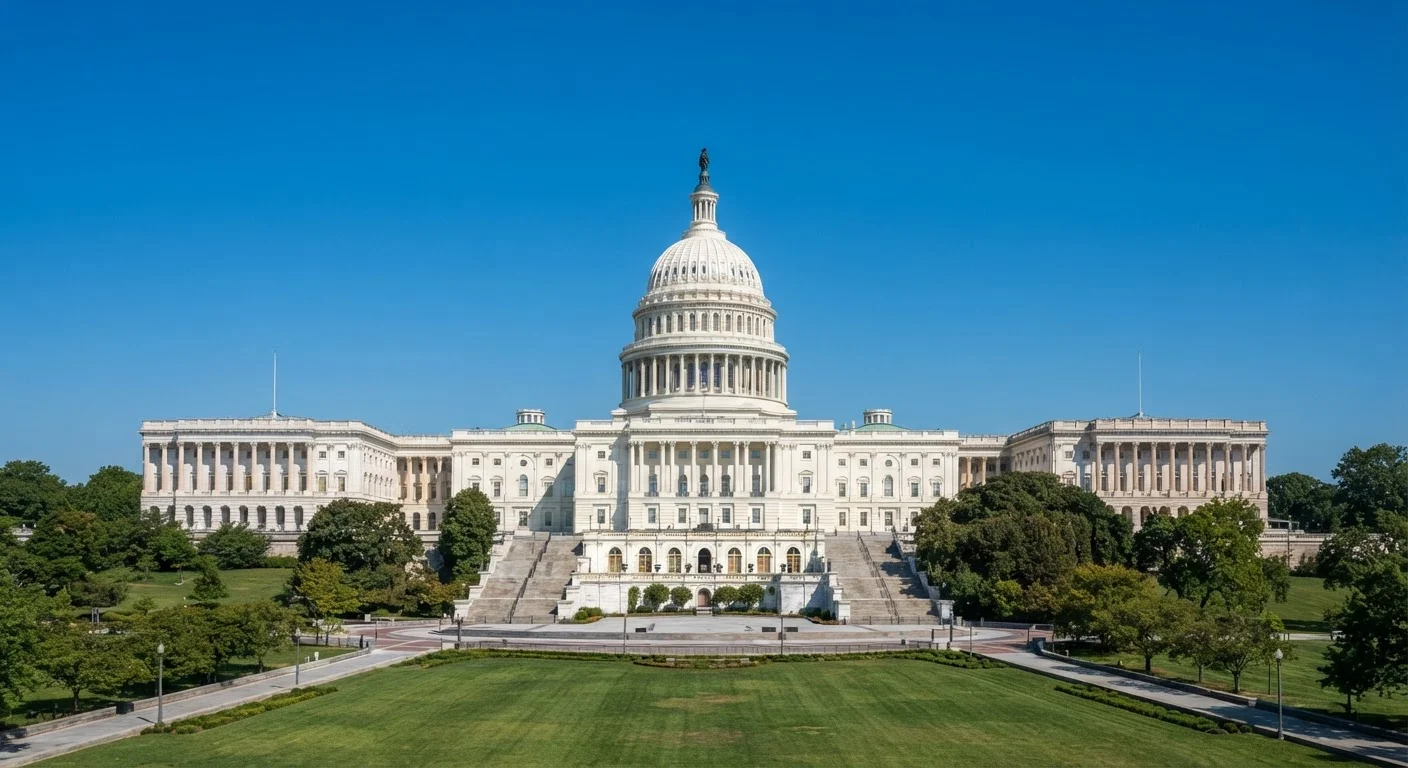
On June 29, 2023, the U.S. Supreme Court issued a landmark ruling in Students for Fair Admissions v. Harvard and its companion case involving the University of North Carolina. In a 6-3 decision along ideological lines, the Court held that the race-conscious admissions programs at both schools violated the Equal Protection Clause of the Fourteenth Amendment.
Chief Justice John Roberts, writing for the majority, concluded that the universities' programs lacked the kind of measurable benchmarks and definite endpoints that prior Court decisions had required. The opinion formally ended a legal framework established in Grutter v. Bollinger (2003), which had allowed race to be a "plus factor" in holistic admissions review for roughly two decades.
For context on how the Court's role shapes major policy shifts like this one, see how the Supreme Court influences American politics.
6–3
Supreme Court vote in SFFA ruling
The June 2023 decision divided the Court along its ideological lines, with the majority holding race-conscious admissions unconstitutional.
~20 years
Duration of Grutter-era affirmative action
The 2003 Grutter v. Bollinger ruling permitted race-conscious admissions for roughly two decades before SFFA overturned the framework.
9 states
States with pre-existing affirmative action bans
Before the SFFA ruling, nine U.S. states had already banned race-conscious admissions at public universities through legislation or ballot measures.
What Colleges Are No Longer Allowed to Do
The ruling drew a clear line: a college may not treat race as a factor that, by itself, benefits an applicant. Specifically prohibited are systems that assign numeric or categorical advantages based on racial or ethnic identity, or that use race as a tiebreaker. Institutions that maintained separate review tracks or target enrollment percentages by race are required to dismantle those structures.
The Court also addressed indirect workarounds. It warned that schools cannot accomplish through indirect means what the ruling prohibits directly — for example, using race as a proxy through other criteria in a way designed to achieve racial balancing.
What Remains Legally Permissible
The ruling was not a blanket prohibition on all discussion of race in the admissions process. The majority opinion included a notable exception: applicants may still write about race in personal essays, and schools may consider what those essays reveal about an individual's character, resilience, or contributions — provided the evaluation focuses on the person's qualities, not the racial category.
Beyond essays, colleges retain broad latitude in other areas:
- Socioeconomic preferences: Giving weight to first-generation college students or low-income applicants remains lawful.
- Geographic diversity: Recruiting from underrepresented zip codes or rural areas is permissible.
- Community outreach: Targeted recruitment at under-resourced high schools is unaffected.
- Pipeline programs: Pre-college enrichment and mentorship programs aimed at broadening the applicant pool remain legal.
How Prospective Students Can Respond
Students from underrepresented backgrounds can still discuss race, identity, and lived experience in personal statements — what matters is how those experiences shaped them as individuals. Counselors advise focusing on specific, concrete narratives rather than racial classification alone. First-generation college status, socioeconomic background, and community involvement remain factors many schools actively weigh.
Early Evidence: How Enrollment Has Shifted
Several selective universities reported meaningful changes in the racial composition of their incoming classes in the first full admissions cycle conducted under the ruling's constraints. MIT reported that the share of Black students in its fall 2024 entering class fell sharply compared to recent years. Similar trends were observed at other highly selective institutions, though results varied across schools.
Notably, states that had already banned affirmative action through ballot measures — California, Michigan, and Washington among them — offered partial models. Research on those states showed that race-neutral alternatives partially, but not fully, maintained diversity at flagship universities. Socioeconomic proxies tended to benefit low-income white and Asian American students at rates that did not fully replicate prior racial diversity outcomes.
The long-term demographic effects on higher education remain genuinely uncertain and are the subject of ongoing academic study.
The Political and Legal Landscape Going Forward
The SFFA ruling has spurred legislative activity at both the state and federal levels. Several states have moved to codify race-neutral admissions into law, while others have passed legislation explicitly protecting diversity-oriented recruitment and financial aid programs from further restriction.
Legal challenges continue in adjacent areas. Harvard's legacy admissions preferences remain under scrutiny through a separate federal civil rights complaint. The military academy exemption has also been challenged in lower courts, and that question has not been definitively resolved by the Supreme Court.
Colleges themselves have responded with varying strategies — expanding financial aid, broadening geographic recruitment, and in some cases hiring dedicated staff to identify applicants from underrepresented communities through race-neutral means. Whether those approaches will sustain campus diversity at pre-ruling levels is a question researchers and policymakers continue to examine closely.