The Landscape of Voter ID Requirements Across the U.S.
There is no national voter ID standard. Under the U.S. system, election administration is largely a state responsibility, which means requirements differ dramatically depending on where you live. The National Conference of State Legislatures tracks these laws and groups states into several categories based on how strictly they enforce ID requirements and what types of ID they accept.
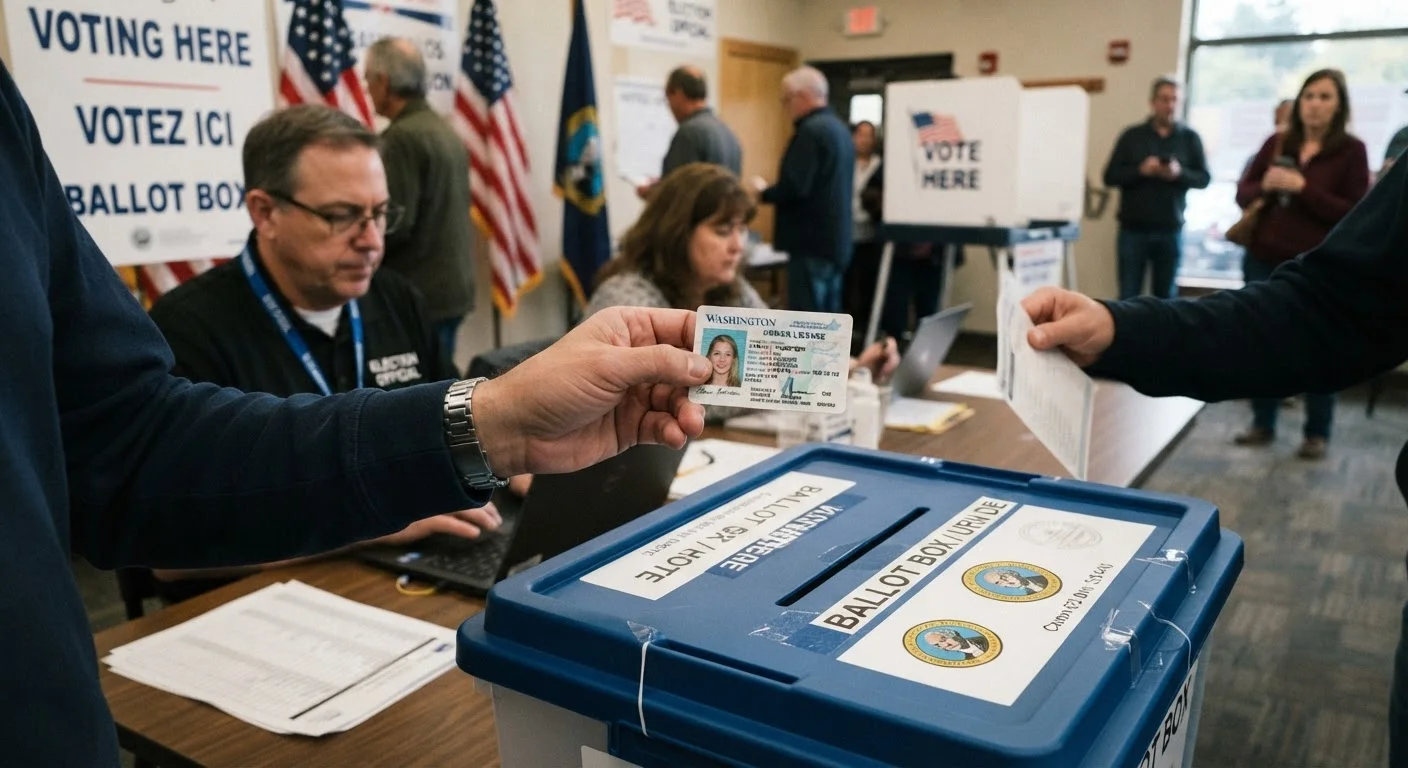
At one end of the spectrum are strict photo ID states, where voters who cannot present an approved government-issued photo ID must cast a provisional ballot — one that won't be counted unless the voter takes follow-up action. At the other end are states with no document requirement at all, where voters confirm their identity by providing their name and address, which poll workers verify against registration rolls.
In between sit several hybrid categories: states that accept non-photo IDs such as utility bills or bank statements, and states where failing to show ID still allows you to vote on a regular ballot after signing an affidavit. See our voter registration checklist for state-by-state guidance on what you may need before Election Day.
What the Research Shows — and Where It's Contested
The question of whether voter ID laws affect turnout has generated a substantial body of academic research — and no consensus. Studies differ in methodology, time period, and the specific laws examined, making it difficult to draw a single definitive conclusion.
Several peer-reviewed studies, including work published in political science journals, have found that strict photo ID requirements reduce turnout among certain groups — particularly Black, Latino, and low-income voters — by measurable but often modest margins. Other studies, using different datasets and methods, have found little to no statistically significant effect on overall turnout.
35+
States with some form of voter ID requirement
As of recent legislative sessions, more than 35 states have enacted laws requiring voters to show some form of identification, according to the National Conference of State Legislatures.
~11%
Eligible U.S. voters estimated to lack qualifying photo ID
The Brennan Center for Justice has estimated that roughly 11 percent of U.S. citizens — disproportionately low-income, elderly, and minority voters — do not possess government-issued photo ID.
Rare
Confirmed cases of in-person voter impersonation
Multiple independent reviews of hundreds of millions of ballots cast have found only a handful of confirmed in-person impersonation cases, making it one of the least common forms of reported election irregularity.
Where researchers do find broader agreement is on who is least likely to hold qualifying ID. Studies consistently show that low-income individuals, racial and ethnic minorities, elderly voters, young voters, and people with disabilities are disproportionately likely to lack the government-issued photo ID that strict laws require. A widely cited study using data from Wisconsin found that the gap was particularly pronounced among Black and Latino registered voters.
Proponents of voter ID laws argue that the requirements are reasonable, that free IDs are available, and that public confidence in election integrity justifies the measure. Critics respond that even free IDs carry indirect costs — time, transportation, underlying documents — that function as barriers for vulnerable populations. For context on how evidence around elections is often misread, see our piece on widely believed myths about how U.S. elections work.
The Fraud Question: What Voter ID Does and Doesn't Address
Voter ID laws specifically target in-person impersonation fraud — a scenario in which a person shows up at the polls and falsely claims to be a registered voter. Investigations by news organizations, academic researchers, and government bodies have consistently found this type of fraud to be exceedingly rare. The Brennan Center for Justice and other institutions have reviewed hundreds of millions of votes cast and found only scattered, confirmed instances of in-person impersonation.
This does not mean election fraud of every kind is nonexistent. Absentee and mail ballot fraud, registration fraud, and administrative errors have all been documented at various levels — but these are not addressed by requiring ID at the polling place.
“The evidence on voter ID laws and turnout is genuinely mixed, but what studies consistently show is that the populations least likely to hold qualifying ID are the same populations that have historically faced the greatest barriers to political participation.”
— Lorraine Minnite, Political scientist and author of research on voter fraud and election administration
Supporters of voter ID laws often argue the issue is about public trust as much as documented fraud — that requiring ID makes elections feel more secure to the public, regardless of demonstrated risk. This is a values-based argument that falls outside the scope of what empirical research can fully resolve.
Key Considerations for Voters
For Americans who want to make sure their vote counts, the most practical step is to verify exactly what your state requires well before Election Day. State election authority websites publish current, authoritative guidance. Laws do change — sometimes following court rulings or legislative action — so checking even if you've voted before is worthwhile.
If your state has a strict ID requirement and you don't currently hold qualifying ID, most states offer a path to obtain a free voter ID card. The process typically requires underlying documents such as a birth certificate, which may involve a fee to obtain. Local election offices and nonpartisan civic organizations can often help navigate this process.
Understanding the rules in advance, and knowing your rights if you arrive without ID, is the most reliable way to protect your ability to vote under whatever system your state uses.