Why Registration Requires More Than a One-Time Step
Registering to vote is not always a set-it-and-forget-it process. A move to a new address, a legal name change, or even a period of inactivity can alter your registration status without any notice arriving in your mailbox. Election officials across the country periodically conduct list maintenance — removing voters who appear to have moved or become ineligible — which means a registration that was valid in a previous election may no longer be active.
This checklist is designed to help you verify where you stand, understand what your state requires, and avoid the most common mistakes that leave eligible voters unable to cast a counted ballot. Because rules differ widely, always confirm details directly with your state or local election office — this guide is a starting framework, not a substitute for official sources.
For a closer look at how documentation rules are applied at polling places, see how voter ID laws work and what research says about their effects.
Confirm Your Current Status
Know Your State's Deadlines
Gather Required Documents
Prepare for Election Day
Tools and Official Sources You Will Need
Before working through the checklist, gather the resources below. Using unofficial third-party sites for registration can sometimes cause delays or errors — going directly to government sources is the safest approach.
Vote.gov
The official U.S. government portal for checking registration status and finding your state's registration page and deadlines.
State or County Election Office Website
The authoritative source for your specific state's ID requirements, polling place locations, and ballot status tracking.
USPS Address Confirmation
Useful for verifying your official mailing address before submitting or updating your registration to avoid mismatches.
State DMV or ID-Issuing Agency
Needed if your driver's license or state ID must be updated to reflect a current address before registering.
Avoid Unofficial Registration Websites
Third-party websites sometimes offer voter registration assistance but may introduce errors, charge fees, or fail to transmit your information to election officials at all. Always register or update your information directly through your state's official election website or in person at a government office. If you are uncertain whether a site is official, navigate to your state government's main homepage and look for an elections link from there.
What to Do If Something Looks Wrong
If your registration status appears inactive, incorrect, or missing, act as early as possible. Contact your county or state election office directly to request a correction. Many errors — such as a misspelled name or an outdated address — can be resolved before the deadline if caught early.
Keep in mind that some states have strict cutoff dates weeks before an election, while a smaller number allow eligible residents to register or update their information at the polls on Election Day. Knowing which category your state falls into is critical. If you have moved recently, you will generally need to re-register in your new jurisdiction even if you are still in the same state.
Missing the Deadline Has Real Consequences
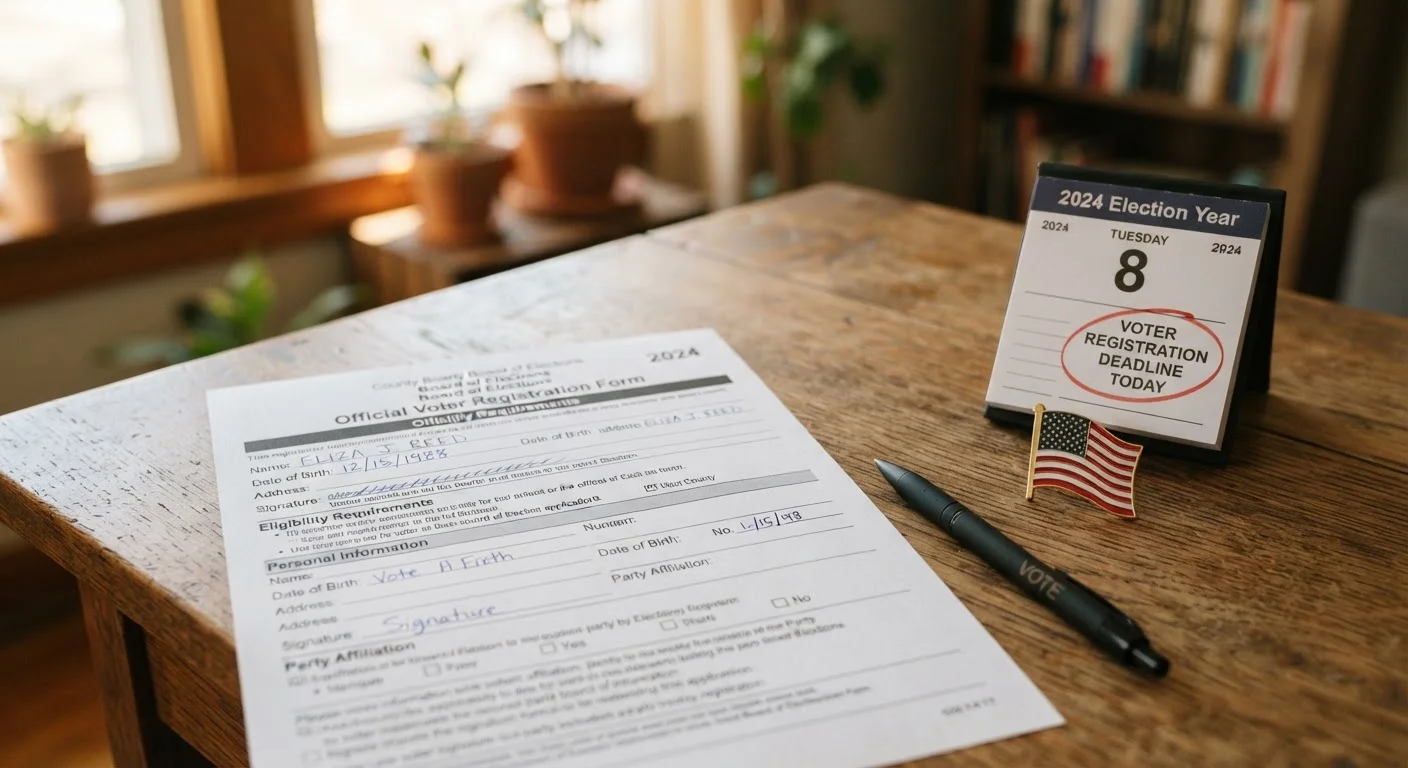
In most states, if you miss the voter registration deadline, you will not be able to cast a regular ballot in that election — even if you are fully eligible. Only a limited number of states permit same-day registration that would allow you to register and vote on Election Day at the polls. Do not assume your previous registration is still valid; verify it directly through an official source well before any deadline.
Staying on top of civic paperwork follows the same logic as reviewing other important documents on a regular basis — much like working through a checklist before any major commitment. The stakes here, however, are your ability to participate in your democracy.