Three Branches, One Balancing Act
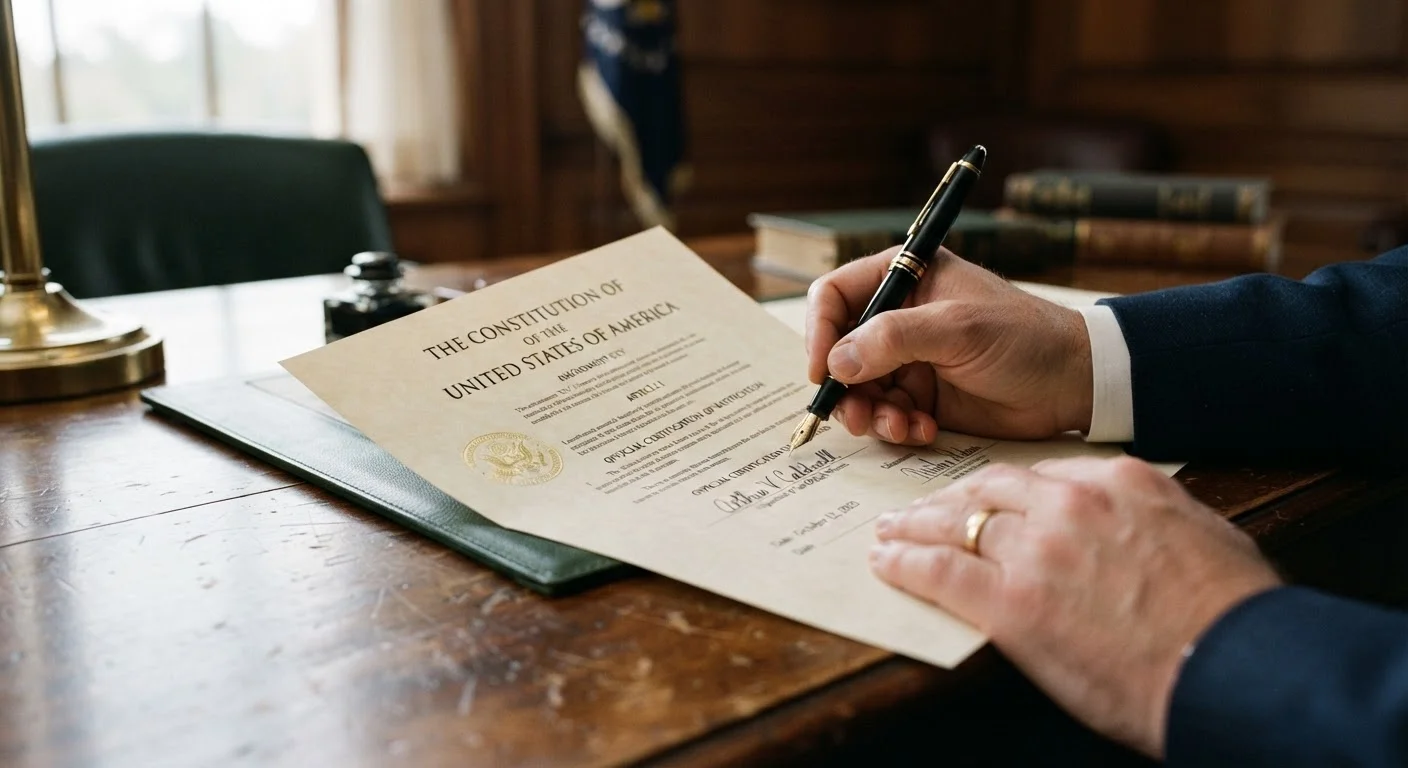
When a federal judge blocks an executive order, or Congress subpoenas a cabinet official, or the President vetoes a spending bill — these are not political crises in and of themselves. They are the constitutional system doing exactly what it was designed to do.
The framers of the U.S. Constitution were deeply skeptical of concentrated power. Having lived under a monarchy, they built a government deliberately divided against itself. Each of the three branches — legislative, executive, and judicial — holds distinct powers, and each has formal tools to push back against the others.
The result is a system of what the Constitution's architects called "checks and balances." Understanding those mechanics makes political news far easier to interpret, especially in moments when the branches appear to be in open conflict.
The System Is Not Always Tidy
Checks and balances do not guarantee swift or clean resolution of disputes. Court cases can take years; vetoes may stand even when unpopular; congressional oversight can be blocked by executive claims of privilege. The Constitution provides the framework, but political will, elections, and public pressure all shape how disputes actually resolve.
What Each Branch Can and Cannot Do
Congress (the legislative branch) writes laws, controls the federal budget, and holds broad oversight authority over the executive branch. It can also impeach and remove the President or federal judges. But Congress cannot enforce laws on its own — it depends on the executive branch to carry them out.
The President (the executive branch) enforces and implements laws, commands the military, negotiates treaties, and appoints federal judges and cabinet members — subject to Senate confirmation. The President can veto legislation passed by Congress. But the President cannot pass laws unilaterally or serve as judge in a legal dispute.
Federal courts (the judicial branch) interpret the law and rule on whether government actions comply with the Constitution. The Supreme Court's power of judicial review — established by the landmark 1803 case Marbury v. Madison — allows courts to strike down laws or executive actions deemed unconstitutional. But courts cannot enforce their own rulings directly; they rely on the executive branch to follow through.
1,484
Presidential vetoes issued in U.S. history
According to U.S. Senate records, Presidents have used the veto power more than 1,480 times since George Washington, with Congress overriding roughly 7% of those vetoes.
~180
Federal laws struck down by the Supreme Court
The Congressional Research Service has documented roughly 180 federal statutes ruled unconstitutional by the Supreme Court since the power of judicial review was established in 1803.
When Branches Collide: What It Looks Like in Practice
Tension between the branches is built into the system. Some of the most significant moments in American political history have been disputes over who holds authority to do what.
A veto is the most visible executive check on Congress. When the President refuses to sign a bill into law, Congress can accept the outcome or attempt to override it — but only with a two-thirds majority in both chambers, a high bar that is rarely met.
A federal court injunction can halt a presidential executive order or halt a regulation from taking effect while a legal challenge proceeds. This is a judicial check on executive power, and it has been used across administrations of both parties.
Congressional oversight — including subpoenas, hearings, and budget restrictions — gives the legislative branch significant leverage over executive agencies. The power of the purse, in particular, is one of Congress's most potent tools: if Congress refuses to fund an executive initiative, the administration has limited recourse.
For a deeper look at how the judiciary fits into these confrontations, see the Supreme Court's role in American politics.
Why Conflict Between Branches Is Normal — and What to Watch For
It can be tempting to read every institutional conflict as dysfunction or crisis. But disagreement between the branches is the expected output of a system designed to prevent any one actor from having the final word on everything.
What distinguishes a routine constitutional dispute from a genuine crisis is whether the parties involved ultimately respect the process — even if they contest the outcome. A President who challenges a court ruling through an appeal is working within the system. A branch that refuses to acknowledge the others' legitimate authority is a different matter.
For everyday readers, the most useful questions to ask when a branch pushes back are: What specific power is being invoked? Is it authorized by the Constitution or established law? And what mechanisms exist to resolve the dispute? Those questions cut through political noise and focus attention on the structural stakes.
This article is for general informational and educational purposes. It does not constitute legal advice. For questions about specific legal or governmental matters, consult a qualified attorney or legal expert.