
How Loyalty Programs Actually Work
Loyalty programs are structured incentive systems that reward repeat customers with points, miles, cashback, or tiered perks in exchange for continued patronage. At their core, they function as a data-collection and behavioral-shaping tool as much as a customer benefit. When you enroll, the retailer or brand gains granular visibility into what you buy, how often, and how much — insight used to personalize offers and, critically, to encourage you to spend more to reach the next reward threshold.
Most programs operate on one of three models: points-per-dollar (earn a unit of currency for each dollar spent), tiered status (unlock benefits by reaching annual spending levels), or paid membership (pay an upfront fee for guaranteed perks). Understanding which model you're in matters, because each creates different spending incentives and different risks of overspending to chase a reward.
For a deeper look at how one widely-used category operates, see how airline loyalty programs work.
The Real Advantages Worth Noting
When used with clear-eyed discipline, loyalty programs can produce measurable financial benefit.
Rewards spending you'd do regardless
When a program aligns with stores or services you already use, earned points represent a genuine return on necessary spending rather than an incentive to buy differently.
Tiered perks can offset real costs
Higher membership tiers often include tangible benefits — free shipping, priority service, or travel upgrades — that carry meaningful dollar value for frequent users.
Cashback structures are transparent and simple
Programs that return a fixed percentage as cash or statement credit are easier to value accurately than points-based systems, reducing the risk of overestimating rewards.
Consolidation simplifies tracking
Concentrating purchases under one program creates a cleaner record of spending, which some consumers find useful for budgeting and expense awareness.
Concentrated spending — directing purchases you'd make anyway toward a single preferred retailer — is the scenario where programs pay off most reliably. Passive accumulation across dozens of cards, by contrast, typically yields low balances on each with minimal redemption value.
The Drawbacks Retailers Don't Advertise
The structural disadvantages of loyalty programs are real, and they're worth understanding before you swipe that membership card.
Designed to increase purchase frequency
Programs often send targeted promotions and "bonus point" events engineered to drive visits during slow periods — a direct nudge to spend when you otherwise wouldn't.
Point values are set and changed unilaterally
Retailers can reduce the redemption value of existing points at any time, effectively diluting the reward balance you've already earned without any obligation to notify members.
Points expiration destroys unspent value
Many programs cancel points that go unused within 6 to 24 months, meaning infrequent shoppers can lose accumulated rewards simply by not spending enough.
Category restrictions limit practical usefulness
Rewards are often redeemable only on specific product categories or at particular times, reducing the real-world flexibility of what sounds like a generous accumulation.
Data sharing is an implicit cost of enrollment
Membership grants the retailer detailed purchase data that is used to personalize marketing and, in many cases, shared with third-party advertising partners.
Perhaps the subtlest downside is what behavioral economists call the sunk-cost effect: once you've earned points, you feel compelled to keep earning to avoid "wasting" what you've accumulated. That feeling is by design. For a broader look at how behavioral economics shapes purchasing decisions, the habits behind smarter online shopping offers practical grounding.
Store-Brand Overlap Worth Knowing
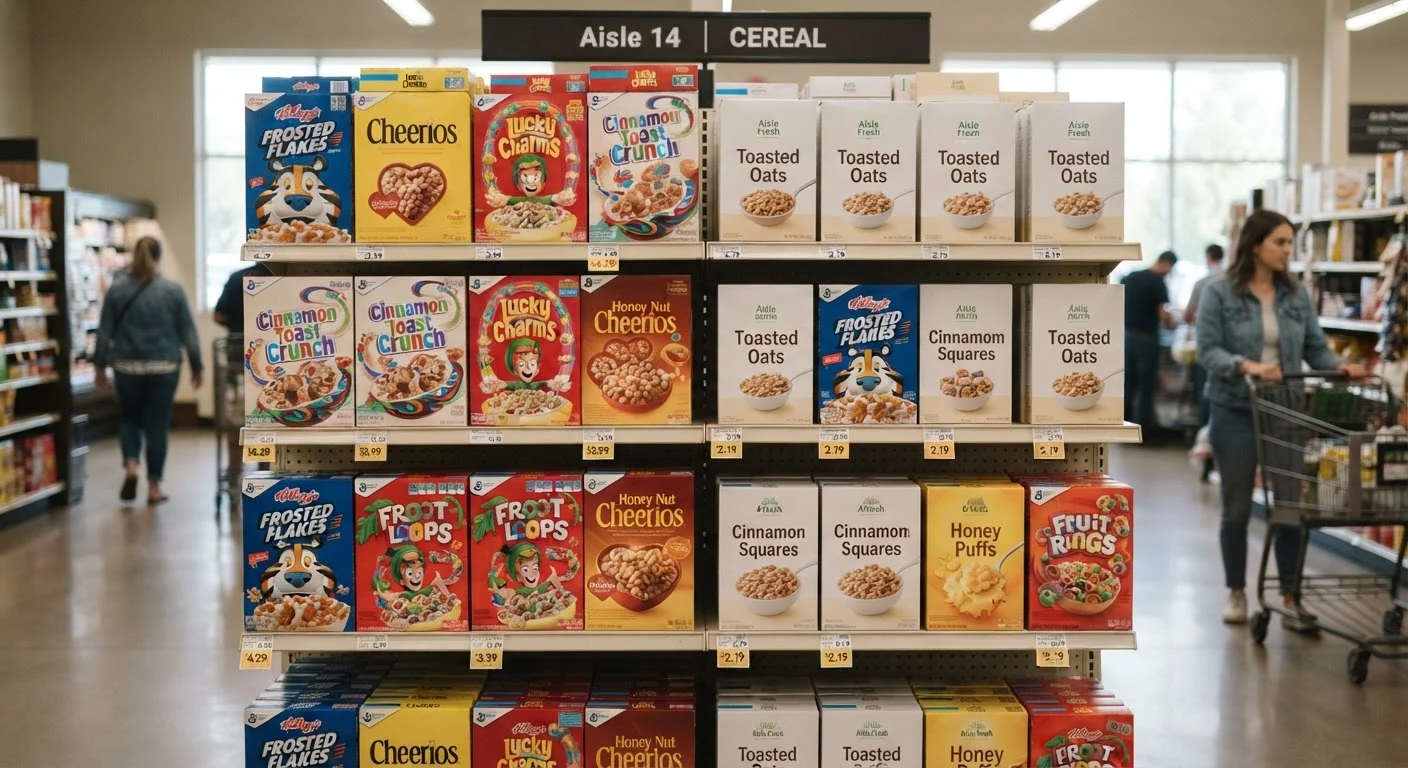
Many loyalty programs push members toward house-brand or private-label products where margins — and therefore reward incentives — are highest. This doesn't mean store-brand products are inferior; in many categories they match name-brand quality. But it's worth separating the quality question from the loyalty nudge. For a grounded comparison, see when branded vs. generic actually matters.
A Framework for Evaluating Any Program
Before joining or continuing with a loyalty program, run through these questions:
- What is the realistic redemption rate? Divide the dollar value of rewards you've actually redeemed over the past year by what you spent to earn them. If that number is below 1%, the program may not be working in your favor.
- Is this program changing what you buy? If you're choosing products or stores primarily to earn points — rather than because they represent genuine value — the program is shaping your behavior more than rewarding it.
- Do your points expire or devalue frequently? Programs that periodically reduce the worth of existing points shift value from member to company without announcement.
This kind of analytical framing applies beyond loyalty programs. Evaluating convenience versus cost uses a similar lens to assess whether time-saving purchases actually save money.
~$360B
Estimated unredeemed loyalty points globally
Bond Brand Loyalty research has consistently found that a substantial share of earned loyalty currency goes unredeemed, representing value that stays with the program operator rather than the member.
77%
Consumers enrolled in at least one loyalty program
According to research cited by the Colloquy Loyalty Census, the vast majority of American consumers belong to at least one loyalty program, though active engagement rates are considerably lower.
It's also worth noting that brand loyalty itself is shifting. Research on changing consumer attitudes is explored in depth in whether brand loyalty is actually declining in America. As shoppers become more price-sensitive and less anchored to specific brands, the calculus around loyalty programs becomes increasingly individual.