
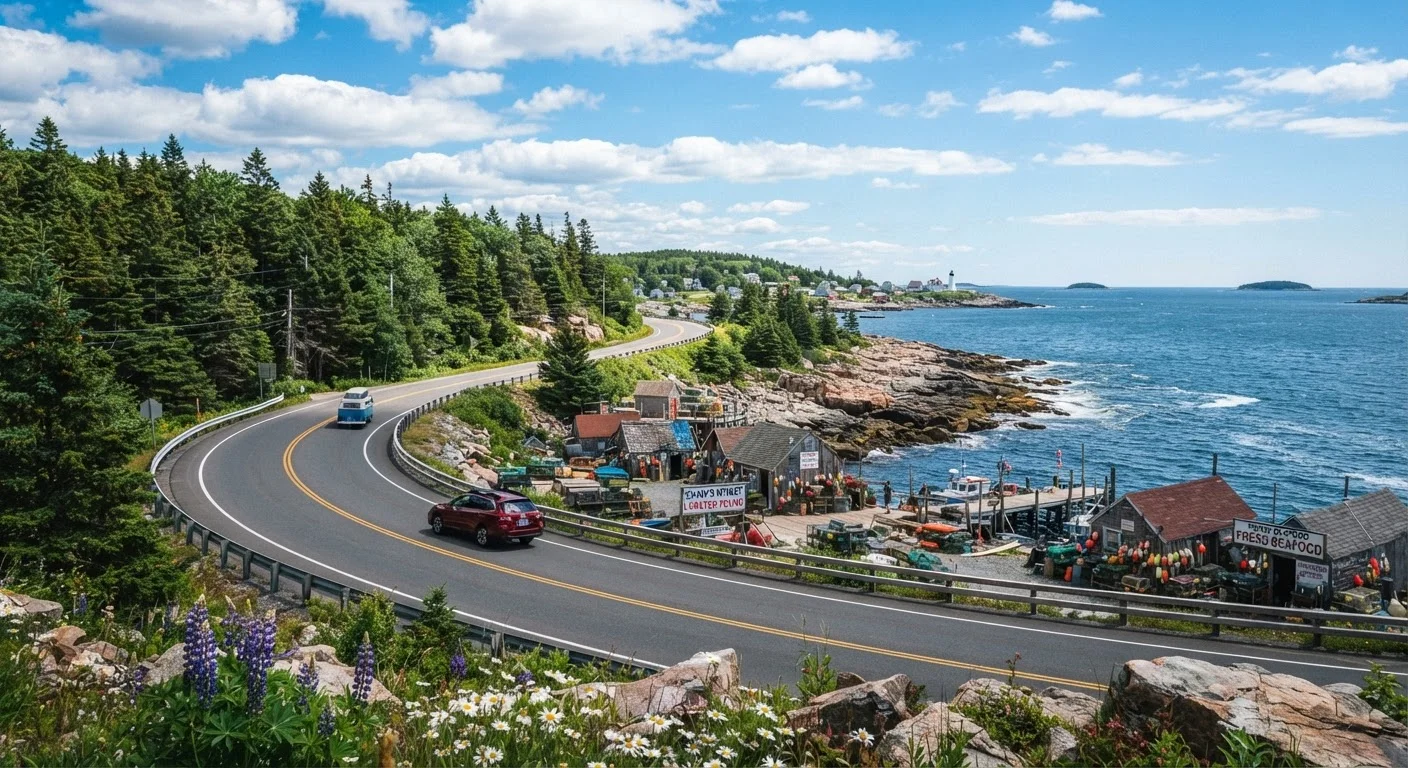
Route 1 Through Coastal Maine: The Big Picture
Maine's Route 1 is one of the oldest and most storied highways in the country, stretching from Fort Kent at the Canadian border all the way down to Fort Fairfield — but it's the coastal stretch, roughly from Kittery in the south to Calais in the northeast, that draws most visitors. Running parallel to the Atlantic, this corridor connects lighthouses, lobster pounds, fishing villages, and arts communities into one long, glorious road trip.
The drive isn't fast — towns are close together, traffic slows in summer, and you'll want to stop constantly — and that's exactly the point. Think of Route 1 as a string of pearls: each town a distinct gem with its own personality.
Southern Gateway: Kittery to Kennebunk
Kittery is the first town you hit crossing from New Hampshire, and it punches above its weight. Beyond the outlet shopping strips, Old Town Kittery is a quiet, walkable neighborhood with Fort McClary State Historic Site and a genuinely excellent dining scene along the waterfront.
York follows, and it's actually four villages in one: York Village (colonial-era architecture and historic jail), York Harbor (upscale inn country), York Beach (classic seaside fun with arcades and fried seafood), and Cape Neddick, home of the iconic Nubble Lighthouse — one of the most photographed spots in New England.
Ogunquit draws artists and beach lovers alike. Marginal Way, a mile-long coastal footpath above the ocean, is free and spectacular. The beach itself ranks among the finest on the Eastern Seaboard, and the Ogunquit Museum of American Art is a serious cultural stop.
Wells offers quieter beaches and the Rachel Carson National Wildlife Refuge — a 9,000-acre saltmarsh system that rewards birdwatchers and hikers. Kennebunkport, just inland from Route 1, is worth the detour for its shingled sea captains' mansions, Dock Square shops, and whale-watching boats departing from Cape Porpoise.
Mid-Coast Marvel: Portland to Rockland
Portland is Maine's largest city and arguably its most dynamic. The Old Port neighborhood delivers cobblestone streets, a James Beard–recognized restaurant scene, craft breweries, and easy access to Casco Bay island ferries. The Portland Museum of Art anchors a walkable arts district. Don't skip the Portland Head Light in adjacent Cape Elizabeth.
Brunswick blends college-town energy (Bowdoin College is here) with outdoor access — it sits at the gateway to the Harpswell Peninsula, a network of peninsulas and islands ideal for kayaking. Bath is the self-proclaimed City of Ships, home to Bath Iron Works and the Maine Maritime Museum, which chronicles centuries of boatbuilding heritage.
Damariscotta is small but mighty: a two-block downtown lined with independent bookshops, oyster bars (the local Pemaquid oysters are celebrated nationally), and galleries. Nearby Pemaquid Point Lighthouse sits atop dramatic geological formations.
Rockland anchors the western edge of the Penobscot Bay region. The Farnsworth Art Museum holds a world-class collection of American art, including a significant Andrew Wyeth wing. Rockland's harbor is a working fishing port and the departure hub for classic windjammer cruises.
Downeast: Camden to Bar Harbor
Camden is often called the jewel of the Maine coast — a tidy harbor backed by Camden Hills State Park, where a short hike to the summit of Mount Battie delivers panoramic views of Penobscot Bay. The town hosts schooner races each September and has a well-developed lodging scene for a town of its size.
Belfast has emerged as one of Maine's most creative small cities, with a revitalized waterfront, independent restaurants, and a thriving arts community that gives it a Brooklyn-meets-fishing-village vibe.
Ellsworth serves as the practical gateway to Bar Harbor and Acadia National Park. Stock up on supplies here before heading onto Mount Desert Island. Bar Harbor itself is lively in summer — restaurants, whale watches, and kayak tours fill the harbor — but the real draw is Acadia National Park, with its carriage roads, summit drives, and tide pools. Cadillac Mountain, at 1,528 feet, is the first place in the continental U.S. to see sunrise during certain months of the year.
Verify current entry fees, reservation requirements, and seasonal road access for Acadia National Park directly with the National Park Service before your visit, as these details can change.