
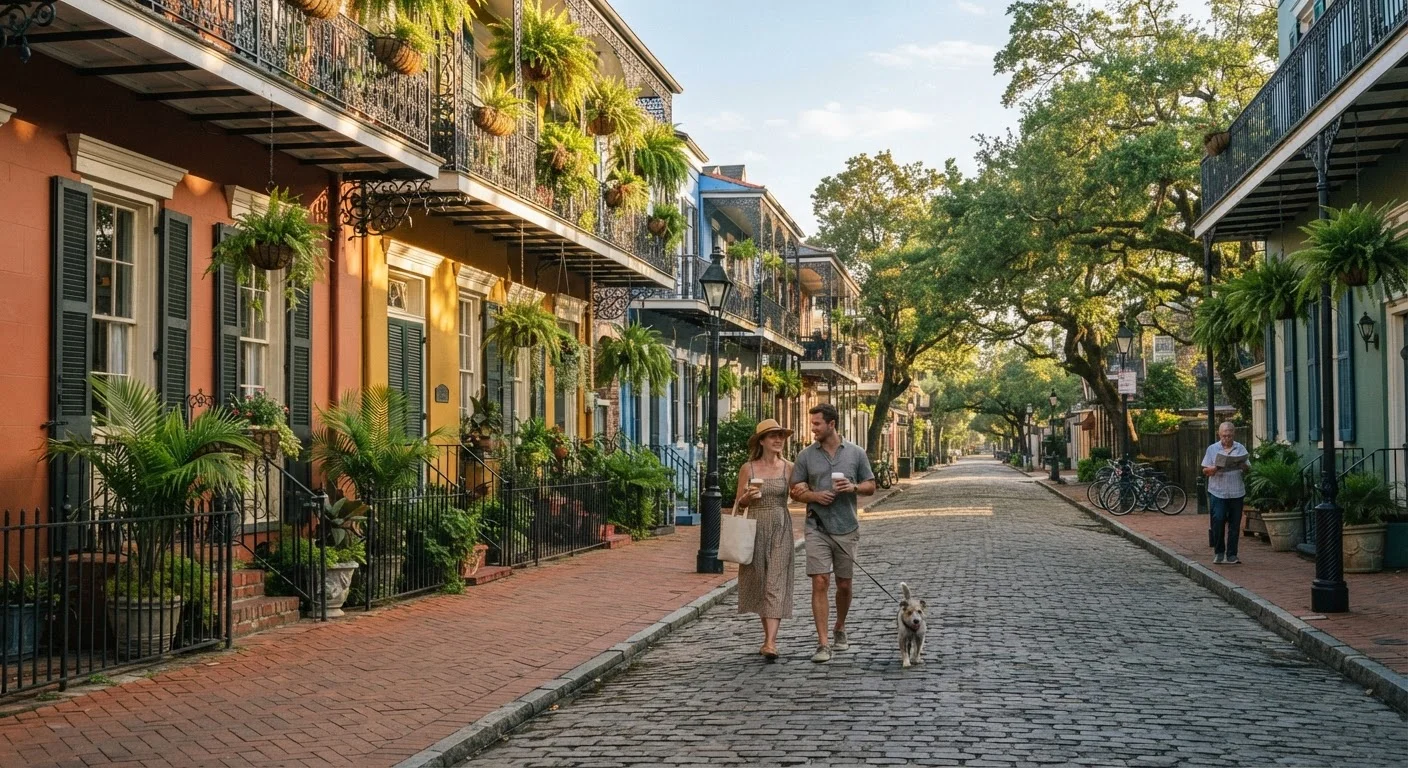
Tremé: The Heartbeat of New Orleans Music Culture
If you want to understand where New Orleans music really comes from, spend a morning in Tremé. Widely regarded as the oldest African American neighborhood in the United States, Tremé sits just north of the French Quarter but feels like an entirely different world. Here, brass bands don't perform for tips on a tourist strip — they march through the streets in living, breathing community tradition.
The neighborhood is home to Congo Square, now part of Louis Armstrong Park, where enslaved Africans gathered on Sundays to maintain musical and cultural traditions that would eventually give rise to jazz. Walking through the park is a genuinely moving experience, and it's free to enter. The Backstreet Cultural Museum on St. Claude Avenue documents the neighborhood's tradition of Mardi Gras Indians and second-line parades with remarkable depth.
About Visiting Historic Cemeteries
New Orleans' above-ground cemeteries are genuinely significant historic sites, not simply tourist attractions. Some require guided tours for entry; others allow self-guided visits. Check access rules for each cemetery before you go, and always treat these spaces with appropriate respect for the families and communities they serve.
Frenchmen Street, which borders both the Marigny and Tremé, is a short walk away and is the go-to spot for live music on any night of the week — a far more local experience than Bourbon Street's bar scene.
The Garden District: Architecture You Won't Forget
Catch the St. Charles Avenue streetcar from Canal Street and ride it uptown — the view alone is worth the fare. The Garden District unfolds around you as one of the most beautifully preserved examples of antebellum residential architecture in the country. Greek Revival and Italianate mansions sit behind iron fences and beneath ancient live oaks draped in Spanish moss.
Magazine Street runs parallel to St. Charles and offers a very different pace: independent bookstores, neighborhood restaurants, vintage clothing shops, and coffee spots that see far more locals than tour groups. Lafayette Cemetery No. 1 at the corner of Washington Avenue is one of the city's famous above-ground cemeteries and is open for self-guided visits. It's a quiet, contemplative place that illuminates New Orleans' French and Spanish colonial burial traditions.
Bywater and Mid-City: Where the City Lives Day to Day
Bywater, downriver from the French Quarter, has become the address of choice for artists, musicians, and independent restaurateurs. Its streets are lined with brightly painted shotgun houses — the narrow, single-story dwellings that define New Orleans' residential architecture — and its food scene punches well above its low-key appearance. The neighborhood rewards slow walking and unplanned discovery.
Mid-City, meanwhile, is anchored by City Park, one of the largest urban parks in the United States at over 1,300 acres. The New Orleans Museum of Art sits at its edge, and the park itself contains sculpture gardens, ancient live oaks, and the beloved Storyland playground. Bayou St. John winds along the neighborhood's edge, drawing residents for kayaking, picnics, and Sunday afternoon gatherings that feel refreshingly unhurried.
70+
Officially recognized neighborhoods in Orleans Parish
According to the City of New Orleans, the metro area contains more than 70 distinct neighborhoods, each with its own character and history.
1,300+ acres
Size of City Park in Mid-City
City Park is among the largest urban parks in the United States, larger than Central Park in New York City, according to City Park New Orleans.
1718
Year New Orleans was founded
Founded by French colonists, New Orleans has over 300 years of layered cultural, architectural, and culinary history embedded in its neighborhoods.
Together, these neighborhoods illustrate something important: New Orleans isn't a city designed primarily for visitors. It's a living, deeply rooted place where culture, cuisine, and community have developed over centuries. The best way to experience it is to move slowly, follow the music, and eat wherever the line looks longest.