The Basic Idea: Paying for the Risk You Actually Represent
Traditional auto insurance pricing relies heavily on statistical proxies — your age, credit score, location, and vehicle type — to estimate how risky you are as a driver. These factors carry real predictive weight, but they describe a category of driver, not necessarily you as an individual. Usage-based insurance shifts part of that calculation toward your actual behavior.
There are two main program structures:
- Behavior-based UBI — monitors how you drive (smoothness, speed, time of day) and rewards safe habits with a discount at renewal.
- Pay-per-mile — charges a low fixed base rate plus a small fee for every mile driven, making total cost directly proportional to how much you use your vehicle.
Both approaches depend on telematics technology. For a grounding in how standard auto insurance works before layering on UBI concepts, see our plain-language car insurance guide.
What Data Telematics Programs Collect
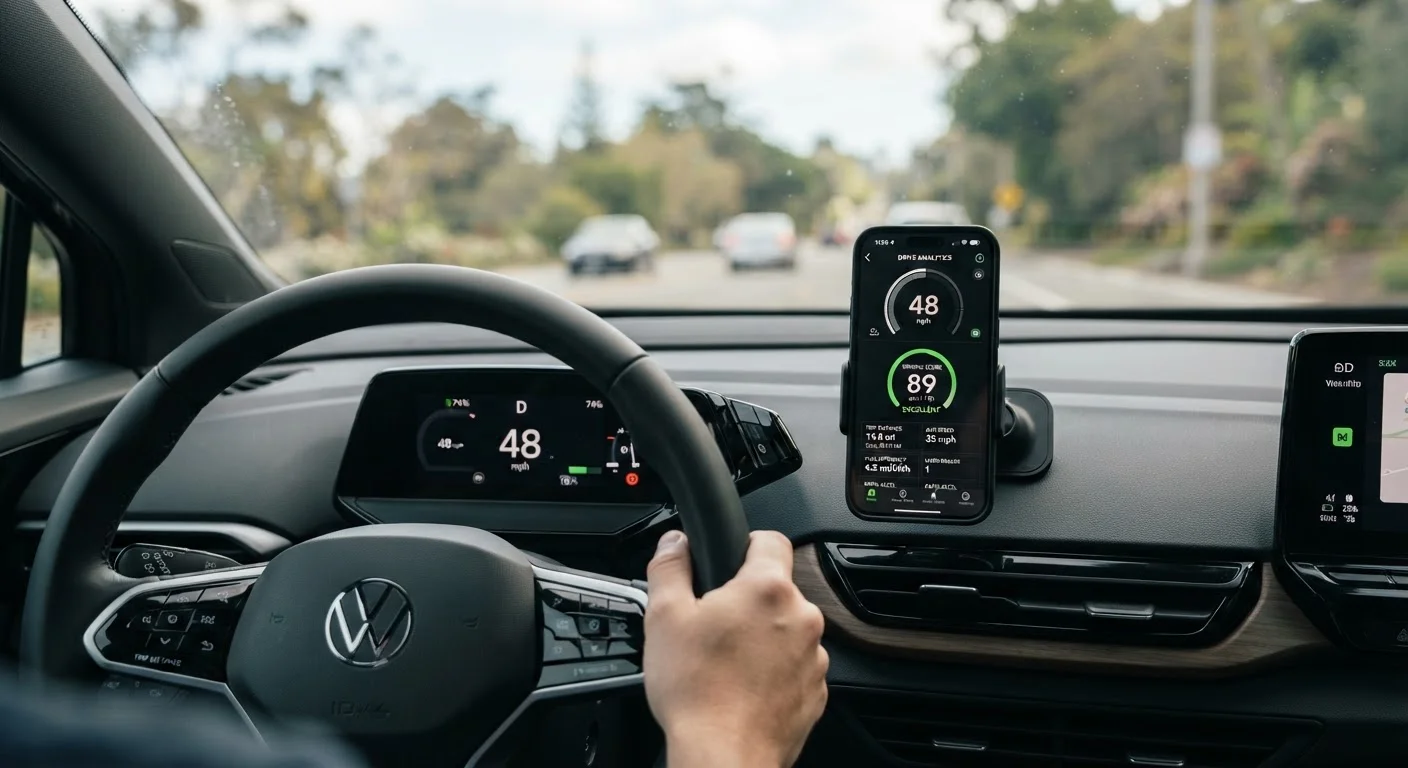
When you enroll in a UBI program, your insurer begins collecting driving data through a plug-in OBD-II device or a smartphone app. The specific metrics vary by insurer, but most programs track some combination of the following:
- Hard braking and rapid acceleration — sudden stops and quick starts are associated with higher crash risk.
- Cornering force — sharp turns at speed suggest aggressive driving habits.
- Speeding — how often and by how much you exceed posted speed limits.
- Time of day — driving between midnight and 4 a.m. correlates with higher accident rates industry-wide.
- Total miles driven — more miles means more exposure to potential accidents.
- Phone interaction — some apps flag apparent phone use while in motion.
Scoring Models Vary by Insurer
Scoring models differ significantly across insurers. A behavior that one program treats as minor may carry heavier weight with another. If you're comparing programs, ask each insurer to explain specifically how scores are calculated and what thresholds trigger discounts or surcharges.
Scoring models differ significantly across insurers. A behavior that one program treats as minor may carry heavier weight with another. If you're comparing programs, ask each insurer to explain specifically how scores are calculated and what thresholds trigger discounts or surcharges.
How Pay-Per-Mile Programs Work in Practice
Pay-per-mile insurance uses a straightforward two-part pricing structure. You pay a monthly base rate — which covers the fixed cost of having insurance — plus a per-mile charge that accumulates as you drive. The per-mile rate is set at enrollment and typically stays constant throughout the policy term.
For example, a driver with a $30 base rate and a 5-cent-per-mile charge who drives 400 miles in a month would pay $50 for that month. A driver covering 1,500 miles pays $105. The math makes the savings clearest for low-mileage drivers.
Mileage is usually tracked through a plug-in device rather than GPS-based routing, meaning the insurer captures distance but not necessarily precise location data — though policies vary. Understanding how mileage interacts with your broader premium is worth exploring alongside the other factors that shape your car insurance rate.
~30%
Potential discount range for safe UBI participants
Industry estimates suggest behavior-based UBI programs can offer discounts generally ranging from modest amounts up to around 30%, depending on the insurer and driving score achieved.
~45%
U.S. households with at least one low-mileage vehicle
Data from the U.S. Department of Transportation indicates a substantial portion of American households own a vehicle driven well below the national average annual mileage, making pay-per-mile potentially viable for many drivers.
13,500 miles
Average annual miles driven per U.S. driver
The Federal Highway Administration has reported the average American driver logs roughly 13,500 miles per year — a benchmark used to compare whether a per-mile program would cost more or less than a standard policy.
Who These Programs Suit — and Who They Don't
Usage-based insurance isn't a universally better deal. It's a trade-off that works well for some drivers and offers little advantage for others.
Drivers who tend to benefit:
- Low-mileage drivers — retirees, remote workers, people in dense urban areas who walk or use transit regularly
- Experienced, smooth drivers who avoid hard braking, late-night driving, and aggressive habits
- Young drivers willing to demonstrate safe behavior, potentially offsetting the age-related premium surcharge
Drivers less likely to benefit:
- Long daily commuters who log high annual mileage regardless of driving quality
- Shift workers or gig-economy drivers who routinely drive late at night or early in the morning
- Drivers uncomfortable sharing behavioral data with their insurer
The data-privacy consideration is genuine. Before enrolling, review the insurer's privacy policy to understand how your driving data is stored, used internally, and whether it can be disclosed to third parties. This is an informed consent question, not just a coverage question.
For context on related coverage decisions that can affect your long-term costs, see coverage choices drivers often regret.