What Actually Happens When You Press the Brake Pedal
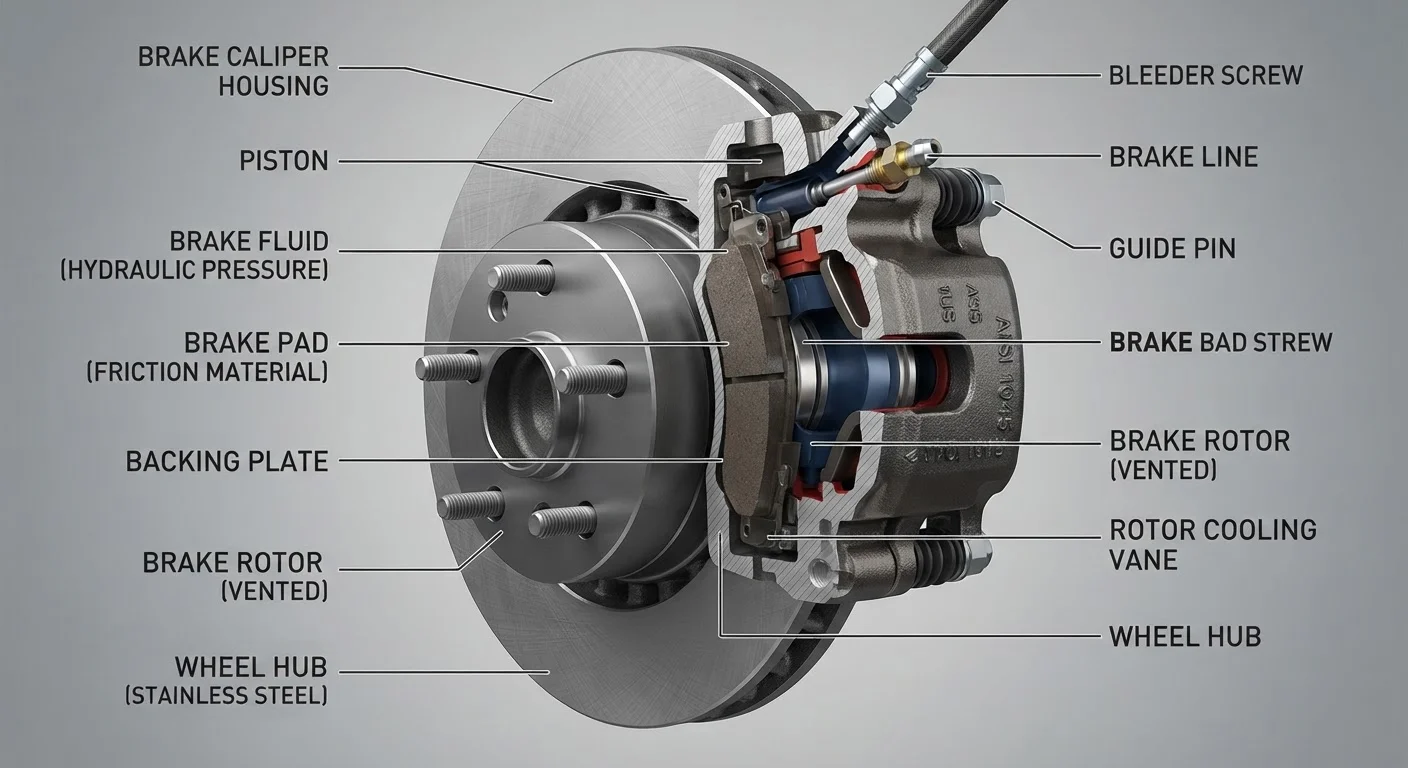
Braking feels instantaneous, but a precisely coordinated chain of events unfolds in milliseconds. When your foot depresses the pedal, it pushes a piston inside the master cylinder — a small reservoir mounted near the firewall. That piston pressurizes the brake fluid, sending hydraulic force through metal lines and rubber hoses to each wheel.
At each wheel, a caliper receives that pressure. The caliper houses one or more pistons that push the brake pads inward, clamping them against the spinning rotor. Friction between the pad material and the rotor surface converts the vehicle's kinetic energy into heat — and that process slows the wheel. The harder you press, the more pressure reaches the caliper, and the more stopping force is applied.
Understanding this sequence matters because each link in the chain can degrade independently. A problem with fluid pressure, a seized caliper piston, worn pad material, or a warped rotor all interrupt the process in different ways — and each produces recognizable symptoms.
Brake Pads: The Wear Component You Replace Most Often
Brake pads are the sacrificial friction material in the system — they are designed to wear down so the more expensive rotor doesn't have to. A typical pad consists of a metal backing plate bonded to a friction compound. That compound may be made from organic materials, semi-metallic blends, or ceramic composites, each with different noise, heat, and longevity characteristics.
As pads wear thin, braking performance doesn't necessarily disappear suddenly — but the warning signs do become louder. Most pads include a small metal wear indicator tab. When the friction material wears to a critical thinness, this tab contacts the rotor and produces a high-pitched squeal. That sound is deliberate: it's a built-in alert that replacement is due.
Schedule Brake Inspections Proactively
You don't have to wait for squealing or vibration to check brake health. Many mechanics will inspect brake pad thickness and rotor condition during a routine oil change or tire rotation at little or no additional cost. Building this into your regular maintenance schedule — outlined in our introduction to car maintenance — keeps small wear issues from becoming expensive emergencies.
If squealing progresses to a deep grinding sound, the pad material has likely worn through entirely, and the metal backing plate is now contacting the rotor directly. That condition damages the rotor rapidly and significantly escalates repair costs. Car sounds and what they signal offers additional context on brake noise.
Rotors: The Discs Your Brakes Clamp Against
The rotor — also called a brake disc — is the large flat metal ring you can often see through the spokes of a wheel. It is bolted to the wheel hub and spins at the same speed as the wheel. When the caliper clamps the pads against it, friction on both faces of the rotor creates stopping force.
Rotors wear in two ways. First, the friction surfaces gradually thin over many braking cycles — every rotor has a minimum thickness specification stamped or cast into it, and once it drops below that threshold, it must be replaced. Second, heat stress from repeated hard braking can cause rotors to warp — developing a slight uneven shape. A warped rotor causes the brake pedal to pulsate or vibrate under your foot, because the caliper is alternately clamping against high and low spots in the disc surface.
A mechanic can sometimes resurface (machine) a rotor back to a flat, usable surface, but only if adequate material thickness remains. Many shops recommend replacing rotors alongside pads to ensure consistent, predictable brake performance.
25,000–70,000 mi
Typical brake pad lifespan range
Lifespan varies significantly by driving style, vehicle weight, and pad compound; city stop-and-go driving falls toward the lower end.
~20%
Stopping distance increase with worn brakes
Research by road safety organizations has found that significantly worn brake components can meaningfully extend stopping distances, especially in emergency situations.
3 core parts
Components that stop your car
Pads, rotors, and calipers form the primary friction assembly — all three must be in working condition for optimal stopping performance.
Calipers: The Hydraulic Clamp at the Heart of the System
The caliper is the housing that translates hydraulic pressure into mechanical clamping force. Floating calipers — the most common type on passenger vehicles — have one or two pistons on one side and slide on guide pins so both pads contact the rotor evenly. Fixed calipers, found on performance vehicles, have pistons on both sides and generally offer more consistent, higher-performance braking.
Calipers fail in two main ways. A seized piston won't retract properly after braking, keeping the pad pressed against the rotor continuously — causing brake drag, heat buildup, and accelerated wear. Conversely, a leaking caliper seal allows brake fluid to escape, reducing hydraulic pressure and braking effectiveness. Both conditions are serious and require professional repair.
A caliper problem often reveals itself as the car pulling to one side during braking — when one wheel slows faster than the other due to uneven clamping force. If you notice pulling, vibration, or a burning smell after driving, have the system inspected promptly. Dashboard warning lights can flag brake system alerts before symptoms become severe.
This article is for general informational purposes only. Brake systems are safety-critical. Always consult a qualified mechanic before performing or deferring any brake-related maintenance or repair.