Why Filters Matter More Than Most Drivers Realize
Your vehicle relies on clean air, clean fuel, and clean air inside the cabin to run well and keep passengers comfortable. Filters make all three possible. Yet because they work invisibly — tucked inside housings, ducts, and fuel lines — many drivers don't think about them until something goes wrong. Understanding what each filter does, and when it needs attention, turns you from a reactive repair customer into an informed vehicle owner.
It's also worth noting that filters are among the more affordable maintenance items you'll encounter. Catching a clogged filter early typically costs far less than repairing the damage a neglected one can cause over time. For a broader look at routine upkeep, see our guide on the fluids under your hood and what each one does.
The Engine Air Filter: Your Engine's First Line of Defense
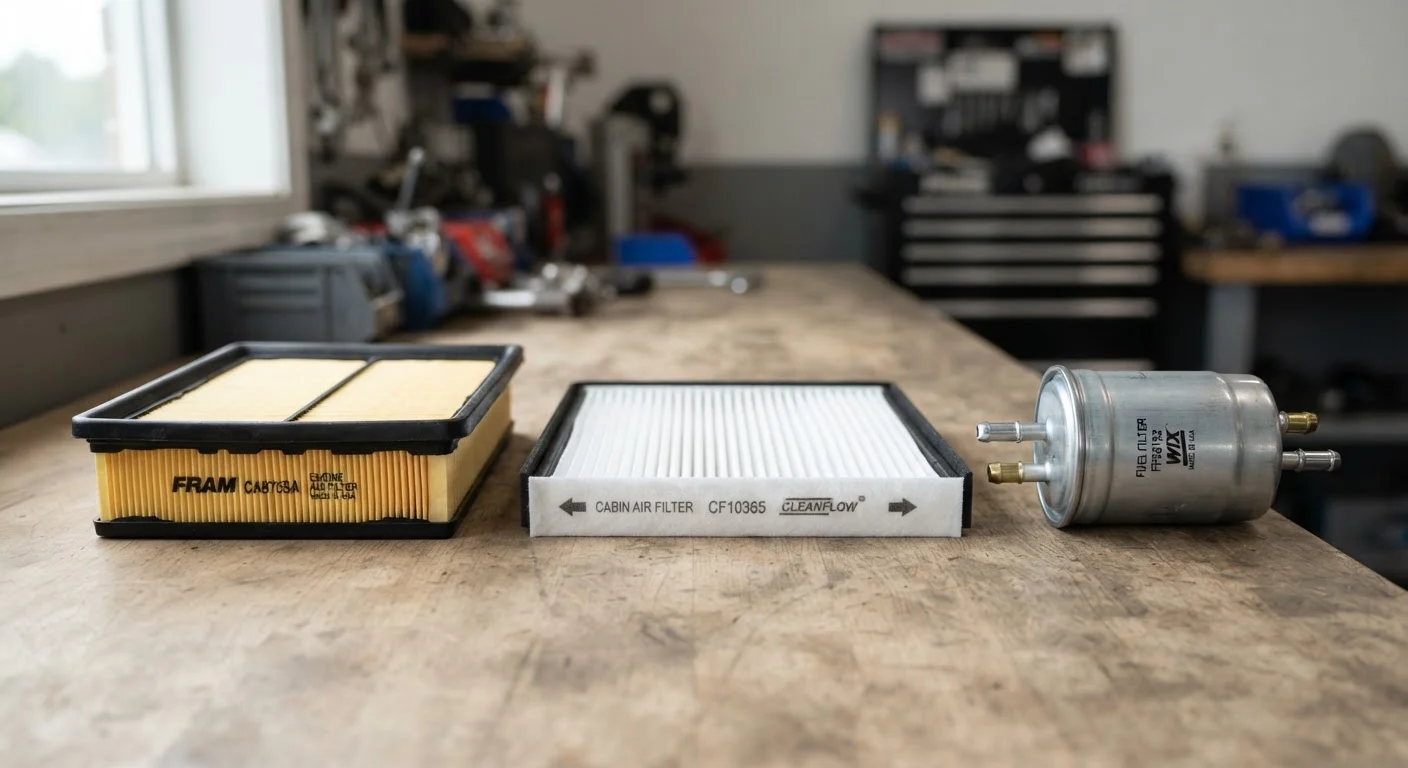
The engine air filter sits between the outside air intake and your engine. Its job is to trap dust, pollen, dirt, and debris before that air enters the combustion chamber. Engines need a precise mixture of air and fuel to run; contaminated air — or restricted airflow from a clogged filter — can hurt fuel efficiency, reduce power output, and over time, accelerate engine wear.
Most manufacturers recommend inspecting the engine air filter roughly every 15,000 to 30,000 miles, though this varies by vehicle and driving environment. If you regularly drive on unpaved roads, through construction zones, or in areas with heavy particulate matter in the air, your filter may need attention sooner. A visual inspection is quick: a clean filter is typically white or off-white; a heavily soiled one looks gray or dark brown and may visibly clog its pleated media.
Check Your Owner's Manual First
Manufacturer recommendations for filter replacement vary significantly between makes and models. Before buying a replacement filter or scheduling service, check your owner's manual for the exact interval and filter specification. Driving in dusty or high-pollution environments typically warrants more frequent inspections than the standard guideline suggests.
The Cabin Air Filter: The Air You Actually Breathe
The cabin air filter — sometimes called a pollen filter or HVAC filter — is entirely separate from the engine air filter and serves a completely different purpose. It cleans the air flowing through your vehicle's heating, ventilation, and air conditioning (HVAC) system before it enters the passenger compartment. It captures pollen, dust, mold spores, and other fine particles.
A clogged cabin filter doesn't harm your engine, but it does reduce HVAC airflow, can cause musty odors inside the car, and may worsen air quality for passengers — a notable concern for anyone with allergies or respiratory sensitivities. Most cabin filters are rated for roughly 15,000 to 25,000 miles, or about once per year for average drivers. The filter is usually located behind the glove box or under the dashboard, and in many vehicles it's accessible enough for a straightforward DIY replacement.
The Fuel Filter: Keeping Your Fuel System Clean
The fuel filter screens contaminants — rust particles, sediment, and other debris — out of the gasoline or diesel before it reaches your fuel injectors or carburetor. Fuel injectors operate under high pressure and have very small openings; even fine particulate contamination can disrupt their spray pattern or cause premature wear.
Service intervals for fuel filters vary widely by vehicle design and fuel system type. On many older vehicles with external inline fuel filters, replacement every 30,000 to 40,000 miles was a common guideline. Many modern vehicles, however, have the fuel filter integrated inside the fuel tank as part of the fuel pump module — these are often designed to last the life of the pump and are not a routine service item. Your owner's manual is the definitive source for your specific vehicle's recommendation.
Symptoms of a restricted fuel filter can include hard starting, hesitation under acceleration, or rough idling — though these symptoms overlap with many other issues. A qualified mechanic should diagnose fuel system concerns before parts are replaced.
| Engine Air Filter | Cabin Air Filter | Fuel Filter | |
|---|---|---|---|
| Primary purpose | Cleans air entering the engine | Cleans air entering the cabin | Cleans fuel before combustion |
| What it protects | Engine internals and combustion | Passengers and HVAC system | Fuel injectors and fuel pump |
| Typical service interval | 15,000–30,000 miles | 15,000–25,000 miles | Varies; often 30,000–40,000 miles (older vehicles) |
| Location in vehicle | Under hood, near intake | Behind glove box or dashboard | Inline or inside fuel tank |
| Signs it needs attention | Reduced power, lower mpg | Weak airflow, musty odor | Hard starting, hesitation |
| DIY-friendly? | Often yes | Often yes | Depends on vehicle design |
Putting It All Together: Maintenance Timing at a Glance
The key takeaway is that these three filters are not interchangeable and do not share service schedules. Missing one doesn't mean the others are due. A practical approach is to note your current mileage at each oil change — which you can read more about in our article on oil change intervals and what modern engines actually need — and use that as a regular checkpoint to assess where each filter stands relative to its own interval.
Always defer to your owner's manual for the intervals specific to your make, model, and year. Driving conditions, climate, and fuel quality all influence how quickly filters degrade. When in doubt, ask your mechanic to inspect all three at your next service visit — a quick visual check costs nothing and can tell you a lot.
This article is for general informational purposes only and is not a substitute for guidance from a qualified mechanic. Always consult your vehicle's owner's manual and a licensed automotive professional for maintenance decisions specific to your vehicle.