Why Car Batteries Die Sooner Than They Should
A car battery is a consumable part — it degrades with every charge and discharge cycle. But the rate at which it ages depends heavily on how the vehicle is driven, where it lives, and how well the electrical system is maintained. Most drivers don't think about the battery until it fails on a cold morning, but the conditions that caused that failure often built up over months or years.
Understanding what accelerates battery wear puts you in a position to slow it down. The most common culprits are temperature extremes, short or infrequent trips, parasitic electrical drains, and neglected terminals. Each one compounds the others. A battery weakened by summer heat is far more likely to fail under the strain of a January cold snap.
As part of broader vehicle upkeep — especially for aging vehicles — battery care is a priority for high-mileage cars, where the charging system may already be working harder to compensate for worn components.
The Main Practices That Protect Battery Life
Most battery damage is preventable with consistent, low-effort habits. The practices below address the root causes of early battery failure rather than just reacting to symptoms.
Have the battery and charging system tested at least once a year
A battery can appear functional while operating well below its rated capacity. An annual load test — available at most auto parts retailers and service shops — reveals actual reserve capacity before a failure occurs. The alternator and voltage regulator should be checked at the same time, since a faulty charging system will wear out a new battery quickly.
Clean corroded battery terminals regularly
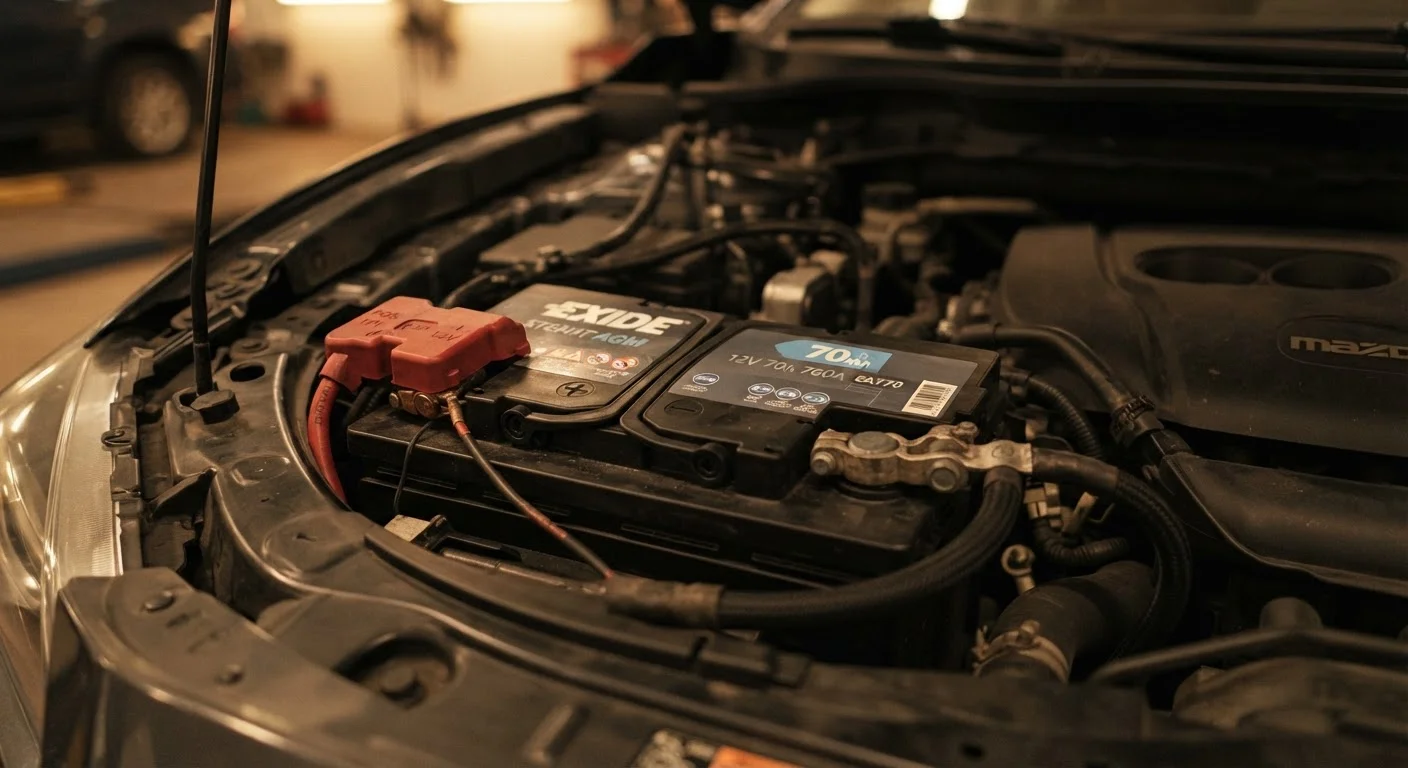
Corrosion — the white or blue-green buildup around battery terminals — increases electrical resistance, which forces the charging system to work harder and reduces the current available to start the engine. Left unaddressed, severe corrosion can cause voltage drops that trigger false warning lights and damage sensitive electronics.
Minimize deep discharges by avoiding prolonged accessory use with the engine off
Conventional lead-acid batteries — the type found in most gasoline-powered vehicles — are not designed for repeated deep discharges. Each full discharge degrades the internal plates, permanently reducing capacity. Even a single overnight drain can shorten battery life by months.
Take longer drives or use a battery maintainer if the vehicle sits unused for extended periods
Batteries self-discharge slowly over time. A vehicle parked for several weeks without being driven — especially in cold weather — can discharge to a level that causes sulfation, a hardening of lead sulfate crystals on the internal plates that permanently reduces capacity.
Park in a garage or shaded area when temperatures are extreme
Because heat is the primary accelerant of battery degradation, reducing thermal exposure during the hottest parts of the day directly extends service life. Even a modest reduction in underhood temperature over years of summer parking can make a measurable difference.
Quick Actions You Can Take Today
You don't need special tools or a mechanic's background to start protecting your battery right now. These steps take minutes and can meaningfully extend your battery's useful life.
How Heat, Cold, and Driving Patterns Add Up
Temperature is the single biggest environmental factor affecting battery health. Heat accelerates the chemical reactions inside the battery, speeding up internal corrosion and causing fluid (electrolyte) to evaporate in non-sealed batteries. According to research cited by battery manufacturers and automotive engineers, a battery operating continuously at high temperatures can lose years of service life compared to one kept in moderate conditions.
Cold, by contrast, temporarily reduces the battery's ability to deliver current — which is why cold mornings expose an already-weakened battery. The damage itself usually happened during the preceding summer. Seasonal vehicle preparation that includes a battery inspection before summer and before winter gives you the best chance of catching a failing battery before it strands you.
Short trips are a quieter threat. Every engine start draws a significant burst of current. The alternator — the device that recharges the battery while the engine runs — needs roughly 15 to 30 minutes of driving to restore what a single start consumed. Drivers who take frequent trips under 10 minutes repeatedly pull the battery down without fully recharging it, gradually reducing its capacity.
Leaving accessories running with the engine off — interior lights, phone chargers, or even a poorly fitted aftermarket stereo — creates a parasitic drain that can fully discharge a battery overnight. A full, deep discharge is one of the most damaging events a conventional lead-acid battery can experience. Each deep discharge permanently reduces the battery's ability to hold a full charge. Routine checks that seem minor, like confirming all lights are off before leaving the car, belong in the same category as oil changes — small habits that prevent costly failures.