Why First-Time Buyers Get Caught Off Guard
Buying your first car involves more moving parts than most people anticipate. The process blends financial decisions, legal documents, and high-pressure timing — often all in a single afternoon. It's not that first-time buyers aren't intelligent; it's that the car-buying process is designed to move quickly, and there's a lot of ground to cover before you sign anything.
Understanding where the common blind spots are — before you step onto a lot — is the most effective preparation you can do. The mistakes below aren't rare exceptions. They're patterns that repeat with regularity across buyers who simply weren't warned in advance.
Total Cost Matters More Than Monthly Payment
Dealers often frame car deals around monthly payment figures rather than the vehicle's total cost. A lower monthly payment stretched over a longer loan term can result in paying thousands more in interest overall. Always ask for the full purchase price, the loan's annual percentage rate (APR), and the total amount you'll repay before agreeing to any financing.
The Mistakes That Cost First-Time Buyers the Most
Each of the oversights below has a compounding effect: they tend to be difficult to reverse once a deal is signed, and many carry financial consequences that extend for years. Working through them methodically is the clearest way to protect yourself.
Focusing only on the sticker price while ignoring total ownership costs.
Why it happens: First-time buyers naturally anchor to the advertised price, which is the most visible number in any listing or advertisement.
Accepting the dealership's financing offer without comparing alternatives.
Why it happens: Dealer financing feels like the path of least resistance — it's offered on the spot and requires minimal paperwork from the buyer's side.
Agreeing to add-ons in the finance office without scrutinizing them.
Why it happens: Add-ons like paint protection, extended warranties, and GAP insurance are presented fluently within a long signing process, making them feel standard rather than optional.
Skipping a pre-purchase inspection on used vehicles.
Why it happens: A car that looks clean and drives well on a test route can still have underlying mechanical issues that aren't apparent without a proper inspection.
Choosing insurance coverage levels without understanding the implications.
Why it happens: Many new buyers select the minimum legally required coverage to keep costs low, not realizing how exposed that leaves them financially after an accident.
Don't Skip Insurance Research Before Buying
Many first-time buyers choose a vehicle and then discover the insurance premiums are far higher than anticipated. Sports cars, luxury trims, and certain SUV models can carry significantly higher rates. Get insurance quotes for any vehicle you're seriously considering before you finalize the purchase — not after. See our guide to shopping for auto insurance for a practical walkthrough.
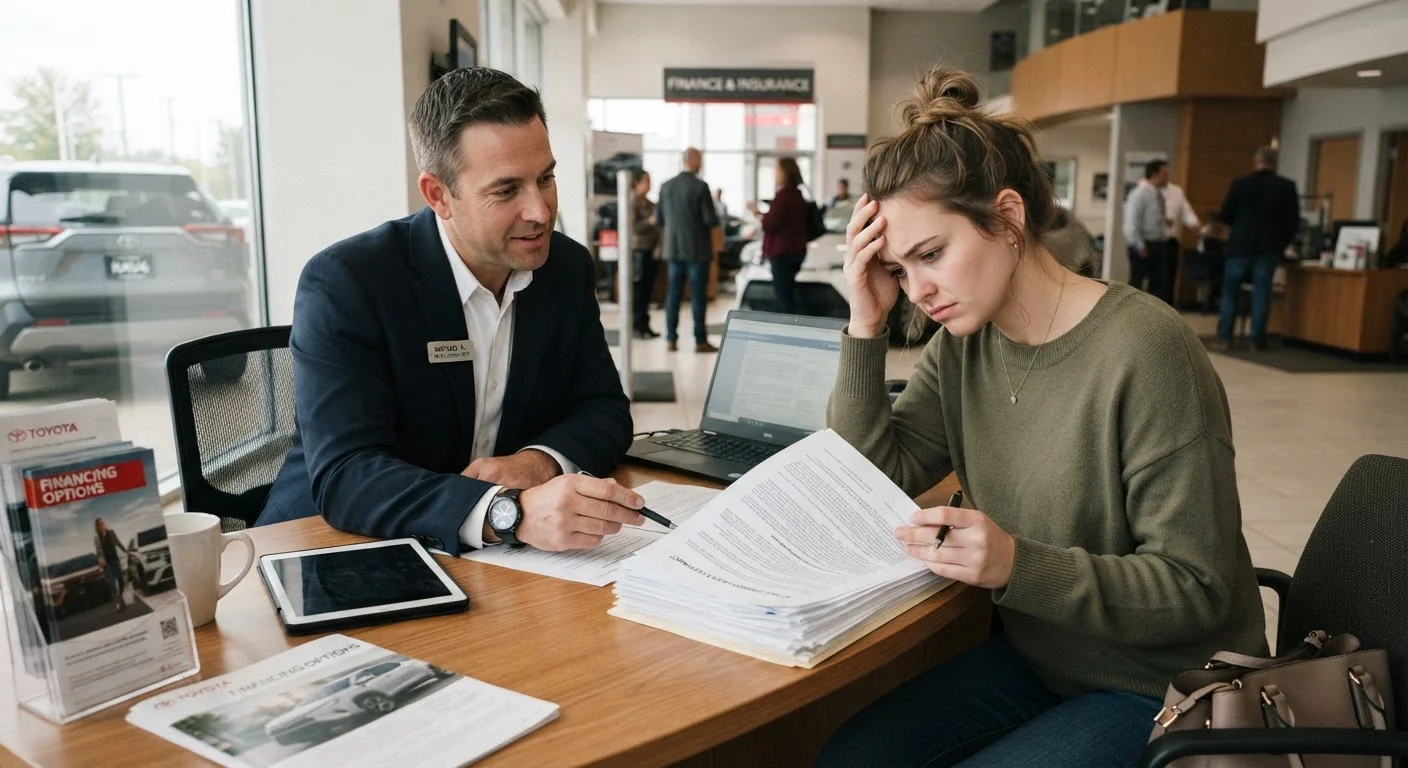
Beyond the financial side, there's a process dimension that catches many buyers off guard. The finance office visit — where final paperwork is completed — is typically the most consequential part of the transaction, yet buyers often arrive there fatigued after hours of negotiating. Going in informed and unhurried makes a measurable difference.
For additional context on what drives major large-purchase decisions among American consumers, the Consumer Trends hub offers broader perspective on how marketplace pressures shape buyer behavior.