How Each Strategy Works
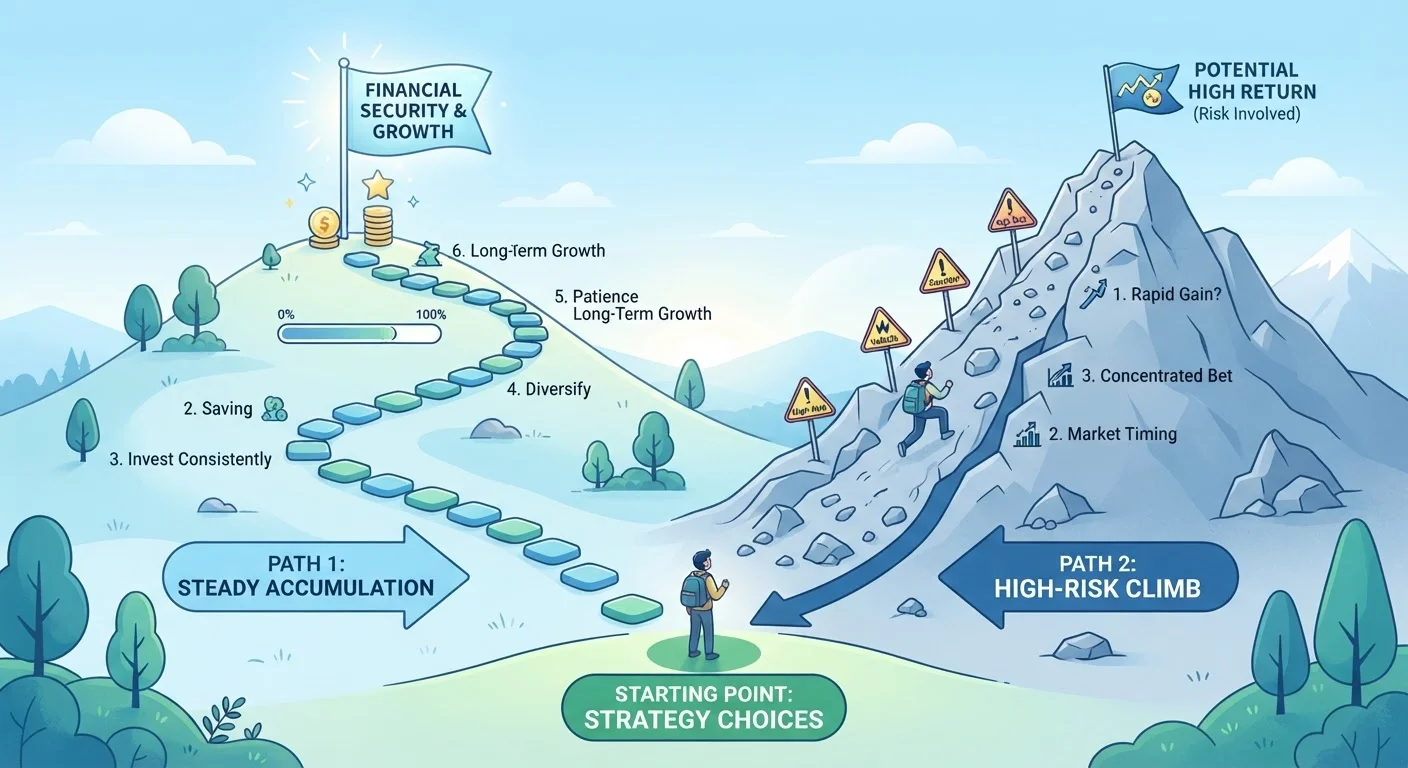
Both the debt snowball and debt avalanche are structured repayment methods that share a common mechanic: you make minimum payments on all your debts, then direct any extra money toward one target debt at a time. The critical difference is how you choose that target.
Debt Snowball: You list your debts from smallest balance to largest, ignoring interest rates. You attack the smallest balance first. Once it's paid off, you roll that payment amount into the next-smallest debt — like a snowball gaining mass as it rolls downhill. Each eliminated account frees up more cash to accelerate the next payoff.
Debt Avalanche: You list your debts from highest annual percentage rate (APR) to lowest. You direct extra payments to the highest-rate debt first. Once that's eliminated, you redirect those funds to the next-highest rate. The math here is straightforward: the account charging you the most interest every month is costing you the most, so eliminating it first halts that bleeding fastest.
If you're also dealing with breaking the minimum-payment cycle on credit cards, either strategy can provide the structured framework you need to make real progress beyond minimums.
The Real Cost Difference: Interest Over Time
The avalanche method's mathematical advantage is real and measurable. Because high-interest debt compounds fastest, every month you carry it costs more than lower-rate debt of the same size. Directing extra dollars there first reduces the principal that interest is calculated on — lowering your total interest bill.
The snowball method, by contrast, may leave high-rate balances untouched longer, allowing them to grow in total cost. The difference can range from modest to substantial depending on how far apart your interest rates are and how large those balances are.
| Criterion | Debt Snowball | Debt Avalanche |
|---|---|---|
| Payoff order | Smallest balance first | Highest interest rate first |
| Total interest paid | Typically higher | Typically lower |
| Speed of first payoff | Often faster | Can take longer initially |
| Motivational structure | High — frequent early wins | Lower — progress feels slower |
| Mathematical efficiency | Less optimal | More optimal |
| Best when rates are similar | Yes — little cost difference | Marginal advantage only |
| Best when rates vary widely | Higher long-term cost | Significant savings potential |
| Number of accounts eliminated | Faster account reduction | Slower account reduction |
That said, the interest savings from the avalanche only materialize if you follow through. Research in behavioral economics consistently shows that motivation and habit formation are critical to financial plan adherence. For some people, the psychological reward of seeing an account reach zero is worth more than the theoretical interest savings.
It's also worth noting that paying down debt has effects beyond the immediate interest savings — including potential credit score changes. However, as our coverage of why debt payoff doesn't always lift your score right away explains, improvements aren't always immediate or linear.
Choosing the Right Method for Your Situation
No single payoff method fits every household. Several factors should shape your decision:
- Your interest rate spread: If one debt carries 24% APR and another carries 6%, the avalanche's savings are significant. If all your rates cluster within a few percentage points of each other, the difference shrinks considerably.
- Your balance distribution: If you have several small balances and one large one, the snowball can quickly eliminate clutter while freeing up payment capacity.
- Your track record with financial commitments: Honest self-assessment matters. If past debt payoff attempts have stalled out, the motivational structure of the snowball may be worth the interest cost.
- Your income stability: If your cash flow is unpredictable, eliminating individual payment obligations quickly (snowball) reduces the number of accounts you must service in a tight month.
Some people use a hybrid approach — prioritizing one high-interest debt first, then switching to the snowball order once that's gone. This isn't a standard method, but it can be a practical compromise. The underlying principle is that both strategies beat making only minimum payments. For context on how different debt types interact with these decisions, see our overview of secured vs. unsecured debt.
If your debt load feels overwhelming, debt consolidation is sometimes explored as an alternative to either method — though it carries its own trade-offs worth examining carefully before committing.
Both Strategies Require One Key Ingredient
Neither the snowball nor the avalanche works without a consistent extra payment above the required minimums. If your budget doesn't currently allow for any extra payment, focus first on freeing up cash flow — through reduced spending or increased income — before choosing a strategy. Even a small extra amount, applied consistently each month, makes a meaningful difference over time.
This article is for general informational and educational purposes only and does not constitute personalized financial or legal advice. Consult a qualified financial professional for guidance specific to your circumstances.