Why These Myths Persist
Credit card balance myths spread because credit scoring is genuinely complex, and issuers rarely volunteer clear explanations. Many cardholders piece together advice from friends, online forums, or half-remembered articles — and well-meaning but inaccurate guidance gets repeated until it feels like fact. The cost of these misconceptions is real: unnecessary interest charges, score damage, and years of debt that could have been avoided.
This article corrects the most common and consequential misunderstandings about carrying a balance. For a broader picture of how debt interacts with credit health, see our comprehensive credit and debt resource.
Myth
Carrying a small balance every month helps build your credit score.
Fact
Carrying a balance does not improve your score — it only generates interest charges with no scoring benefit.
This is perhaps the most widespread credit myth in circulation. The idea seems logical: if you show the card is active by leaving a balance, lenders will see you as a responsible borrower. In reality, credit scoring models reward on-time payments and low utilization, not the presence of a revolving balance. Paying your statement balance in full each month demonstrates responsible use just as effectively — and saves you money on interest. For a detailed breakdown of how utilization is weighted, see how credit utilization actually affects your score.
Myth
As long as you pay the minimum due, you're in good financial shape.
Fact
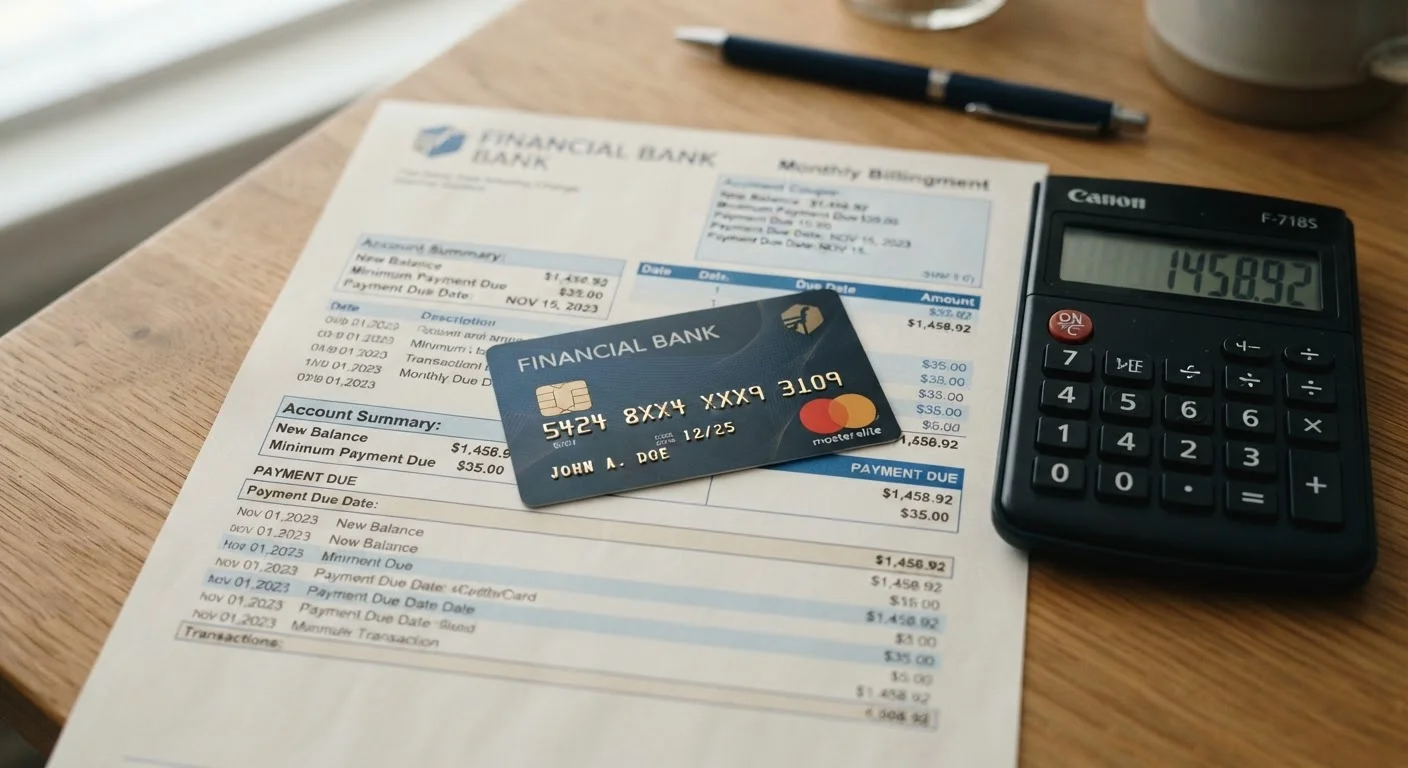
Minimum payments are designed to keep you current on the account, but they extend repayment for years and maximize interest costs.
Credit card minimum payments are typically calculated as a small percentage of your outstanding balance — often 1–3% — or a flat dollar floor, whichever is greater. At average annual percentage rates (APRs), which commonly exceed 20%, paying only the minimum on a $3,000 balance can take a decade or more to retire and cost more in interest than the original purchases. The minimum payment keeps your account from going delinquent, but it is not a path to financial stability. It is the floor of acceptable behavior, not a strategy.
Myth
Your credit utilization is only measured at the end of the billing cycle.
Fact
Issuers report your balance to credit bureaus at various points — often at statement close — so high mid-cycle balances can be captured and affect your score.
Many cardholders assume they can run up a high balance during the month and then pay it off right before the due date without any scoring consequence. While paying in full by the due date does avoid interest, the balance your issuer reports to the credit bureaus is typically the statement closing balance — which may be recorded before you make that payment. If your reported balance is consistently high relative to your credit limit, your utilization ratio will reflect that, potentially suppressing your score even if you technically pay in full each cycle.
Myth
Paying off a credit card balance immediately erases any negative scoring impact.
Fact
Score recovery after paying down a balance can take one to two billing cycles, depending on when the issuer reports updated information.
Credit bureaus don't receive real-time updates. Your issuer typically reports once per month, usually around the statement closing date. If you pay off a large balance today, the bureau may not reflect the updated, lower balance until the next reporting cycle — meaning your score could lag behind your actual financial behavior by several weeks. This is why paying off debt doesn't always lift your score right away. Patience and consistent behavior matter more than any single payment.
Myth
All credit card debt is essentially the same — how you carry it doesn't really matter.
Fact
The type of balance, the APR attached to it, and how it was acquired (purchases vs. cash advances) can all result in dramatically different costs.
Not all balances are treated equally by your card issuer. Cash advances, for example, often carry a higher APR than standard purchases and typically begin accruing interest immediately — there is no grace period. Balance transfers may carry promotional 0% rates that expire and revert to standard (or higher) rates if not paid off in time. Understanding what rate applies to which portion of your balance is essential for managing the real cost of debt. If you're weighing consolidation options, debt consolidation has genuine trade-offs worth understanding before committing.
What This Means for Your Day-to-Day Decisions
Understanding how balances actually work changes the practical choices you make every month. The single most effective habit is straightforward: pay your full statement balance by the due date whenever possible. This eliminates interest charges entirely and signals responsible use to the credit bureaus — without requiring you to carry any debt.
If you're already in a cycle where minimum payments aren't making a dent, that's a separate but solvable problem. Strategies for breaking the minimum-payment cycle can help you prioritize balances and make meaningful progress. And if you've recently paid down a balance and are wondering why your score hasn't moved yet, score changes aren't always immediate — there are structural reasons for the lag.
Missing a Payment Has Lasting Consequences
A payment reported 30 or more days late can remain on your credit report for up to seven years, causing significant score damage that far outlasts the missed payment itself. Late fees and penalty APRs can also trigger immediately. Understanding what really happens when you miss a debt payment can help you prioritize on-time payments even during financially difficult periods.
For habits that protect your credit health over the long run, responsible debt management practices offer a durable framework grounded in how credit systems actually work.
This article is for general informational and educational purposes only and does not constitute personalized financial or credit advice. Consult a qualified financial professional for guidance specific to your situation.