
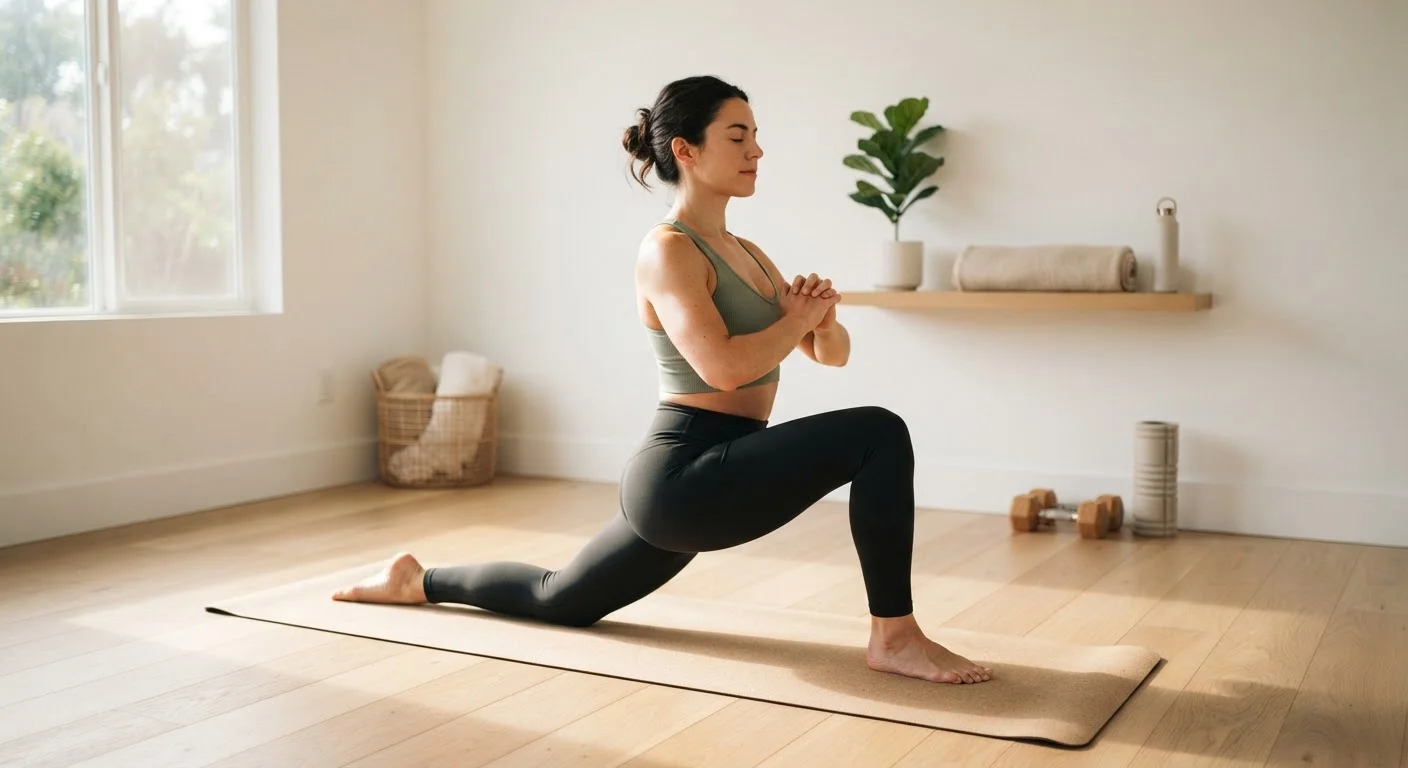
Mobility vs. Flexibility: What's the Difference?
These two terms get used interchangeably, but they describe different things. Flexibility refers to a muscle's capacity to lengthen — the kind measured when someone holds a seated toe-touch. Mobility, by contrast, is the ability to actively move a joint through its full range of motion with control.
Think of it this way: a person might be able to passively pull their leg into a deep hip position with their hands, but struggle to hold it there with only muscle engagement. That gap — between passive and active range — is where mobility training lives.
For everyday movement, mobility matters more. Bending to pick something up, reaching overhead, sitting comfortably, walking on uneven terrain — all of these require joints to move with control, not just length. Developing that capacity is what mobility work is designed to do.
Why Most Fitness Routines Skip Mobility
Strength and cardio produce visible, measurable results relatively quickly. Mobility gains are slower, subtler, and harder to quantify — which makes them easy to deprioritize. Many people treat a brief static stretch at the end of a workout as sufficient, but research suggests that passive stretching alone does little to improve functional joint control.
The consequence accumulates quietly. Restricted hip mobility shifts load onto the lower back during squats and lunges. Limited thoracic (mid-back) rotation reduces shoulder function. Tight ankles compromise knee mechanics during any loaded movement. These restrictions don't just limit performance — they're a leading contributor to overuse injuries and are a primary reason people eventually abandon routines altogether. For more on this pattern, see why fitness routines stall.
Treat mobility like dental hygiene — a few minutes every day beats one long session per week. Frequency is the variable that matters most for lasting joint adaptations.
Joint tissue and the nervous system respond to repeated low-dose input. Infrequent sessions are insufficient to shift deep movement patterns, which is why sporadic 'mobility days' rarely produce sustained results.
If a movement pattern hurts, don't push through it — work just to the edge of discomfort and stop. Sensation of stretch is productive; sharp or joint-centered pain is not.
Forcing range of motion into pain can trigger protective muscular guarding, which narrows range further. Staying at the threshold of comfortable challenge produces better long-term adaptation.
What Mobility Training Actually Involves
Mobility training typically combines three elements: controlled articular rotations (CARs), loaded stretching, and dynamic movement patterns. None of these require specialized equipment.
- CARs involve moving a joint — hip, shoulder, spine — through its maximum available range under muscular control. They're often used as a daily assessment and maintenance practice.
- Loaded stretching uses bodyweight or resistance to develop strength at the end ranges of a joint's motion. A deep goblet squat hold, for example, builds hip and ankle mobility simultaneously.
- Dynamic patterns — like leg swings, thoracic rotations, or world's greatest stretch sequences — teach the nervous system to access range in motion, not just in static holds.
The key areas most people benefit from addressing are the hips, thoracic spine, shoulders, and ankles. These joints bear the highest movement demands in daily life and are where restrictions most commonly develop from prolonged sitting or repetitive training patterns.
How to Weave Mobility Into Your Week
Effective mobility practice doesn't require carving out a dedicated hour. Research and practitioner consensus both support the idea that frequent, shorter sessions — even five to ten minutes daily — outperform infrequent long ones.
A practical approach:
- Morning joint prep: A five-minute CARs sequence upon waking helps the nervous system take inventory of available range and reduces morning stiffness.
- Pre-workout activation: Replace static stretching before exercise with dynamic mobility drills targeting the joints you'll use most.
- Post-workout loaded stretching: When muscles are warm, end-range holds are more productive and less uncomfortable.
- Active recovery sessions: Dedicated mobility work fits naturally on active recovery days between harder training sessions.
For those just returning to regular movement, starting with a walking foundation alongside basic mobility drills is a low-barrier entry point. Building a walking habit and layering in mobility work creates a sustainable base. The approach also scales across different life stages — movement needs shift with age, and mobility becomes increasingly important over time.
When to See a Professional
Mobility work is generally safe for most people, but some situations call for professional guidance before or alongside self-directed practice. If you have a diagnosed joint condition, a history of injury, persistent pain during movement, or are returning to exercise after a long break, a physiotherapist or certified movement specialist can assess your specific restrictions and tailor an approach accordingly.
It's also worth noting that not all tightness is the same. Some limitations are muscular; others involve the joint capsule or surrounding connective tissue; and some apparent restrictions are actually the nervous system's protective response to perceived instability. A professional assessment distinguishes between these and prevents well-intentioned practice from reinforcing the wrong adaptations.
This article is for general informational and educational purposes only and does not constitute medical advice. Always consult a qualified healthcare professional before beginning any new exercise program, especially if you have existing health conditions or injuries.