Where U.S. Retail Spending Actually Goes
Despite the outsized attention e-commerce receives, physical stores still command the larger share of total U.S. retail dollars. According to the U.S. Census Bureau, e-commerce has consistently represented roughly 15–16% of total retail sales in recent quarters — a meaningful and growing slice, but far from a majority. The pandemic accelerated digital adoption sharply in 2020, but that growth rate moderated as stores reopened and shoppers reintroduced in-person habits.
What has changed more durably is how people think about the two channels. Rather than choosing sides, most American consumers now treat in-store and online shopping as complementary tools — each suited to different needs, categories, or moments. Understanding that shift is more useful than declaring a winner.
For context on how these evolving behaviors connect to broader spending caution, see our analysis of why Americans are buying less and returning more.
| Criterion | In-Store Shopping | Online Shopping |
|---|---|---|
| Share of U.S. retail sales | ~84–85% (est.) | ~15–16% (est.) |
| Immediate availability | Same-day access | 1–2 day delivery typical |
| Product evaluation | Touch, try, inspect in person | Photos, specs, and reviews only |
| Selection breadth | Limited to store inventory | Near-unlimited options |
| Price comparison ease | Manual, time-consuming | Fast and side-by-side |
| Return friction | Lower — return in person | Higher — ship back required |
| Impulse purchase risk | Moderate (visual merchandising) | Higher (frictionless checkout) |
| Strongest category fit | Groceries, pharmacy, furniture | Electronics, books, known apparel |
What Category You're Buying Changes Everything
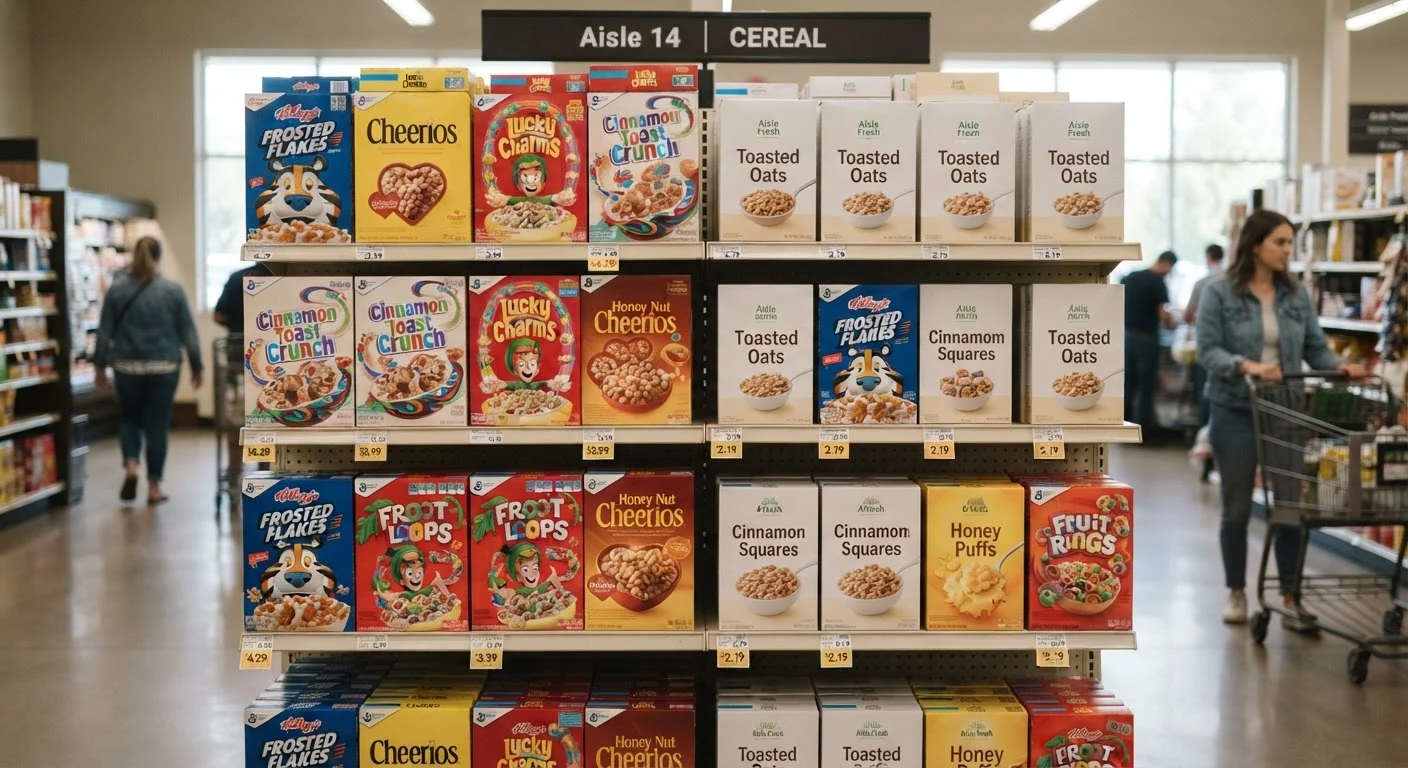
Channel preference is rarely about loyalty to a format — it's about what's being purchased. Consumer research consistently shows that groceries, pharmacy products, and hardware skew heavily toward in-store purchases, while electronics, apparel, and home goods attract stronger online activity. The logic is intuitive: people want to smell a candle or test a mattress in person, but they're comfortable ordering a phone charger or a known clothing brand digitally.
This category-by-category split matters because it explains why both channels remain essential. A shopper might visit a physical pharmacy for a same-day prescription while ordering household staples online for weekly delivery. Neither behavior replaces the other — they address different decision types.
Generational patterns add another layer. Younger cohorts tend to start their research online even when they ultimately buy in a store, while older shoppers often prefer in-store as the primary channel. Our data-informed look at generational shopping differences explores these patterns in more depth.
~15–16%
E-commerce share of U.S. retail sales
U.S. Census Bureau quarterly retail e-commerce surveys consistently show online at roughly this share of total retail spending.
~50%
U.S. adults who use BOPIS regularly
Multiple retail industry surveys have found roughly half of U.S. adults have used buy-online-pick-up-in-store at least once in recent years.
2x
Growth in e-commerce during 2020
The U.S. Census Bureau documented a historic acceleration in e-commerce's share of retail during the height of the COVID-19 pandemic.
The Rise of Hybrid Shopping Behavior
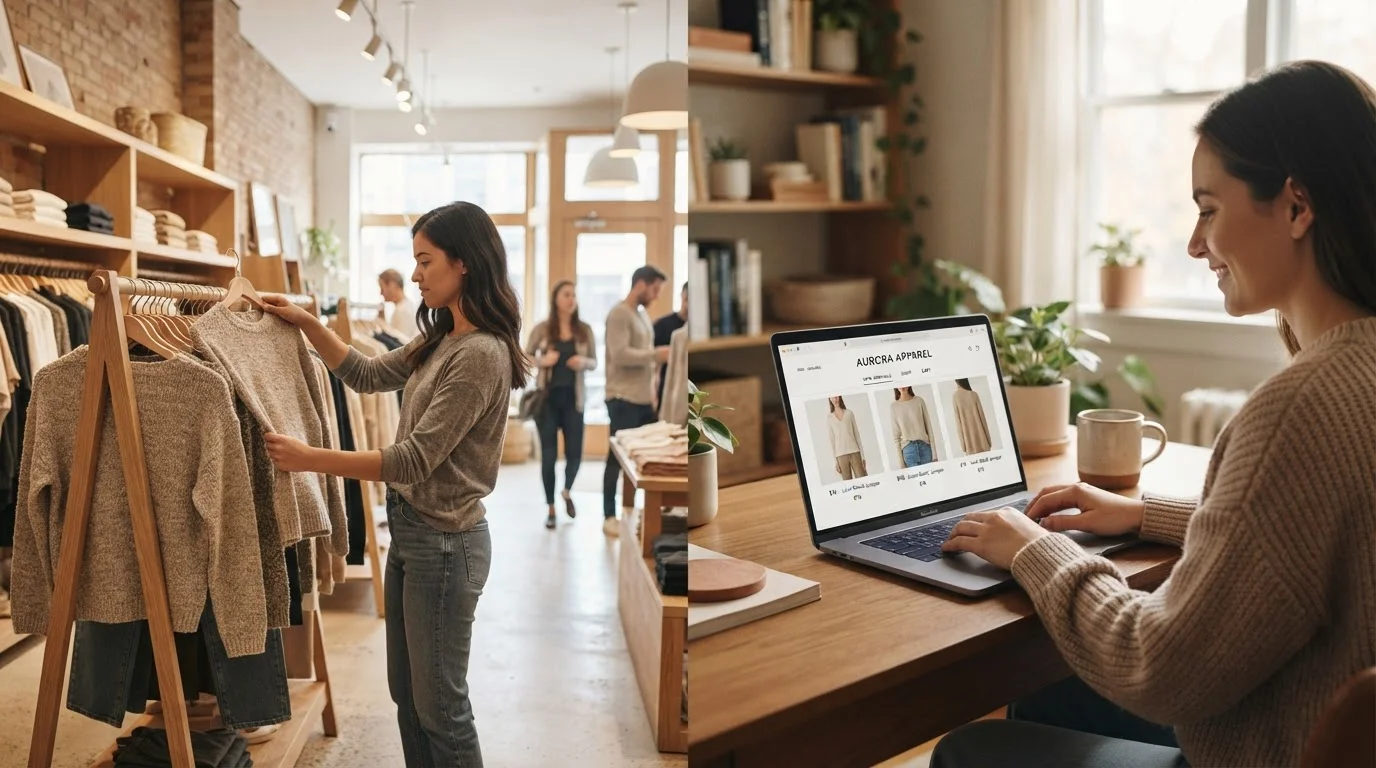
One of the most significant structural changes in U.S. retail is the normalization of hybrid shopping — behaviors that deliberately blend digital and physical touchpoints. "Webrooming" describes researching online before buying in-store; "showrooming" is the reverse, visiting a store to evaluate a product before purchasing it online. Both are now common enough that major retailers design their strategies around them rather than against them.
Buy online, pick up in store (BOPIS) is perhaps the clearest institutional response. Large grocery chains, home improvement retailers, and mass merchandisers have invested heavily in BOPIS infrastructure precisely because consumers want the convenience of digital ordering without the wait or cost of home delivery. This isn't a niche workaround — it has become a standard fulfillment option at most major U.S. chains.
Social commerce — purchasing directly through platforms like TikTok or Instagram — adds yet another layer to this ecosystem. Our explainer on social commerce outlines how those channels are reshaping discovery and purchase behavior in ways that don't fit neatly into either the in-store or traditional e-commerce bucket.
Making the Channels Work for You
Understanding these patterns is practically useful. Shoppers who recognize their own channel instincts can make more deliberate decisions about where and how they buy — reducing impulse purchases, lowering the chance of returns, and saving time. For example, defaulting to online for a category where tactile evaluation matters (like bedding or footwear) may increase return rates, a friction that carries real costs in time and sometimes money.
The habits that tend to serve shoppers well are deliberately intentional: using online channels for research and comparison before committing, visiting physical stores when sensory evaluation is genuinely important, and using BOPIS when speed and certainty both matter. Our guide to building a smarter relationship with online shopping offers practical strategies for navigating digital temptation without abandoning the channel's real advantages.
Broader consumer trend context matters here too — some shopping shifts turn out to be temporary, while others permanently reshape behavior. The current blend of in-store and online appears to be in the latter category.