
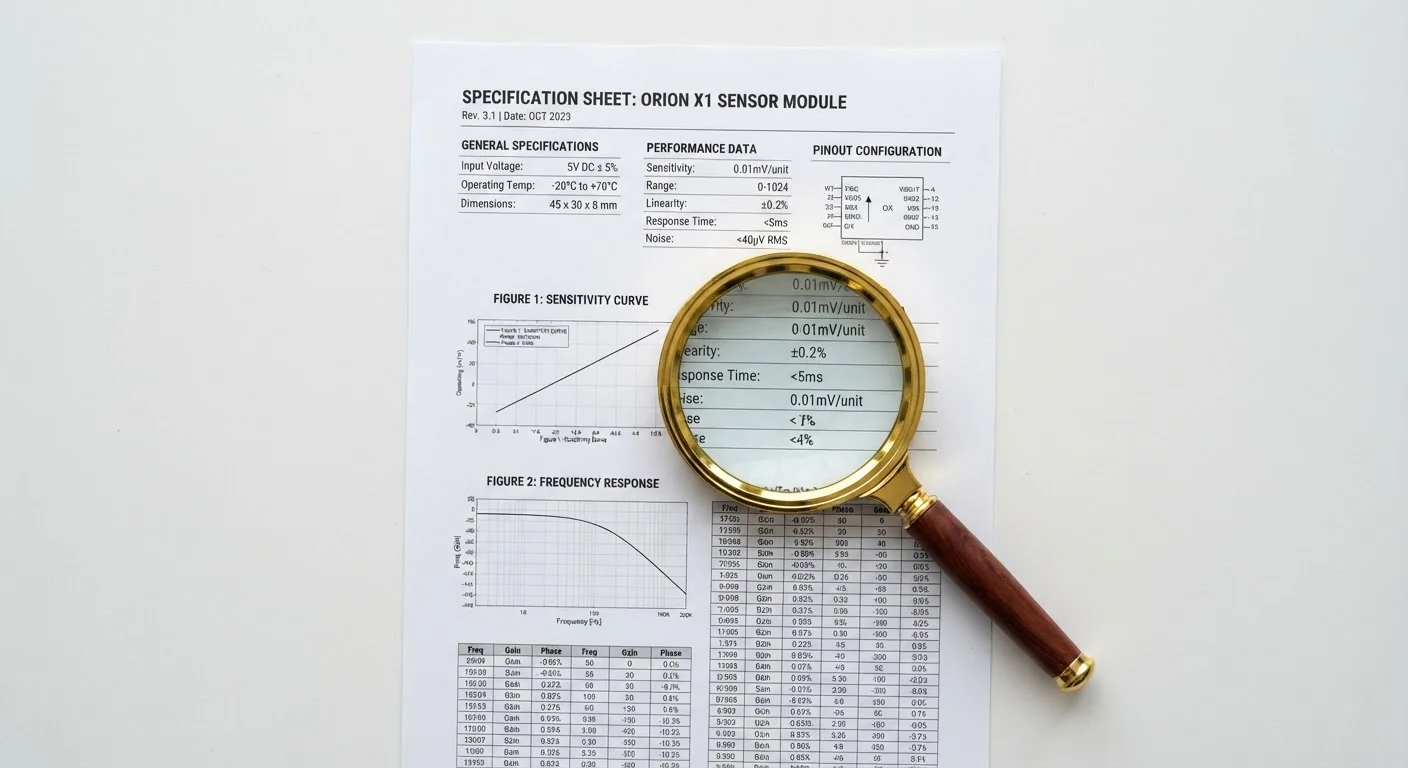
The Purpose of a Spec Sheet — and Its Built-In Limits
A product specification sheet exists to communicate measurable facts about a product in a standardized way. Done well, specs let you make apples-to-apples comparisons across competing products without physically handling either one. The problem is that standardized doesn't always mean realistic.
Most specs are captured under laboratory conditions optimized to produce favorable results. A laptop's battery life figure, for example, is typically measured at reduced screen brightness running a simple looping task — not the multi-tab, video-streaming workload most users run daily. The number is accurate; the context just doesn't match yours.
Understanding this gap is the foundation of spec literacy. The goal isn't to distrust every number — it's to ask, measured how, and under what conditions? For more context on how numbers are used to shape perception in other product categories, see how trend reports can similarly mislead.
What Specific Specs Do and Don't Reveal
Some specs translate cleanly to real-world use; others are nearly meaningless without additional context. Here's how to approach common spec categories critically:
- Resolution and pixel counts: More pixels can mean sharper images, but only up to a point your eye can perceive at normal viewing distance. A camera with more megapixels doesn't automatically produce better photos — sensor size, aperture, and image processing matter more in practice.
- Power and wattage: Higher wattage in appliances signals capacity, not efficiency or quality. A high-watt blender motor doesn't guarantee smoother output if the blade design is poor.
- Thread count in textiles: Thread count became a proxy for quality, but counts above roughly 400 often involve multi-ply or thinner threads that can actually reduce durability rather than improve it.
- Noise ratings (dB): Decibel scales are logarithmic, not linear. A product rated 3 dB quieter isn't slightly quieter — it's roughly half the acoustic power. Understanding the scale changes how you interpret the gap between competing products.
30–50%
Typical real-world battery life gap vs. rated spec
Independent device reviewers across consumer electronics publications consistently report that real-world battery performance falls 30–50% below manufacturer-rated figures under typical mixed usage.
400+
Thread count above which quality gains diminish
Textile researchers and consumer testing organizations generally note that thread counts above approximately 400 provide no meaningful improvement in softness or durability and are often a result of multi-ply counting methods.
For deeper context on what material descriptions in specs actually indicate, material grade explainers can fill in what raw spec numbers leave out.
Omissions: What Specs Don't Tell You
What's absent from a spec sheet is often as revealing as what's present. Manufacturers emphasize the metrics where their product performs well and routinely omit those where it doesn't. If you're evaluating a product and a spec you care about — say, repairability, weight, or standby power draw — is nowhere to be found, that absence is a signal worth investigating.
Specs also don't capture subjective qualities: how a product feels in the hand, how intuitive the interface is, or how well customer support responds when something goes wrong. These matter enormously for long-term satisfaction and are largely invisible on a datasheet.
Similarly, specs rarely tell you anything about build consistency — whether the unit you receive will match the one that was tested. Physical and tactile build quality signals fill in what the spec sheet can't show you, particularly when buying online.
Using Specs Smartly: A Practical Framework
Rather than treating specs as definitive performance promises, use them as a screening layer. Here's a practical approach:
- Identify your threshold, not the maximum. Determine the minimum spec you actually need for your use case. Once a product clears that threshold, additional gains may not translate to a noticeably better experience.
- Check for cited methodology. A spec tied to a recognized standard — MIL-SPEC drop ratings, ENERGY STAR efficiency testing, or ISO waterproofing ratings — carries more weight than a manufacturer's unattributed self-measurement. Understanding which certification labels mean something helps you distinguish rigorous standards from marketing badges.
- Seek independent lab tests. Consumer testing organizations and specialist reviewers often measure the same specs manufacturers publish and report the real-world delta. That gap is your most useful data point.
- Notice what's missing. Cross-reference competitor spec sheets. If everyone lists a particular metric except one manufacturer, ask why.
This same critical lens applies well beyond electronics. Building savvy buying habits across categories means developing a consistent habit of questioning what numbers represent before letting them drive a decision.
Specs are a useful starting point — but informed purchasing requires reading them as one input among many, not as a final verdict.