Why Material Grade Labels Appear on Product Listings
Walk through any product listing for cookware, outdoor furniture, or a power tool and you'll encounter shorthand like "304 stainless," "6061 aluminum," or "ABS plastic." These aren't marketing filler — they're standardized designations developed by industry and engineering bodies to communicate specific properties. The problem is that most listings drop the number without any explanation, leaving shoppers to guess whether it matters.
Material grades exist because the same base material — aluminum, steel, plastic — can vary dramatically in composition, strength, corrosion resistance, and workability depending on how it was alloyed or processed. Understanding the logic behind grade systems won't make you a metallurgist, but it gives you a reliable filter for evaluating product quality claims. Pair this knowledge with reading product specs critically and you're in a much stronger position before any purchase.
Alloy
A metal made by combining two or more elements, at least one of which is a metal. Alloying changes mechanical properties like strength, hardness, and corrosion resistance compared to the base metal alone.
Tensile Strength
The maximum stress a material can withstand while being stretched or pulled before breaking. Usually expressed in pounds per square inch (psi) or megapascals (MPa).
Corrosion Resistance
A material's ability to resist chemical degradation — such as rusting, oxidizing, or pitting — when exposed to moisture, chemicals, or environmental conditions.
Thermoplastic
A type of plastic polymer that softens when heated and hardens when cooled, making it recyclable and moldable. Most common plastics (ABS, PP, HDPE) are thermoplastics.
Grade Designation
A standardized alphanumeric code assigned by engineering or industry bodies (such as ASTM or SAE) that specifies a material's composition and minimum performance properties.
Chromium Passivation
The process by which chromium in stainless steel reacts with oxygen to form a thin, self-repairing oxide layer that protects the underlying metal from rust and corrosion.
Aluminum Grades: Lightness With Trade-offs
Aluminum alloys are classified by a four-digit system. The first digit indicates the primary alloying element. The most commonly encountered grades in consumer products are from the 6000 series (alloyed with magnesium and silicon) and the 7000 series (alloyed with zinc).
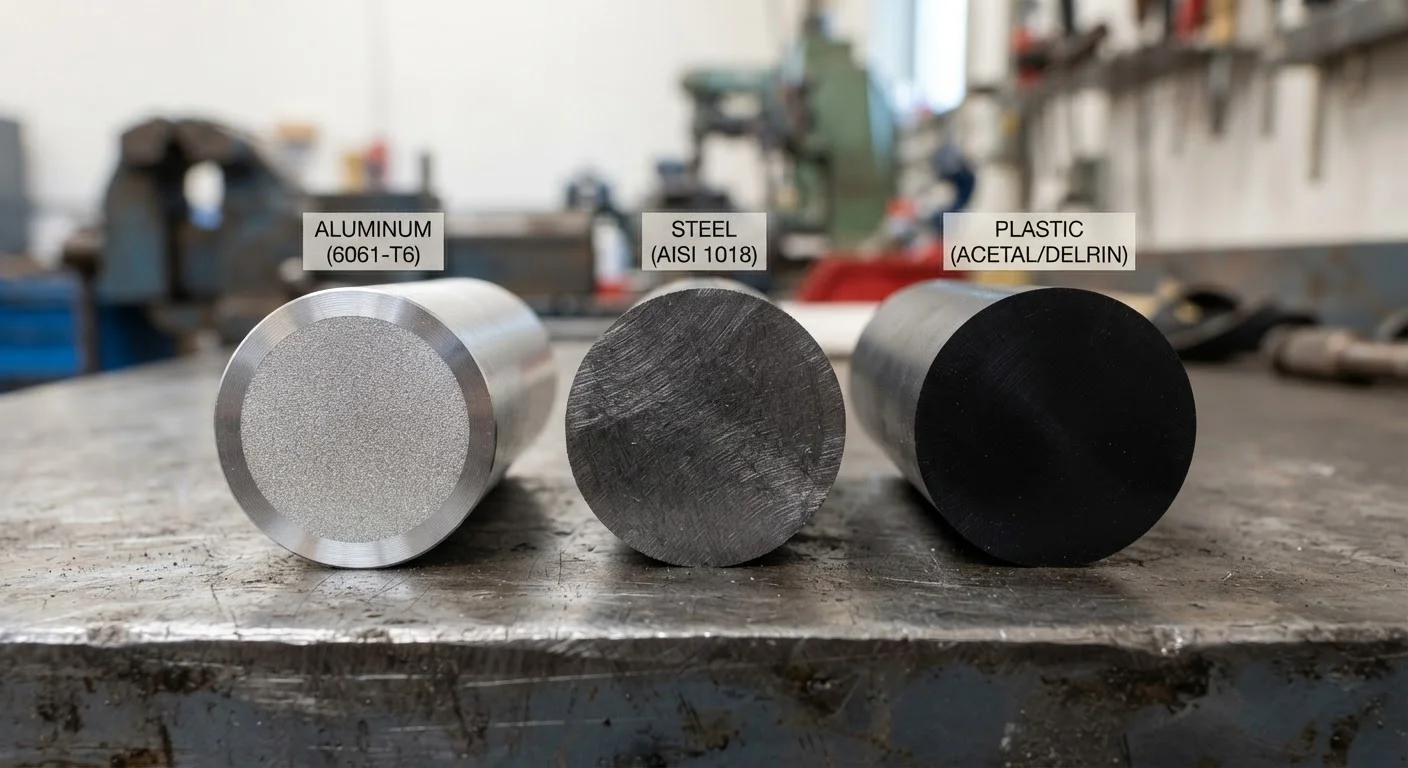
- 6061 aluminum is the workhorse grade — good corrosion resistance, moderate strength, and easy to machine or weld. It appears frequently in bicycle frames, automotive parts, and outdoor equipment.
- 6063 aluminum is softer and more suited to architectural extrusions, like window frames and decorative trim, where surface finish matters more than structural load.
- 7075 aluminum has much higher tensile strength — closer to some steels — making it common in aerospace and high-performance sporting goods. It's also less corrosion-resistant and harder to weld.
When a listing simply says "aircraft-grade aluminum" without specifying an alloy, that phrase carries no standardized meaning. It's worth noting in the context of how vague material language works on packaging.
Steel Grades: Stainless Isn't a Single Thing
Steel is iron alloyed primarily with carbon, plus other elements depending on the target properties. Carbon content is the baseline determinant of hardness and brittleness. Higher carbon means harder but more brittle steel; lower carbon is more ductile and weldable.
Stainless steel — the category most shoppers encounter — is defined by a minimum chromium content (typically 10.5%) that creates a passive oxide layer resisting rust. But the grades within stainless differ significantly:
- 304 stainless steel (also called 18/8, for 18% chromium and 8% nickel) is the most common grade in kitchen products, appliances, and hardware. It handles everyday moisture and most food acids well.
- 316 stainless steel adds molybdenum, which provides substantially better resistance to chlorides — important in marine environments or medical equipment. It costs more and is overkill for most household use.
- 430 stainless steel contains no nickel, making it cheaper but less corrosion-resistant. Often used in appliance exteriors where aesthetics matter more than durability under moisture.
For tool steel or structural steel, grades like A36 or 1018 describe specific carbon content and mechanical properties. These rarely appear in consumer listings but are relevant when evaluating hardware or hand tools. Physical quality signals can help when grade information is absent entirely.
| Most common aluminum grade in consumer goods | 6061 (Aluminum Association alloy designation system) |
| Minimum chromium content for stainless steel | 10.5% (ASTM International / ISO 15510) |
| 304 stainless steel composition | 18% chromium, 8% nickel (ASTM A240 standard) |
| What 7075 aluminum is used for | Aerospace and high-performance sporting goods (Aluminum Association) |
| Plastic grade with highest impact resistance (common types) | Polycarbonate (PC) (General engineering properties reference) |
| Grade that adds marine corrosion resistance to stainless | 316 (adds molybdenum) (ASTM A276) |
Plastics: Abbreviations Worth Recognizing
Plastics are grouped by polymer family, and each family has distinct mechanical and chemical properties. The resin identification codes (the numbers inside recycling triangles) offer a rough starting point, but engineering-grade plastics often appear under abbreviation rather than number.
- ABS (Acrylonitrile Butadiene Styrene) is rigid, impact-resistant, and commonly used in electronics housings, power tool bodies, and LEGO bricks. It does not tolerate UV well without stabilizers.
- Polycarbonate (PC) is significantly tougher than ABS — used in safety equipment, water bottles, and bulletproof glazing. It's more expensive and can yellow under prolonged UV exposure.
- Polypropylene (PP) is lightweight, chemically resistant, and used widely in food containers, automotive trim, and textiles. It has good fatigue resistance but can crack at low temperatures.
- Nylon (PA) is a strong engineering thermoplastic with good wear and heat resistance. Common in gears, bushings, and structural components inside appliances.
- HDPE (High-Density Polyethylene) is dense, chemical-resistant, and used in cutting boards, piping, and outdoor furniture. It's one of the more durable commodity plastics.
When a listing says only "heavy-duty plastic" or "premium resin," those terms are unregulated. Third-party certifications are one of the few reliable ways to verify performance claims when a specific grade isn't disclosed.
This article provides general educational information about material classifications and is not a substitute for professional engineering or product safety guidance. Verify material specifications directly with manufacturers or third-party certifiers when safety is a consideration.