
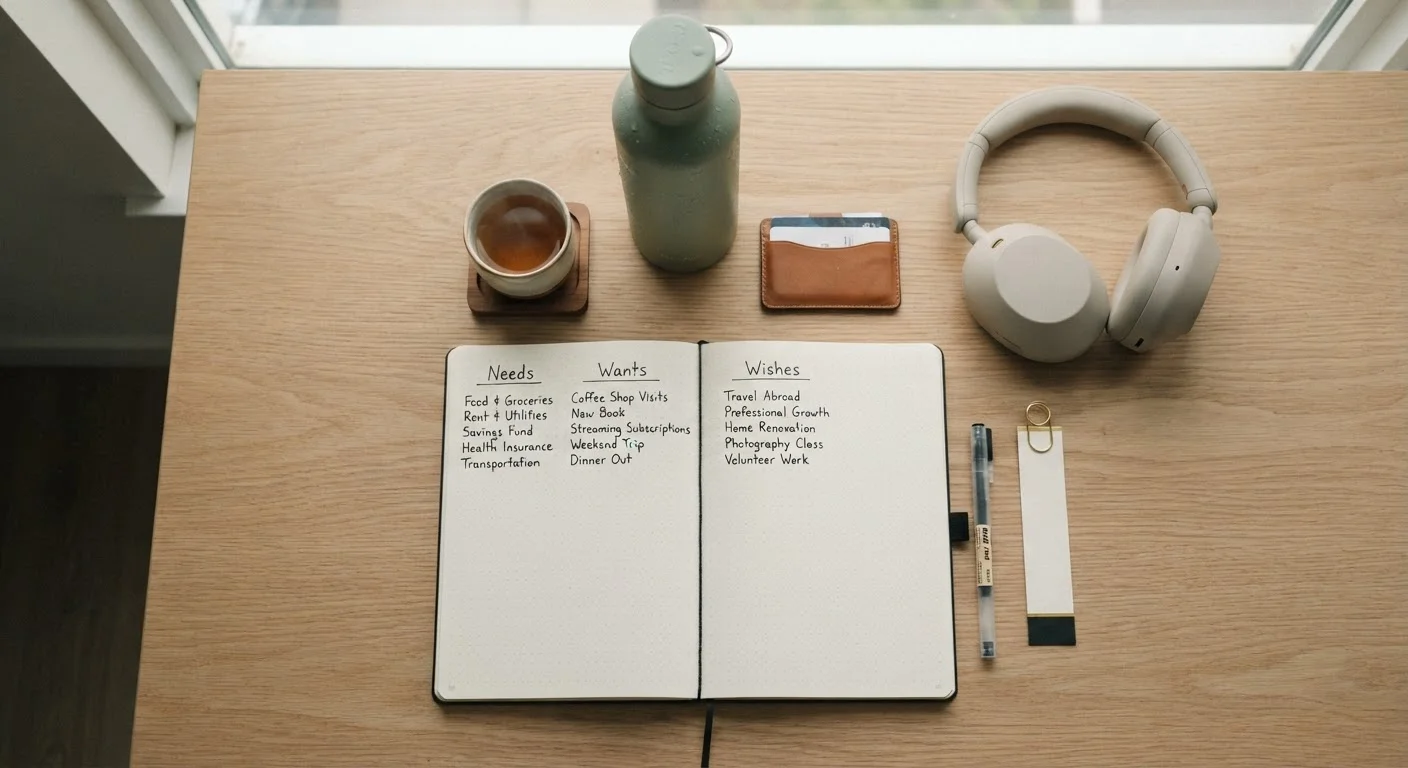
What the Framework Is and Why It Works
Most purchase regret does not come from buying expensive things — it comes from buying things without thinking. The Needs, Wants, and Wishes framework is a lightweight mental filter you apply before any transaction, from a $4 coffee upgrade to a major appliance. Its power is simplicity: one question, three possible answers, and a clearer picture of what you are actually doing with your money.
Unlike rigid budgeting systems, this approach does not require spreadsheets or willpower. It works because it creates a brief pause between impulse and action — and that pause is where better decisions happen. Research in consumer behavior consistently finds that small friction points reduce unplanned spending. This framework provides exactly that kind of productive friction.
If you have ever wondered why impulse purchases feel so justified in the moment but hollow afterward, the psychology behind why we buy things we don't need explains the cognitive patterns at work — and why a simple categorization habit can interrupt them.
Needs
Purchases that address a genuine functional gap — something you cannot reasonably do without in your current circumstances.
Wants
Purchases that meaningfully improve quality of life or convenience but are not essential for basic functioning.
Wishes
Aspirational or emotionally driven purchases that offer little practical improvement over what you already own.
Intentional spending
Making purchases based on conscious, deliberate decisions rather than habit, impulse, or external pressure.
Purchase friction
A deliberate pause or step that slows down a buying decision, giving you time to evaluate whether the purchase truly makes sense.
Tier One: Needs
A Need is a purchase that addresses a genuine functional gap. Without it, a specific task cannot be completed, a health or safety concern goes unmet, or a core life responsibility breaks down. The test is direct: What concrete problem remains unsolved if I skip this?
Examples include replacing a broken water heater, buying medication, or purchasing work tools required for employment. Notice what is absent from that list: upgrades, preferences, and comfort improvements. A Need is defined by necessity, not by how much you would enjoy the item.
The most common mistake at this tier is rationalizing a Want into a Need through creative logic. A phone with a cracked screen that still functions fully is not a Need to replace — it is a Want. Being honest here is the foundation the entire framework rests on. When genuinely unsure, try waiting 48 hours; true Needs tend to make themselves felt again quickly.
Tier Two: Wants
A Want meaningfully improves your life, efficiency, or wellbeing — but life continues adequately without it. This is the largest and most nuanced tier. Wants are not frivolous; many are entirely reasonable purchases that deserve a place in a thoughtful budget. The key is recognizing them accurately rather than disguising them as Needs.
A faster laptop when your current one works, a more comfortable desk chair, or a higher-quality kitchen knife all qualify as Wants. They offer real value, but their absence does not create a functional crisis. Treating them as Wants allows you to plan for them intentionally rather than reacting to marketing pressure.
Wants also benefit from timing. Since they are not urgent, you can wait for natural shopping opportunities, compare options carefully, or save toward them. Running through a pre-purchase checklist before acting on a Want is one of the most effective ways to confirm it still makes sense once the initial enthusiasm fades.
Tier Three: Wishes
Wishes are aspirational or emotionally driven purchases — items you desire but that offer little practical improvement over what you already have. They are often tied to identity, status, novelty, or mood. There is nothing inherently wrong with Wishes; the problem arises when they are mistaken for something more urgent.
A designer item when a functional equivalent exists, a fifth pair of running shoes, or a gadget purchased primarily because it is new — these typically live in Wish territory. When you know you are buying a Wish, you can treat it as a deliberate, occasional indulgence rather than a recurring default.
Wishes also serve as useful data. A persistent Wish — something you keep returning to over months — may signal a genuine preference worth saving for. One that fades within a week was probably impulse. Tracking your Wishes informally, perhaps in a simple list, helps you distinguish between the two over time.
Putting the Framework Into Practice
Applying this framework takes seconds once it becomes habit. Before any purchase, pause and ask: Is this a Need, a Want, or a Wish? The answer does not automatically mean yes or no — it means you proceed with accurate self-knowledge instead of momentum.
For everyday shopping, pair this habit with a structured shopping list to limit in-the-moment category slippage. For online purchases — where friction is deliberately removed and temptation is engineered — this pause matters even more. Building smarter online shopping habits covers practical ways to hold this standard when a cart is just one click away.
For major purchases, the framework pairs well with deeper evaluation. Whether you are navigating a car purchase or assessing any large-ticket item, placing it honestly in one of these three tiers first will sharpen every subsequent decision you make about it.
Start with a simple question
Before any purchase, write or mentally state one sentence: "I am buying this because it is a [Need / Want / Wish]." Making the category explicit — even privately — dramatically reduces rationalization. Over time, this one-sentence habit becomes automatic and requires almost no effort.
The goal is not to buy less — it is to buy intentionally. A Wish purchased knowingly and planned for is a better outcome than a Need purchased impulsively and regretted. That distinction is what this framework is designed to produce.