Why Shopping Lists Are More Than a Memory Aid
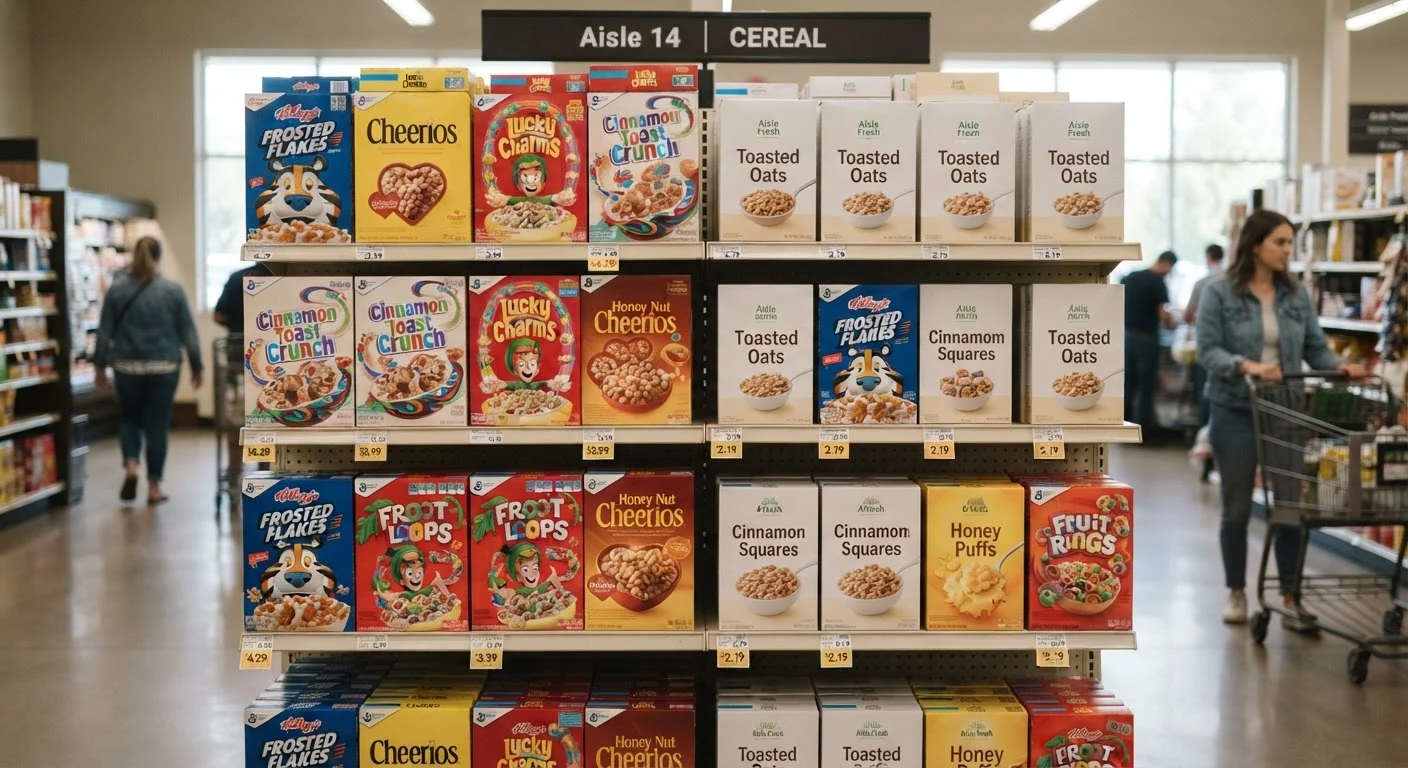
Most people think of a shopping list as a tool for remembering what to buy. That's true, but it undersells what a well-constructed list actually does. Research in consumer behavior consistently shows that shoppers who enter stores without a list are significantly more likely to make unplanned purchases — not because they're careless, but because retail environments are carefully designed to surface desire and manufacture urgency.
The same dynamic plays out online. Recommendation engines, limited-time signals, and auto-scroll feeds all work against deliberate decision-making. A list functions as a pre-commitment device: it represents the choices you made before the environment started influencing you. That separation — deciding what you need before you're surrounded by what's available — is where most of the list's value comes from.
This connects directly to the concept of why we buy things we don't need. Cognitive biases like the decoy effect, social proof, and loss aversion operate most powerfully in the moment. A list made in advance is a rare instance where your calmer, more deliberate thinking gets a vote. It also reduces decision fatigue — when you already know what you're there to get, you make fewer micro-decisions, which preserves mental energy and reduces the likelihood of impulsive choices late in the trip.
For a complementary approach to pre-purchase thinking, see our pre-purchase checklist, which applies similar logic to individual buying decisions.
What to Do Before You Write a Single Item
The quality of your shopping list depends heavily on the few minutes you spend before you start writing. Skipping this step leads to lists that are incomplete, redundant, or padded with things you already own.
What you will need
Start by doing a quick inventory of what you already have. For grocery lists, that means checking the fridge, freezer, and pantry. For household or personal care items, check your supplies. This step prevents duplicate purchases — one of the most common and avoidable forms of shopping waste. It also gives you a realistic baseline so your list reflects actual gaps, not assumptions.
Next, set a rough budget or a purchase limit before you begin writing. You don't need an exact figure, but knowing whether this is a fill-in trip or a full restocking shapes how you prioritize items. Pairing this with a simple spending tracking habit makes the process even more grounded over time.
Finally, think in terms of purpose, not product. Instead of writing "new pan," write "a pan suitable for searing, replacing the warped one." That framing keeps you anchored to function rather than leaving you open to upgrading impulsively once you're browsing.
How to Build a List That Holds Up Under Pressure
A List Only Works If Made Before You Shop
Writing your list while already browsing — in a store or online — largely defeats its purpose. The value comes from deciding what you need in a neutral, low-stimulus environment. Once you're surrounded by products, marketing, or recommendations, your judgment is already being influenced. Commit to building the list before you open an app or walk through a door.
Once you've done your pre-list check, the actual writing process matters. Use these steps to structure a list that stays useful when you're in-store or scrolling online.
Do a quick inventory before writing anything
Walk through your pantry, fridge, bathroom cabinet, or whichever space is relevant to your shopping category. Note what's running low, what's completely out, and what you have in excess. This prevents duplicate purchases and grounds your list in reality rather than assumption.
Write down items with enough specificity to make a decision
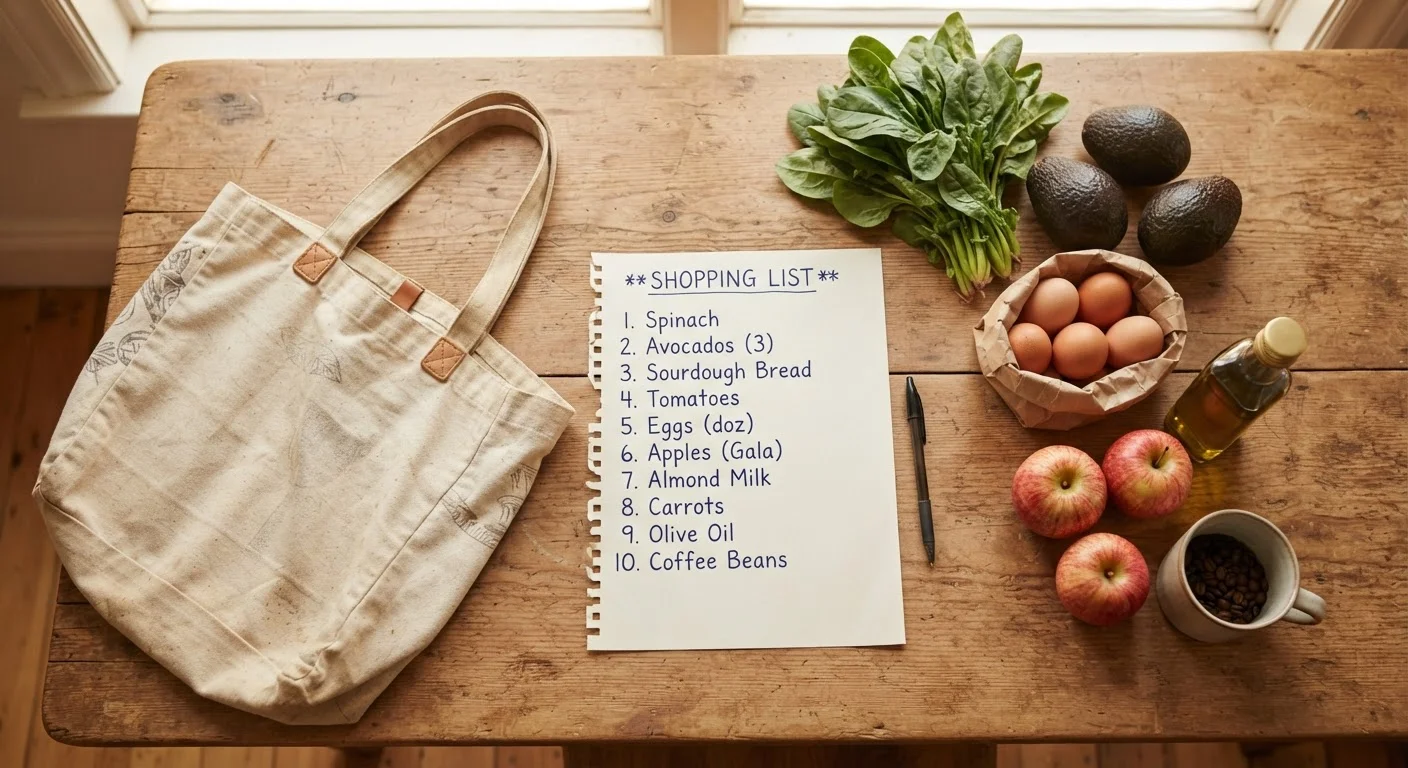
Each item should include enough detail that you could send someone else to buy it on your behalf. Include the category, a rough quantity, and any relevant constraint — such as size, format, or a ceiling price. Avoid vague entries like "cleaning stuff" or "something for dinner."
Add a one-word reason next to anything non-essential
For items that aren't routine replenishments, jot a brief reason — "birthday," "replace broken," "planned recipe." This small step creates a moment of self-accountability and makes it easier to drop an item from the list if the reason no longer holds by the time you shop.
Organize items by category or store section
Group your list by how your store or website is organized — produce, dairy, household, personal care, and so on. For online shopping, group by the type of item or planned use. This reduces the time you spend navigating and limits the browsing that tends to produce unplanned additions to your cart.
Set a hard limit on off-list purchases before you start
Decide in advance whether you'll allow any off-list items, and if so, how many or up to what value. For example, one unplanned item under a set dollar threshold, or none at all. Making this rule before you're in the shopping environment means you're not negotiating with yourself in a high-stimulus moment.
After completing your list, consider running it through the needs, wants, and wishes framework to quickly sort items by genuine necessity. Items in the "wishes" column can be deferred to a future trip or reviewed against your budget before committing.
Try a Running List Between Shopping Trips
Instead of rebuilding your list from scratch each time, keep a running note on your phone or a pad in the kitchen. Add items as you notice you're running low or think of something you need. By the time you're ready to shop, the foundation of your list is already done — and you're less likely to forget essentials or overbuy.
Making Your List a Lasting Habit
A shopping list used once is a convenience. A shopping list used consistently is a financial and behavioral tool. The difference lies in treating list-making as a ritual rather than an afterthought.
One practical way to build consistency is to schedule your list-making. Whether it's Sunday evenings before a weekly grocery run or the morning before any planned shopping, attaching the habit to an existing routine makes it easier to sustain. Intentional shoppers often describe list-making as one of the few habits that reliably reshaped their spending without requiring willpower in the moment.
After each shopping trip, spend two minutes reviewing your list. What did you buy that wasn't on it? What did you skip that was? Those patterns reveal where your list-making needs refinement — and where your in-store or online behavior is still being pulled off course. This kind of low-effort reflection is also useful context if you're working toward more conscious consumption habits in general.
For those who shop online frequently, the same principles apply — arguably with more urgency. The temptation to add items mid-browse is constant. Building a smarter relationship with online shopping explores specific tactics for staying on-list when the cart is just one click away.
Vague List Items Lead to Overspending
Writing "snacks" or "cleaning supplies" without specifics leaves too much room for interpretation — and upselling — at the point of purchase. Where possible, name the exact item, a rough size or quantity, and any meaningful constraint (e.g., fragrance-free, under a certain price). Specificity is what gives a list its guardrails.