The Seasonal Draw: What Each Season Actually Offers
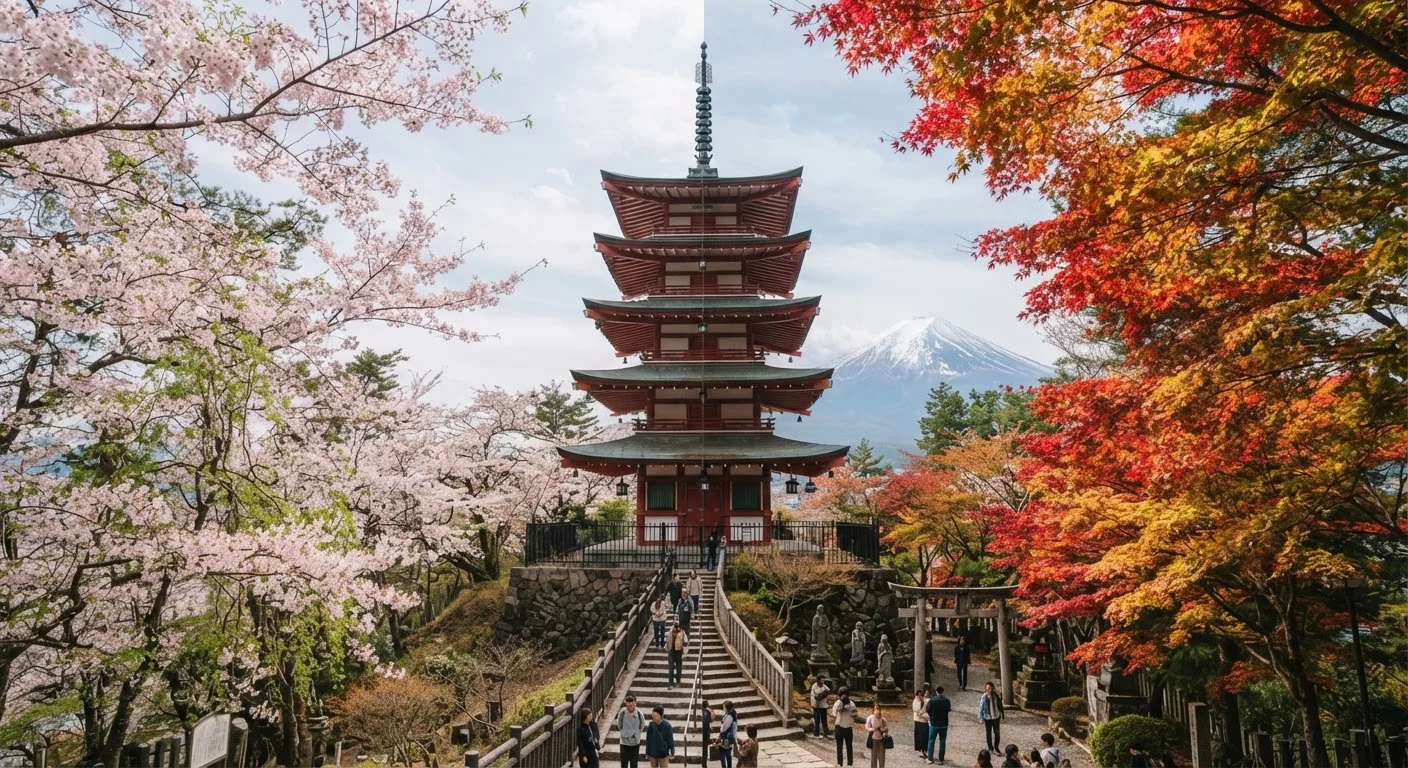
Japan is one of those rare destinations where the season you choose shapes the trip just as much as the places you visit. Spring and fall are the two most celebrated times to go — and for good reason — but they deliver genuinely different experiences rather than interchangeable versions of the same itinerary.
Spring centers on sakura, Japan's cherry blossoms. For a few electric weeks, parks, riverbanks, and castle grounds fill with pale pink clouds of flowers. The Japanese tradition of hanami — gathering under the blossoms to eat, drink, and celebrate — turns public spaces into open-air festivals. The energy is joyful, communal, and unmistakably alive.
Fall brings koyo, the changing of the leaves. Maples, ginkgos, and Japanese zelkovas shift through amber, scarlet, and gold, draping temple gardens and mountain slopes in color that rivals anything in New England or the Canadian Rockies. The mood is quieter, more meditative — perfectly suited to wandering stone paths through shrines and pausing at a moss-covered garden.
| Criterion | Japan in Spring | Japan in Fall |
|---|---|---|
| Peak timing | Late March – mid-April | Mid-October – late November |
| Season length | 1–2 weeks per location | 6–8 weeks (varies by region) |
| Main attraction | Cherry blossoms (sakura) | Autumn foliage (koyo) |
| General atmosphere | Festive, social, energetic | Contemplative, scenic, quieter |
| Typical temperatures | 50–65°F (10–18°C) | 45–68°F (7–20°C) |
| Crowd intensity | Very high at peak bloom | High, but more distributed |
| Hiking conditions | Moderate; trails may be muddy | Excellent in most regions |
| Seasonal food highlights | Wild vegetables, sakura sweets | Mushrooms, new-crop rice, persimmon |
Timing, Crowds, and the Logistics Reality
Both seasons are genuinely peak travel periods, so it's worth going in with clear expectations. Cherry blossoms typically peak somewhere between late March and mid-April depending on the year and region — but that window can be as short as one to two weeks in any given city. A late cold snap or warm spell can shift the peak by days. Travelers who plan rigid itineraries around a specific date sometimes miss the blossoms entirely; building in flexibility is wise.
Fall foliage has the advantage of a longer season. Hokkaido in the north sees color as early as late September, while Kyushu in the south may hold its peak into early December. This gives fall travelers more options to match foliage with their travel window — and the flexibility to chase color across regions.
Both seasons see crowded bullet trains, fully booked ryokan (traditional inns), and long queues at iconic spots. As a general principle of seasonal travel, planning well in advance pays dividends — see our breakdown of peak vs. shoulder season travel for a fuller picture of how to weigh those tradeoffs.
10M+
Visitors to Japan in peak spring weeks
Japan Tourism Agency data has consistently shown March–April as the highest inbound travel months in recent years.
~2 weeks
Typical cherry blossom viewing window per city
The Japan Meteorological Corporation tracks sakura forecasts annually; full bloom typically lasts 7–14 days in any given location.
47 prefectures
Regions with notable fall foliage across Japan
Japan's geographic diversity means koyo color appears from Hokkaido in September through Okinawa's subtle seasonal shifts in December.
Weather, Packing, and Day-to-Day Comfort
Neither season is reliably warm or dry, which surprises some first-time visitors. Spring in Japan can feel more like late winter than early summer — Kyoto in late March often hovers around 50–55°F (10–13°C). Rain is common, and a cold front can bring temperatures back below 40°F overnight. That said, when the sun is out, it's glorious.
Fall temperatures are similarly variable. October is generally the most comfortable month — mild days in the low-to-mid 60s°F (around 16–19°C) with lower humidity than summer. November can turn sharply cold, especially in northern regions and at higher elevations.
The packing list for both seasons overlaps heavily: comfortable walking shoes, a packable rain jacket, and layers you can add or shed throughout the day. Fall travelers heading into the mountains should add a warmer mid-layer. For either trip, checking regional weather forecasts close to departure is far more useful than assuming seasonal averages will hold.
Verify Entry and Travel Requirements Before You Go
Japan's entry requirements, visa policies, and any health-related travel conditions can change. Always check current guidance from official sources — including the Japanese Embassy or Consulate for your country and the Japan Tourism Agency — well before your departure date. Do not rely solely on travel blogs or third-party booking sites for entry information.
Which Season Fits Your Travel Style?
If you're drawn to energy, spectacle, and a deeply social atmosphere, spring is likely your season. Sakura season is culturally singular — nothing quite like it exists elsewhere in the world, and Japan fully leans into it. Travelers who want to feel like they've arrived in Japan at its most expressive, most alive moment tend to leave spring trips with their most vivid travel memories.
If you prefer contemplative travel — unhurried mornings at a hillside temple, long walks through forested paths, evenings with local sake and seasonal dishes — fall will likely resonate more deeply. The foliage season rewards slow exploration, and the autumn light that falls through maple trees onto ancient stone is the kind of thing that stays with you.
Importantly, both seasons reward itineraries that mix the obvious highlights with lesser-visited spots. Kyoto and Tokyo will be packed in either season. Considering places like Yamagata, Mino, or Iwate during fall, or smaller castle towns during sakura season, can significantly improve both the experience and the breathing room.