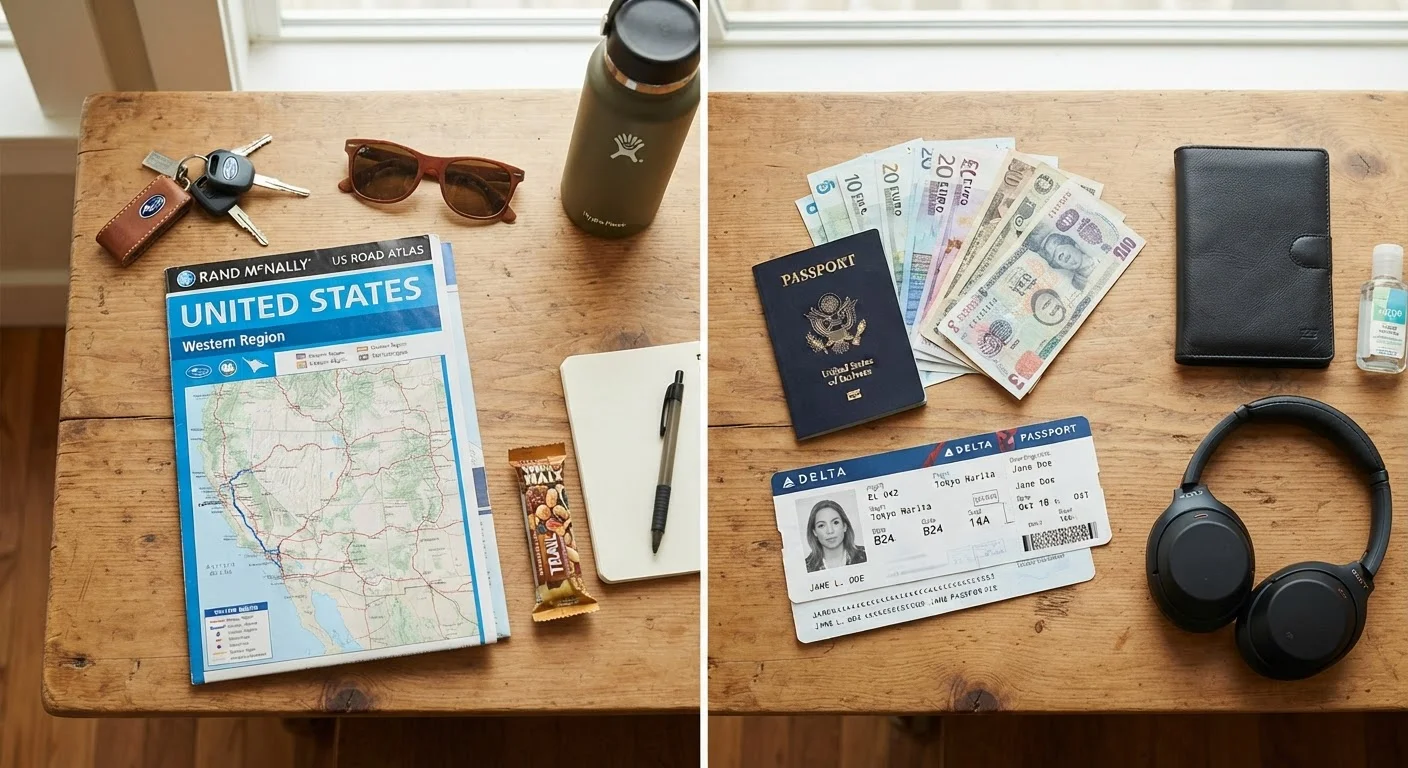

Choosing Your Destination
The best international trip starts with an honest conversation with yourself: What kind of experience do you actually want? A city immersion, a beach retreat, an adventure through remote landscapes? Your answer should drive everything that follows.
Beyond personal preference, weigh practical factors: flight distance and cost, the country's current U.S. State Department travel advisory level, language considerations, and how far your dollar goes there. Some destinations are dramatically more affordable than others — a key factor if you're working with a defined budget.
Consider the season carefully. Weather, crowds, and local holidays all shift the experience significantly. Shoulder season — just before or after peak — often delivers better prices and thinner crowds without sacrificing too much weather-wise. If you're comparing international options with a domestic alternative, our guide on domestic vs. international trip planning differences is a useful starting point.
Research your destination's entry requirements using the U.S. State Department's official country information pages, not travel blogs — rules change faster than editorial sites update.
Entry requirements can shift due to diplomatic changes, health situations, or new bilateral agreements. Official sources reflect current policy while third-party sites often lag behind.
When building your day-by-day schedule, treat transit time — including airport-to-hotel transfers — as a real activity that takes real time and energy.
Experienced travelers know that arrival day logistics routinely consume more time than expected, and underestimating them sets the wrong tone for the entire trip.
Documents, Visas, and Entry Requirements
This is the step that can derail a trip entirely if ignored until the last minute. Start here, even before you book anything.
Passport validity: Most countries require your U.S. passport to be valid for at least six months beyond your travel dates. Check your expiration date immediately. Standard passport renewal can take 6–8 weeks; expedited processing is faster but costlier, and processing times fluctuate. Apply early.
Visa requirements: Many countries grant Americans visa-free entry for short stays; others require advance applications, fees, and supporting documents. Check the official U.S. State Department website and the destination country's embassy site — not third-party aggregators — for current, authoritative requirements. Entry rules can change, so verify within a few weeks of departure as well.
Other entry documents: Some destinations require proof of onward travel, proof of accommodation, or minimum funds. Know these before you land.
Visa Mistakes Can End Your Trip Before It Starts
Arriving at a border without the correct visa — or with insufficient passport validity — can result in being denied boarding or refused entry entirely. Airlines can also be fined for transporting passengers who don't meet entry requirements, so gate agents may turn you away. Always verify requirements directly with the destination country's official embassy or consulate website, and recheck within a few weeks of departure in case rules have changed.
Budgeting and Managing Money Abroad
Financial missteps abroad are frustratingly common — and almost entirely preventable. Build your budget around the real costs at your destination: accommodation, meals, local transport, activities, and a contingency buffer of roughly 10–15% for the unexpected.
Notify your bank and card issuers before you leave. Many institutions flag foreign transactions as fraud and freeze accounts without warning. A quick call or app notification removes that risk.
Currency strategy: Avoid airport currency exchange kiosks, which typically offer poor rates. Using a bank ATM at your destination to withdraw local currency in modest amounts is usually more efficient. Some checking accounts reimburse international ATM fees — worth checking before you travel.
Cards abroad: Look for credit and debit cards with no foreign transaction fees. Dynamic currency conversion — where a foreign merchant offers to charge you in dollars — almost always costs you more; decline it and pay in the local currency.
3%
Typical foreign transaction fee on many cards
Many standard U.S. credit and debit cards charge a 1–3% foreign transaction fee on every international purchase, which adds up quickly over a full trip.
$50,000+
Potential cost of international medical evacuation
According to travel insurance industry guidance, emergency medical evacuations from international destinations can exceed $50,000 without adequate coverage in place.
Health Prep and Travel Insurance
Health preparation is one of the most skipped steps in international planning, and one of the most consequential. Start by scheduling a visit with your primary care provider or a travel medicine clinic at least 4–6 weeks before departure — some vaccines require multiple doses spaced over time.
Vaccinations and medications: Requirements and recommendations vary significantly by destination. The CDC's Travelers' Health website provides destination-specific guidance. Always consult a licensed healthcare provider to determine what's appropriate for your individual health situation — this article is general information, not medical advice.
Travel insurance: Standard U.S. health insurance provides limited or no coverage abroad. A travel insurance policy can cover emergency medical care, medical evacuation (which can cost tens of thousands of dollars without coverage), trip cancellation, and lost baggage. Policy terms vary widely — read the actual document, not just the summary, before purchasing. For a deeper look at first-time international health and safety prep, see everything to know before your first trip abroad.
Building Your Itinerary and Booking Logistics
An itinerary that tries to do everything usually delivers very little. Resist the urge to overschedule. A good rule: plan for roughly two to three experiences per day and leave deliberate breathing room for the unexpected — a longer lunch, a detour you didn't anticipate, or simply recovering from jet lag.
Book flights and accommodation well in advance for popular destinations, especially during peak travel periods. For flights, mid-week departures and red-eye options sometimes carry lower prices, though this varies widely. Keep layover times generous on international itineraries — tight connections leave no room for customs and immigration delays.
Research local transport ahead of time: Is there a metro system? Are taxis safe and metered? Is a rail pass worth it for your route? Ground transport planning prevents both lost time and unnecessary expense.
Our guide on building a trip itinerary that actually works walks through how to structure days so your schedule stays realistic and enjoyable. And if you're traveling with others, group travel planning strategies covers the coordination layer that solo itinerary guides don't.
Safety, Connectivity, and Final Prep
In the weeks before departure, work through your remaining logistics with the same energy you brought to picking the destination.
Stay connected without surprise charges: Contact your mobile carrier about international plans before you leave. Alternatively, purchasing a local SIM card on arrival is often cost-effective for longer stays. Download offline maps — apps like Google Maps allow offline map saving — so you're never dependent on data to navigate.
Safety fundamentals: Register your trip with the U.S. State Department's Smart Traveler Enrollment Program (STEP) at step.state.gov. It's free and ensures the nearest U.S. embassy can reach you in an emergency. Share your full itinerary with a trusted contact at home, including accommodation names and addresses.
Keep digital copies of your passport, visa, travel insurance policy, and key contacts stored in a secure, accessible place (email or encrypted cloud storage). Physical copies stashed separately from originals are a smart backup.
For a week-by-week countdown of everything to finalize, our pre-departure checklist has you covered. And if you want to understand the full planning framework at a higher level, our complete trip planning framework lays out the end-to-end process clearly.
This article provides general travel information for educational purposes. Entry requirements, health recommendations, and safety conditions change frequently — always verify current details with official government sources, your healthcare provider, and licensed insurance professionals before traveling.