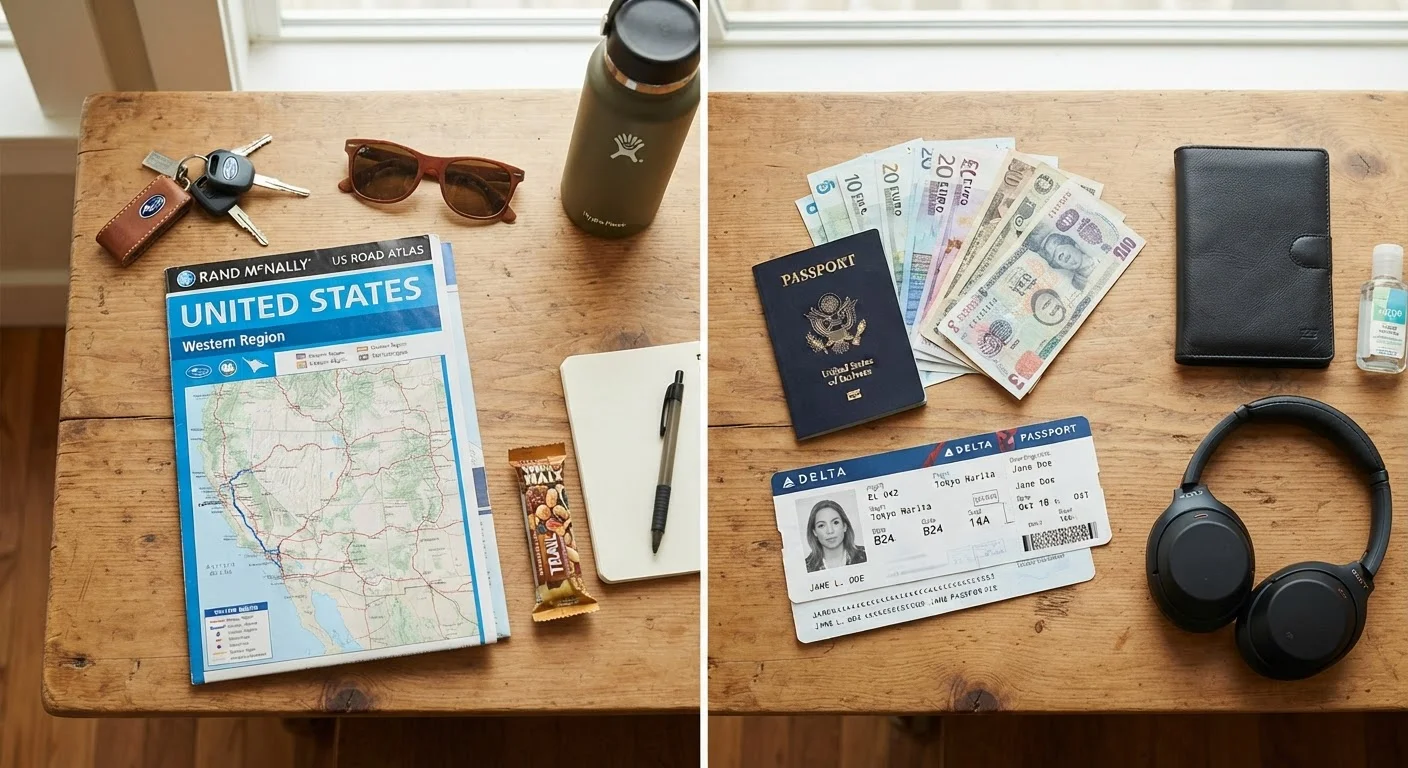

Step 1: Choose and Research Your Destination
Great trips start with an honest conversation between what you want and what's actually feasible. Before committing to a destination, consider three factors simultaneously: your available time, your interests, and the destination's conditions during your travel window.
Use a layered research approach. Start broad — regional travel guides, government tourism sites, and travel communities — then narrow down to specifics: typical weather by month, local events, safety conditions, and transportation options on the ground. For domestic destinations, this process is often quicker; international travel demands deeper due diligence on things like entry requirements and health advisories.
The Destinations hub is a good starting point for honest, practical overviews of both U.S. and international locations. Once you have a shortlist, create a simple comparison: best travel months, approximate daily costs, and visa status for U.S. passport holders. This makes the final decision much easier to defend to yourself — and to travel companions.
Build a destination 'reality check' document before committing: jot down the three biggest potential drawbacks of your shortlisted destination — weather risk, crowd density, logistical complexity — and decide whether you can live with them.
Most regrettable trips trace back to overlooked negatives that were knowable in advance. Forcing yourself to name the downsides before booking creates a more informed, resilient decision.
Always price your trip in the local currency first, then convert — this prevents the mental accounting errors that make international destinations seem cheaper (or pricier) than they actually are.
Currency conversion done casually and inconsistently is one of the most reliable ways to underestimate the true cost of international travel.
Research the destination's shoulder season, not just peak dates. Crowds thin, prices typically ease, and the experience often feels more authentic. Many travelers find shoulder-season trips significantly more enjoyable than peak-season visits to the same places.
Step 2: Set a Realistic Travel Budget
Budgeting is where enthusiasm meets reality, and most trip plans falter here because people underestimate costs rather than overestimate them. A complete travel budget has five core categories: transportation (flights or gas), accommodation, food and drink, activities and entry fees, and a contingency fund of at least 10–15% of your total projected spend.
Research actual costs rather than best-case scenarios. Check current flight prices for your target dates, look at a range of accommodation options in your intended neighborhoods, and estimate daily food costs by browsing local restaurant menus or travel forum posts from recent visitors. For practical money-saving strategies, there are numerous approaches worth exploring — but always evaluate them against your specific itinerary rather than applying generic advice.
10–15%
Recommended travel contingency fund
Financial travel planners and experienced travelers broadly recommend reserving this buffer above your projected spend to cover unexpected costs.
6–12 weeks
Recommended planning lead time
General travel guidance suggests starting serious trip planning this far in advance to secure preferred flights, accommodations, and popular experiences.
78%
Travelers who encounter at least one disruption
According to travel industry surveys, the vast majority of travelers experience at least one unexpected disruption — flight delays, accommodation issues, or weather — during their trip.
If you're traveling with others, cost-splitting can significantly change individual budgets. See our guide on group travel cost coordination for fair, friction-free approaches to shared expenses.
Build your budget in a simple spreadsheet with columns for estimated and actual spend. Revisiting it weekly in the lead-up to departure keeps surprises manageable.
Step 3: Handle Documents and Entry Requirements
Documentation is non-negotiable, and errors here can end a trip before it starts. For domestic travel within the United States, a valid driver's license or state ID is typically sufficient for flights, though REAL ID-compliant identification is now required for TSA checkpoints — check that your ID qualifies well ahead of your travel date.
For international travel, the requirements multiply quickly. Passport validity, visa requirements, entry permits, vaccination documentation, and travel insurance mandates all vary by destination and can change with little notice. Never rely on secondhand information for these details. The U.S. Department of State's travel website and the destination country's official embassy or consulate site are the authoritative sources to consult — and to recheck closer to your departure date.
Our guide for first-time international travelers covers passports, visas, and entry basics in detail. If you're navigating international travel for the first time, that's essential reading.
Entry requirements, visa rules, and health documentation mandates can change at any time. Always verify current requirements through official government and embassy sources before finalizing your plans.
Step 4: Book Strategically — Flights, Stays, and Activities
The order in which you book matters. Flights typically anchor your dates, so book those first once you've confirmed your budget range and destination. Accommodation follows, particularly for popular destinations where quality options fill up weeks or months in advance. Activities and tours can usually be booked closer to departure, though iconic experiences with limited capacity — think guided tours of national monuments or small-group culinary classes — often sell out early.
When evaluating accommodation, look beyond the nightly rate. Factor in location relative to your planned activities, cancellation policy flexibility, and what's included (parking, breakfast, airport transfers). A slightly higher-priced hotel in a walkable neighborhood can cost less overall than a budget option requiring daily rideshare fees.
Booking flexibility is genuinely valuable. Refundable or free-cancellation rates cost a bit more upfront but can save significantly if circumstances change. Pairing this with travel insurance creates a stronger safety net — particularly important for international trips or any journey involving non-refundable prepaid costs. See why trips fall apart for the most common booking mistakes travelers make.
Step 5: Pack Smart and Prepare for the Unexpected
Packing well is a skill that improves with practice, but it starts with one principle: pack for your actual itinerary, not a hypothetical version of it. List every planned activity and the specific clothing or gear it requires. This eliminates both over-packing (the most common mistake) and under-packing (the more consequential one).
Beyond clothing, build a travel day kit — documents, phone charger, medications, snacks, and a small amount of local currency if traveling internationally — that stays accessible throughout transit. Keep digital and physical copies of your passport, travel insurance policy, accommodation confirmations, and emergency contacts stored separately from the originals.
Contingency planning isn't pessimism; it's professionalism. Know the flight change and cancellation policies for every segment. Identify the nearest embassy or consulate if you're traveling internationally. Have a plan for lost luggage, a delayed connection, or a medical situation abroad. For deeper international preparation, the international travel planning walkthrough covers health prep and on-the-ground safety in thorough detail.
The travelers who navigate disruptions best aren't lucky — they've thought through the scenarios in advance and know their first two steps when something goes sideways.