The Planning That Happens Before You Board
Most travelers think their long-haul prep ends at booking a flight and packing a bag. Experienced flyers know the real work starts well before the departure gate. Long-haul flights — generally considered anything over six to eight hours — punish poor planning in ways that short-hop domestic legs simply don't. Fatigue compounds. Dehydration sets in. And a bad seat can turn a manageable ten-hour flight into a genuinely miserable one.
The good news is that most of these discomforts are avoidable. The details below are the ones that frequently slip through even seasoned travelers' checklists — but they're also the ones that consistently separate a smooth international experience from an exhausting one. For a broader pre-departure framework, see our pre-trip checklist covering documents, medications, and the logistics most people forget.
Choose your seat with strategy, not habit
Most travelers pick a window or aisle by instinct and call it done. But on a twelve-hour flight, seat placement has real consequences. Bulkhead seats (directly behind a cabin divider) offer extra legroom but typically have fixed armrests and no under-seat storage. Exit-row seats provide legroom at the cost of limited recline and, on some aircraft, cooler cabin temperatures near the door.
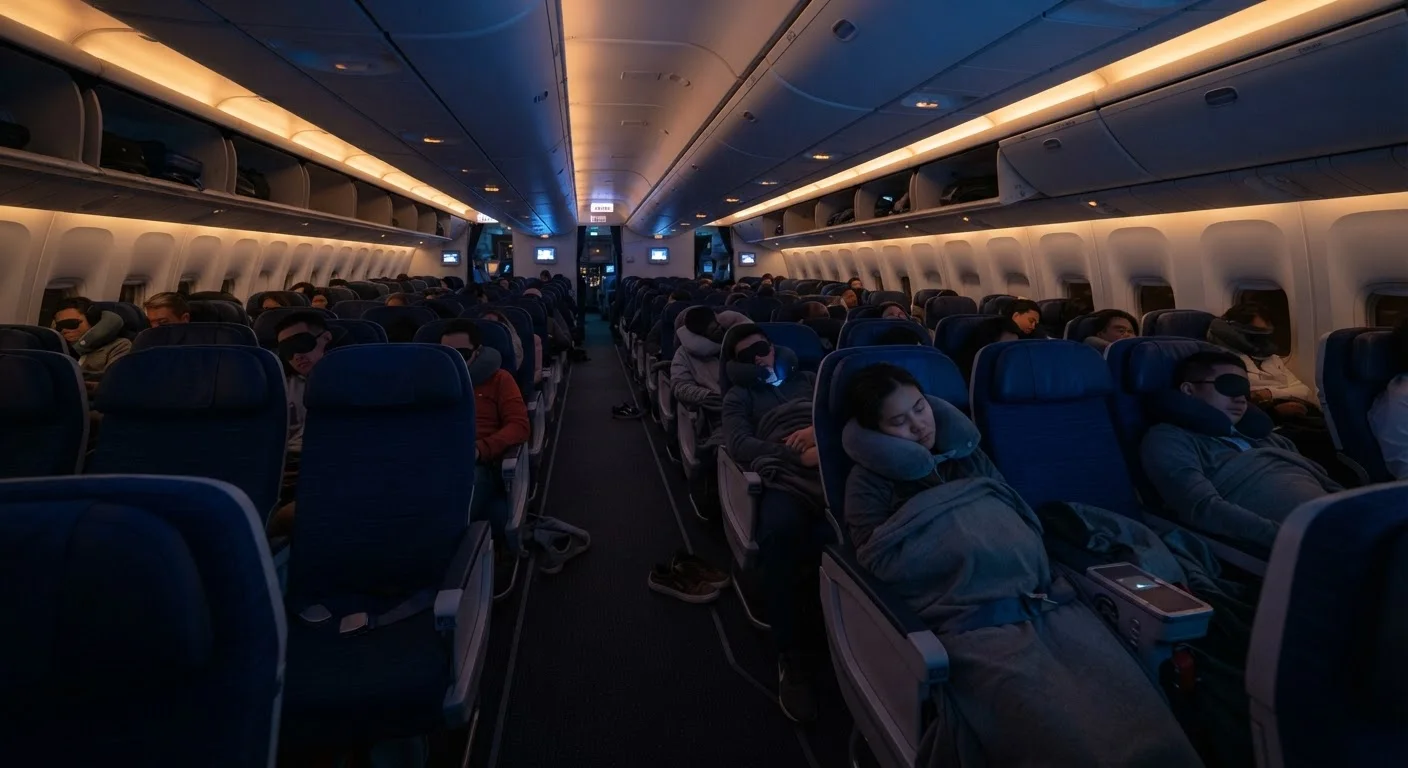
Seats near galleys and lavatories tend to get more foot traffic and noise — especially on overnight flights when cabin lights go down but passenger movement doesn't. Checking an aircraft seat map before selecting can reveal which rows have misaligned windows, reduced recline, or proximity to high-traffic areas. Many airlines allow seat changes at no cost right up until check-in opens.
On a twelve-hour flight, the wrong seat placement has consequences that compound by the hour.
Pick your layover length deliberately
Layovers are often treated as an inconvenience to minimize, but an overly tight connection on an international itinerary is a real risk. Customs, immigration, and re-screening at connecting airports — particularly when routing through a different country — can easily consume more time than a schedule allows. A missed connection on a long-haul itinerary often means an unplanned overnight stay.
On the flip side, a layover that's too long can add hours of exhaustion before you even board your main flight. A general traveler guideline for international connections is a minimum of two hours, though some busy hub airports warrant more. For insight into how add-on logistics can affect your overall cost and experience, our piece on hidden costs of cheap flights is worth reading before you finalize your route.
A tight international connection isn't just stressful — it's a genuine risk of missing your flight entirely.
Start adjusting your sleep schedule before you fly
Jet lag isn't purely a product of the flight — it begins with the mismatch between your current body clock and your destination's time zone. Shifting your bedtime and wake time by even one hour per day in the two or three days before departure can reduce how hard the adjustment hits when you arrive.
Eastbound travel tends to be harder on most people than westbound, because advancing your internal clock (going to sleep earlier) is biologically more difficult than delaying it. On the flight itself, resetting your watch to destination time immediately and eating and sleeping on that schedule — rather than your origin's — helps reinforce the shift. For a deeper look at the science and practical strategies, see what jet lag really is and how to minimize it.
Shifting your sleep schedule even slightly before departure can meaningfully reduce jet lag on arrival.
Hydrate aggressively and move regularly
Airplane cabin air is kept at very low humidity — typically between 10% and 20% — which is significantly drier than most indoor environments on the ground. Over a long flight, this accelerates dehydration, which contributes to headaches, fatigue, and that general feeling of being wrung out when you land. Drinking water consistently throughout the flight — not just when you feel thirsty — makes a measurable difference.
Circulation is the other factor. Sitting largely immobile for eight or more hours increases the risk of discomfort and swelling in the legs. Standing up, stretching in the aisle, and doing simple ankle rotations or calf raises in your seat every hour or two keeps blood moving. Compression socks, while not glamorous, are a practical tool many frequent long-haul flyers use for exactly this reason. If you have circulatory concerns, consult your doctor before traveling.
Cabin air is drier than most deserts — consistent hydration throughout the flight isn't optional, it's essential.
Build an in-flight kit that actually addresses your needs
The standard advice is to bring headphones and a neck pillow. That's a starting point, not a plan. A genuinely useful long-haul kit accounts for the specific ways your body struggles on overnight flights. That might mean an eye mask and earplugs if you're a light sleeper, lip balm and saline nasal spray to counter cabin dryness, or a light layer since cabin temperatures can fluctuate significantly, particularly during overnight legs.
If you take regular medications, make sure they're in your carry-on — not your checked bag. And if you're prone to motion sensitivity or ear discomfort during descent, packing accordingly can prevent a painful end to an otherwise manageable flight. The goal is a kit tailored to you, not a generic packing list.
A long-haul kit should address your specific vulnerabilities, not just the items that appear on every generic list.
Think carefully about your arrival time and first 24 hours
Many travelers plan their flight meticulously and then have no plan for what happens when they land — often disoriented, tired, and in an unfamiliar city. Flights that arrive late at night into an unfamiliar airport can mean navigating ground transport when you're least equipped to do it. Early morning arrivals, by contrast, give you a full day of natural light exposure, which actively helps reset your body clock.
If your flight lands midday local time and your hotel room won't be ready until mid-afternoon, think through how you'll spend those hours productively without crashing. Staying awake until a reasonable local bedtime — even if you're exhausted — is one of the most effective ways to land running rather than limping. Our article on strategies that help your body adjust faster offers practical evidence-informed approaches for exactly this window.
Your first 24 hours after landing shape the rest of the trip — plan them with as much care as the flight itself.
Setting Yourself Up for a Strong Arrival
A long-haul flight doesn't end when the wheels touch down — it ends when you've cleared customs, collected your bags, and figured out how to get to where you're actually staying. That transition is where even well-rested travelers stumble. Planning your airport-to-city ground transport in advance removes one of the most stressful variables from an already taxing travel day.
Long-haul travel rewards deliberate planning and penalizes improvisation. The details listed here won't cost you extra money — they cost only a bit of attention before you fly. Build them into your routine and they'll become second nature by your third or fourth international trip. Your future self, stepping off that plane feeling like a functional human being, will thank you.
Know Your Rights If Something Goes Wrong
Even well-planned long-haul itineraries can get disrupted by delays, mechanical issues, or missed connections. Knowing what airlines are required to provide — and when — can save you significant stress and money. Our guide to passenger rights around delays and cancellations breaks down the U.S. rules clearly. Keep key contact numbers and your booking references accessible in your carry-on, not just in your email inbox.