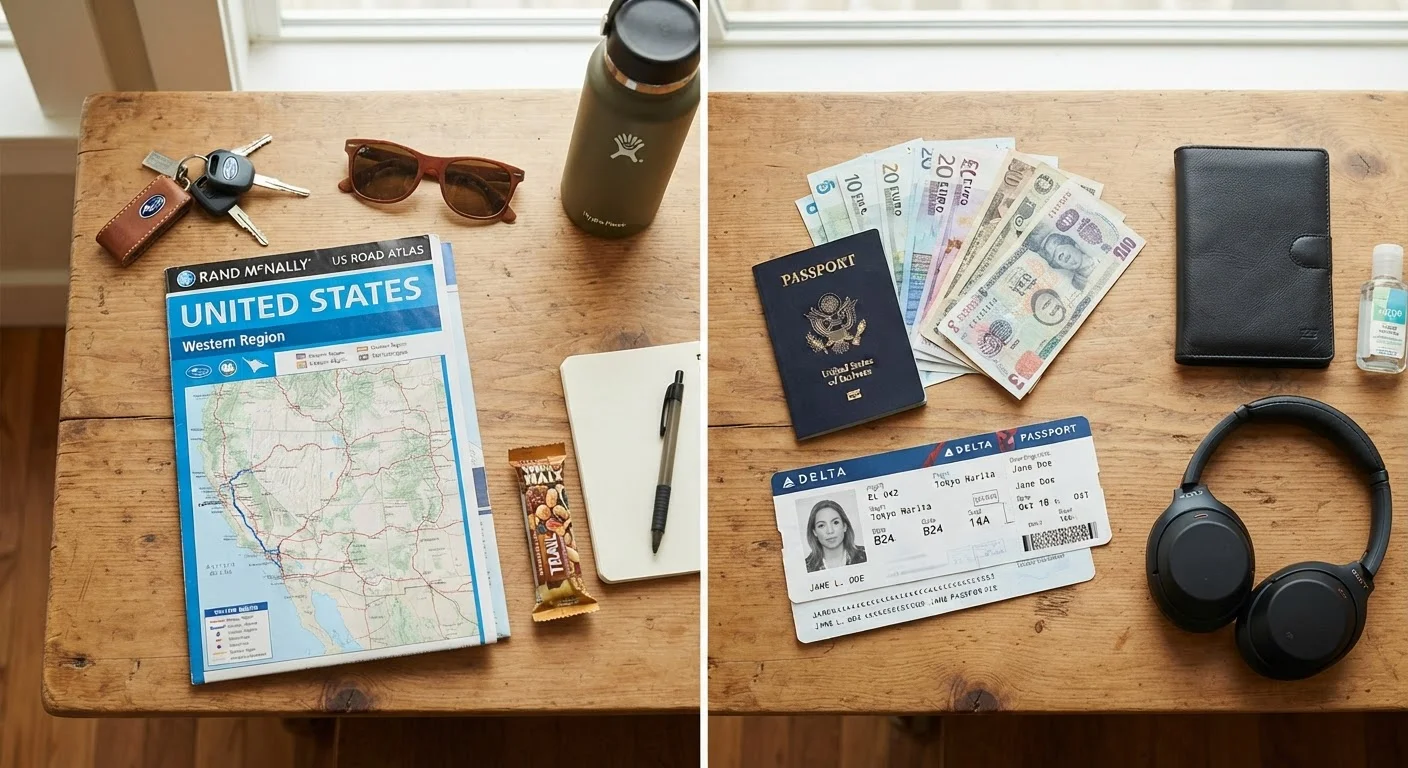

Why a Pre-Trip Checklist Pays Off Every Time
There's a certain kind of travel panic that hits at the worst moment — the realization, mid-air or at the immigration desk, that something important was forgotten. A missing adapter, an expired passport, a bank card flagged for suspicious activity. These situations are almost always preventable with one methodical run-through before you leave.
This checklist is designed for everyday travelers taking any kind of trip — a weekend road trip, a domestic flight, or a full international adventure. For deeper guidance on planning a trip abroad, see our first-time international travel guide. If you want a week-by-week timeline, our pre-departure checklist covers the longer runway. This article focuses on the final check — everything to confirm in the 24–48 hours before departure.
Documents & Identity
Finances & Cards
Health & Medications
Home & Security
Packing & Gear
What to Gather Before You Sit Down with This List
Before you start ticking boxes, pull together everything in one place: your travel documents, your phone and charger, your medications, and any printed confirmations. Having it all visible at once makes it far easier to spot what's missing.
Passport and travel documents folder
Keep originals and copies of all identity and travel documents organized and accessible in one dedicated sleeve.
Printed or offline-accessible confirmations
Store hotel, flight, and car rental confirmations offline in case you lose internet access on arrival.
Universal power adapter
Ensures your devices can charge at destinations with different outlet standards.
Portable charger / power bank
Keeps your phone charged during long travel days, layovers, and sightseeing stretches.
Travel insurance policy documents
Confirms your coverage details and the claims contact number you'll need in an emergency.
One note on documents: a valid passport is your starting point, not your finish line. Entry rules, visa requirements, and passport validity windows vary significantly by destination. Our deep dive on what a passport can't do breaks down the rules many travelers overlook until it's too late.
Don't Skip the Travel Advisory Check
Entry requirements, health conditions, and safety situations can change quickly. Check your government's official travel advisory site (for U.S. travelers, that's travel.state.gov) within a few days of departure — not just when you booked the trip. Some destinations require updated documentation or health measures that weren't in place when you planned the journey.
After You've Checked Every Box
Once you've worked through all the groups above, do one final sweep of your home — lights off, windows locked, thermostat adjusted. Leave your full itinerary (flight numbers, hotel names, confirmation numbers) with a trusted contact who can reach you or act on your behalf if something comes up.
If you're driving to the airport or hitting the road on a road trip, a quick vehicle check is worth the extra few minutes. Our car maintenance hub has straightforward guidance on the basics. And for anyone planning a long-haul flight, our piece on overlooked long-haul flight details is worth a read before you board.
For comprehensive, start-to-finish international trip planning, bookmark our international travel planning walkthrough — it's a useful companion to this checklist for bigger trips. More trip planning resources are also available if you're still in the early stages.
This article is for general informational purposes only. Always verify entry requirements, health recommendations, and travel advisories through official government and provider sources before you travel, as conditions can change.