What Buying and Leasing Actually Mean
When you buy a vehicle — whether with cash or a loan — you own it outright once any financing is paid off. You can drive it as long as you choose, sell it, modify it, and build equity as a trade-in asset.
When you lease, you're essentially renting the vehicle from the financing company for a set term, typically two to four years. Your monthly payment covers the vehicle's depreciation during that term plus fees and interest (expressed as a "money factor" in lease contracts), not the full purchase price. At the end of the lease, you return the car, buy it at a pre-set residual value, or start a new lease. For a deeper look at how those numbers break down, see how lease math actually works.
Understanding this foundational difference helps clarify why each path produces such different financial outcomes over time.
The Case for Buying
Buying a vehicle makes the most financial sense when you plan to keep it long after the loan is paid off. Once the loan is retired, your only ongoing costs are insurance, maintenance, and fuel — a significant reduction in monthly outlay compared to perpetually leasing.
You build equity and own an asset outright
Once a loan is paid off, the vehicle has real trade-in or resale value. This equity can offset the cost of your next purchase in a way leasing never allows.
No mileage penalties or use restrictions
Owners can drive as many miles as they need without fee consequences, and can modify or customize the vehicle without asking permission.
Lower long-term cost for drivers who keep vehicles
A vehicle owned and driven for 10 years typically costs less in total than a decade of continuous leasing, especially once the loan is retired and monthly payments stop.
Freedom to sell or trade whenever you choose
Ownership gives you the flexibility to exit the vehicle on your own timeline, whether that's after two years or twelve, without contract penalties.
Ownership also removes the restrictions that come with leases. There are no annual mileage caps to worry about, no penalties for wear and tear beyond normal use, and no prohibitions on modifications. If you drive 20,000 or more miles per year, buying almost always works out better financially, since excess mileage fees on a lease can add up quickly.
For those comparing new and used options, buying new vs. used is worth reading alongside this decision, since the used market can substantially reduce the upfront cost of ownership.
The Case for Leasing
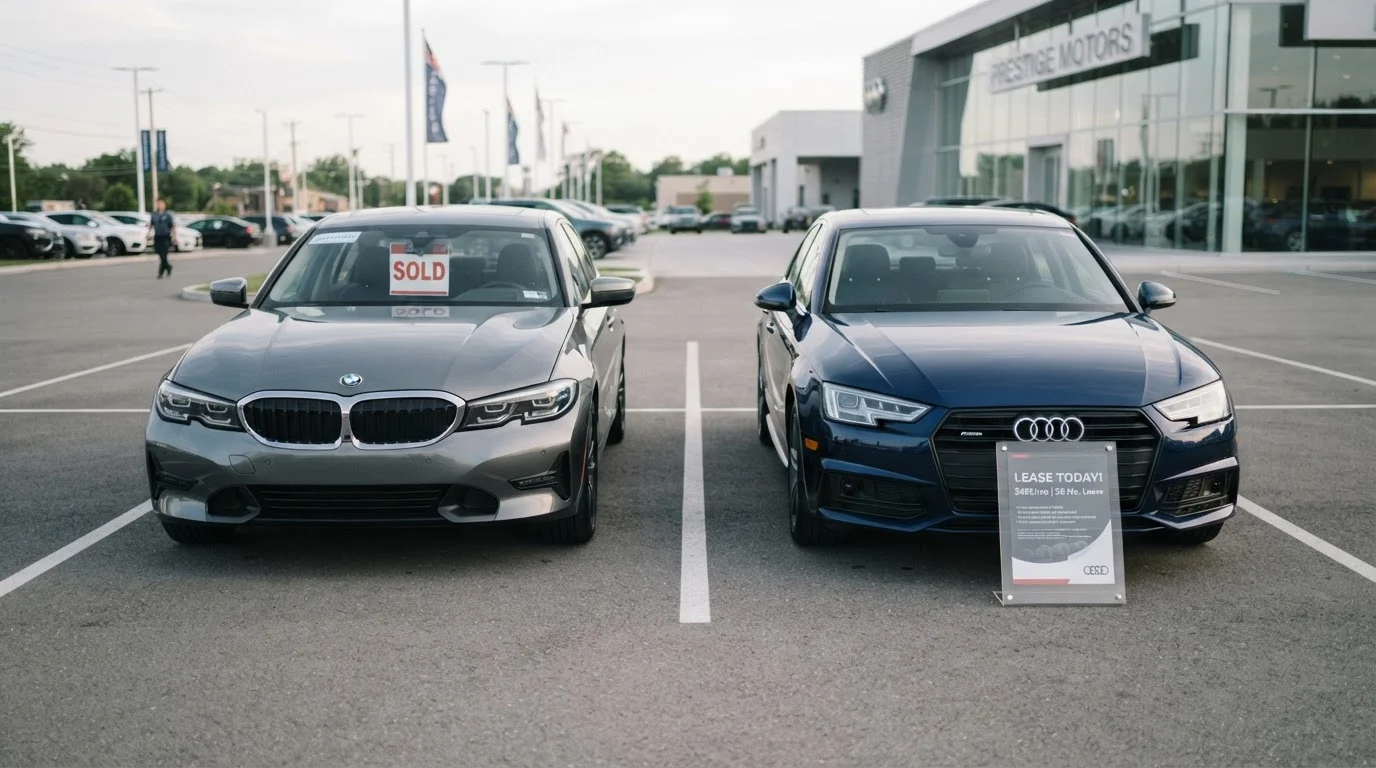
Leasing suits drivers who prefer lower monthly payments, enjoy driving a newer vehicle on a regular cycle, and don't want to manage resale or long-term maintenance concerns on an aging car.
No ownership equity built during the lease term
Monthly payments cover depreciation and fees, not ownership. At lease end, you return the car with nothing to show as an asset unless you choose to buy it out.
Mileage caps can generate unexpected fees
Most leases set annual mileage limits of 10,000 to 15,000 miles. Overage charges — often 15 to 25 cents per mile — can add hundreds or thousands of dollars at turn-in.
Early termination is expensive and complicated
Exiting a lease before the term ends typically involves significant fees, sometimes amounting to the remaining payments plus penalties, leaving little room for life changes.
Wear and condition charges at return
Lessees are responsible for returning the vehicle in acceptable condition. Scratches, interior damage, or worn tires beyond defined thresholds can result in charges billed after turn-in.
Because lease payments are based on depreciation rather than the full vehicle price, they're typically lower than loan payments for the same vehicle — sometimes meaningfully so. This can free up cash flow for other priorities, though it's worth recognizing that you're building no ownership equity during that time.
Lease contracts also transfer some uncertainty about long-term reliability to the leasing company. Most leases align with the manufacturer's warranty period, so major mechanical repairs are generally covered. However, you're responsible for keeping the vehicle in good condition — excess wear charges at turn-in can be a costly surprise if you're not prepared for them.
Lease Terms Vary Widely by Contract
Mileage limits, money factors, residual values, and wear-and-tear standards differ between manufacturers, lenders, and individual contracts. Always read the full lease agreement before signing, and don't assume terms are standard across deals. A careful review of what you're agreeing to can prevent costly surprises at turn-in.
It's also worth noting that financing options affect both paths. Whether you're buying or leasing, how you arrange financing matters. Dealer financing versus your own bank covers the key differences so you can approach the negotiating table prepared.
Key Factors to Help You Decide
No formula produces a universal answer, but these questions can sharpen your thinking:
- How many miles do you drive annually? Standard leases typically allow 10,000–15,000 miles per year. Drivers who consistently exceed that threshold often find buying more cost-effective.
- How long do you plan to keep the vehicle? Buyers who hold cars for 8–10 years typically come out ahead. Those who trade in or upgrade every two to three years narrow that advantage considerably.
- How important is flexibility? Ending a lease early typically triggers significant penalties. Owning gives you the ability to sell whenever you choose, though you'll need to manage trade-in value and any remaining loan balance.
- What does your budget look like month to month? Leasing generally produces a lower monthly payment, which matters if cash flow is a priority. But the total cost over a decade of continuous leasing will often exceed the cost of buying and owning outright.
~30%
Share of new vehicle transactions that are leases
Industry data from Experian and other tracking sources has shown leasing regularly accounts for roughly a quarter to a third of new vehicle transactions in the U.S., varying by market conditions.
10,000–15,000
Typical annual mileage limit in a standard lease
Most lease contracts set this range as the default; exceeding it triggers per-mile charges that can significantly raise the total cost of the lease.
Ultimately, the decision should reflect your actual driving habits, not assumptions about what's "smarter." Both paths have served drivers well under the right conditions.