How Each Financing Path Actually Works
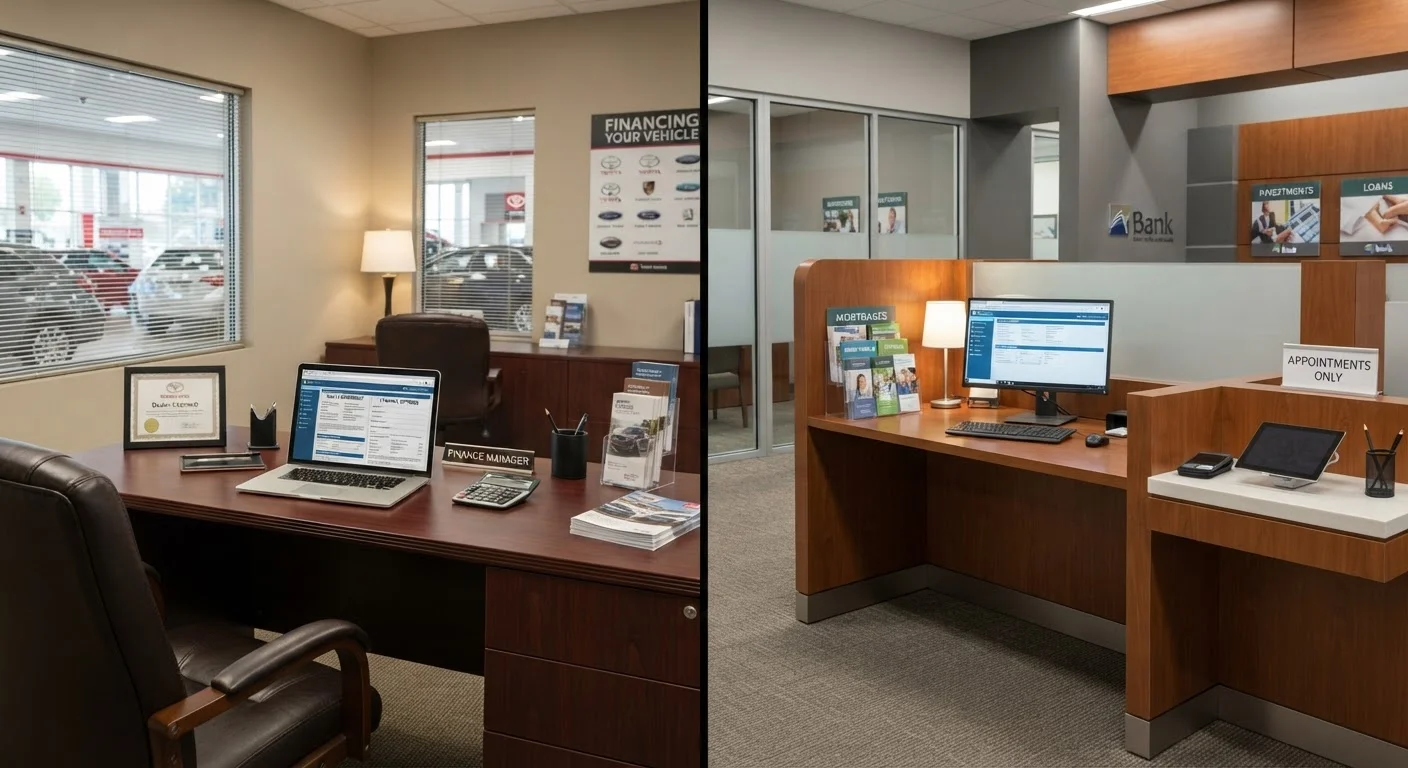
When you finance through a dealership, the dealer acts as an intermediary between you and a network of lenders — banks, captive finance arms (lenders owned by automakers), and other institutions. You fill out one application at the dealership, and the finance manager submits it to multiple lenders simultaneously. The dealer then presents you with an offer, which may include a markup above the rate the lender actually approved. That markup, sometimes called a "dealer reserve," is legal and common, but it means the rate on your contract isn't necessarily the lowest rate you qualified for.
When you arrange financing through your own bank or credit union before visiting a dealership, you receive a pre-approval letter stating the maximum loan amount and the interest rate the lender will extend. You shop for a vehicle knowing exactly what your financing costs, then use that offer as a baseline — either paying with it or asking the dealer to beat it. This separation of the loan negotiation from the vehicle price negotiation tends to give buyers more clarity.
See our full car-buying walkthrough for context on where financing fits within the broader purchase process.
| Criterion | Dealer Financing | Bank / Credit Union Financing |
|---|---|---|
| Application process | Single application at the dealership | Apply directly with your lender beforehand |
| Rate transparency | Rate may include dealer markup | Rate quoted is exactly what you pay |
| Promotional APR offers | Available through captive lenders | Not available |
| Negotiating position | Price and financing often bundled | Financing separated from price negotiation |
| Speed and convenience | Entire deal in one visit | Requires advance preparation |
| Relationship with lender | You deal with the dealer, not the lender directly | Direct relationship with your lender |
| Best credit profile benefit | Access to competitive captive lender rates | Lowest available market rate |
The Rate Markup Question — and Why It Matters
Dealer financing markups vary, but regulatory scrutiny has increased over the years and some lenders now cap the spread a dealer can add. Even a modest rate increase — say, half a percentage point on a $30,000 loan over 60 months — adds real dollars to the total interest paid. The impact grows with larger loan amounts and longer terms.
This doesn't mean dealer financing is always more expensive. Automaker captive lenders occasionally run promotional financing — including 0% APR offers — that no outside bank can match. These promotions are typically tied to specific model years, trim levels, and strong credit profiles. If you qualify, the savings can be substantial. The key question to ask is whether accepting the promotional rate means forgoing a cash rebate, which sometimes offsets or exceeds the financing benefit. Doing the math on both scenarios before deciding is worthwhile.
Questions worth asking in the finance office include whether the rate presented is the lender's buy rate or an adjusted figure — knowing what to ask makes a measurable difference.
~80%
New car buyers who finance through the dealership
According to Federal Reserve consumer finance data, the large majority of new vehicle purchases involve dealership-arranged financing rather than outside loans.
1–3%
Typical dealer markup range on loan interest rates
Industry observers and consumer advocacy research have noted dealer reserve markups commonly fall in this range, though lender policies and regulations vary.
60–72 months
Most common new car loan terms in the U.S.
Longer loan terms lower monthly payments but increase total interest paid — a trade-off worth calculating regardless of where you finance.
What to Do Before You Apply Anywhere
Regardless of which financing path you choose, the groundwork is the same. Check your credit reports through AnnualCreditReport.com and review them for errors. Understand your credit score range, since lenders use it to tier interest rates. Request pre-approval from your bank or credit union — this is typically a soft inquiry during rate shopping — so you have a benchmark in hand before you walk onto any lot.
If you're a first-time buyer, total loan interest is one of the costs that tends to catch people off guard. A lower monthly payment achieved by extending the loan term often means paying significantly more over the life of the loan.
Bring your pre-approval to the dealership even if you intend to consider dealer financing. It functions as a rate ceiling: if the dealer can offer a better rate, you win; if not, you use your own financing. Either way, you're negotiating from a position of information rather than uncertainty.
This article is for general informational purposes only and does not constitute financial or legal advice. Loan terms, interest rates, and eligibility vary by lender and individual circumstances. Consult a licensed financial professional before making borrowing decisions.