Why Budgeting Matters Before Anything Else
A budget is the foundation of every sound financial decision. Before you can save meaningfully, pay down debt strategically, or begin investing, you need a clear picture of where your money is actually going each month. Without that picture, even a decent income can slip away without much to show for it.
Budgeting is not about restriction — it's about intention. When you tell your money where to go, you make deliberate trade-offs rather than passive ones. That shift in control is where financial confidence begins. For a broader view of how budgeting connects to every dimension of your personal finances, the complete personal budgeting reference is a useful companion resource.
Take-home pay
The amount of money you actually receive after taxes and other deductions are withheld from your paycheck. This is the figure your budget must be built on.
Fixed expense
A recurring cost that stays the same each month, such as rent, a car payment, or a subscription with a set price.
Variable expense
A cost that changes from month to month based on your choices and habits, such as groceries, gas, or dining out.
Budget surplus
When your income exceeds your planned expenses, leaving money that can be directed toward savings, debt payoff, or another financial goal.
50/30/20 guideline
A general budgeting framework that suggests allocating approximately 50% of take-home pay to needs, 30% to wants, and 20% to savings and debt repayment. It is a starting reference, not a precise rule.
Irregular expense
A cost that doesn't occur every month but is predictable over the year, such as annual insurance premiums or vehicle registration fees. Dividing these by 12 and saving monthly prevents financial surprises.
Step 1: Calculate Your Take-Home Income
Your budget must be built on money you actually receive, not what you earn before taxes. Take-home pay — the amount deposited into your account after taxes, Social Security, Medicare, and any pre-tax deductions — is your real starting point.
- Salaried workers: Check your most recent pay stub for your net pay amount and multiply by the number of pay periods in a month.
- Hourly workers: Multiply your average hours per week by your net hourly rate, then multiply by 4.33 (the average weeks per month).
- Variable or self-employed income: Use your lowest reliable monthly earnings as a conservative baseline. Budget from the floor, not the ceiling.
Include all consistent income sources: side work, rental income, or regular support payments. Exclude windfalls like tax refunds or one-time bonuses from your baseline — treat those separately when they arrive.
Step 2: List and Categorize Your Expenses
Pull up three months of bank and credit card statements. List every expense you see, then sort them into two buckets:
- Fixed expenses
- Amounts that stay the same each month — rent or mortgage, car payment, insurance premiums, loan minimums, and subscriptions with set charges.
- Variable expenses
- Amounts that fluctuate — groceries, gas, dining out, clothing, entertainment, and household supplies.
Use the three-month average for variable categories rather than a single month, which may be unusually high or low. Don't forget irregular expenses that don't appear monthly — annual fees, vehicle registration, or seasonal costs. Divide these by 12 and set aside a small amount monthly so they don't arrive as surprises.
One category many first-time budgeters undercount: savings. Treat savings as a non-negotiable expense line, not something funded with whatever is left over. Even a small, consistent amount builds the habit. Our guide on building a saving habit from zero covers this in practical detail.
Step 3: Balance the Numbers and Set Spending Limits
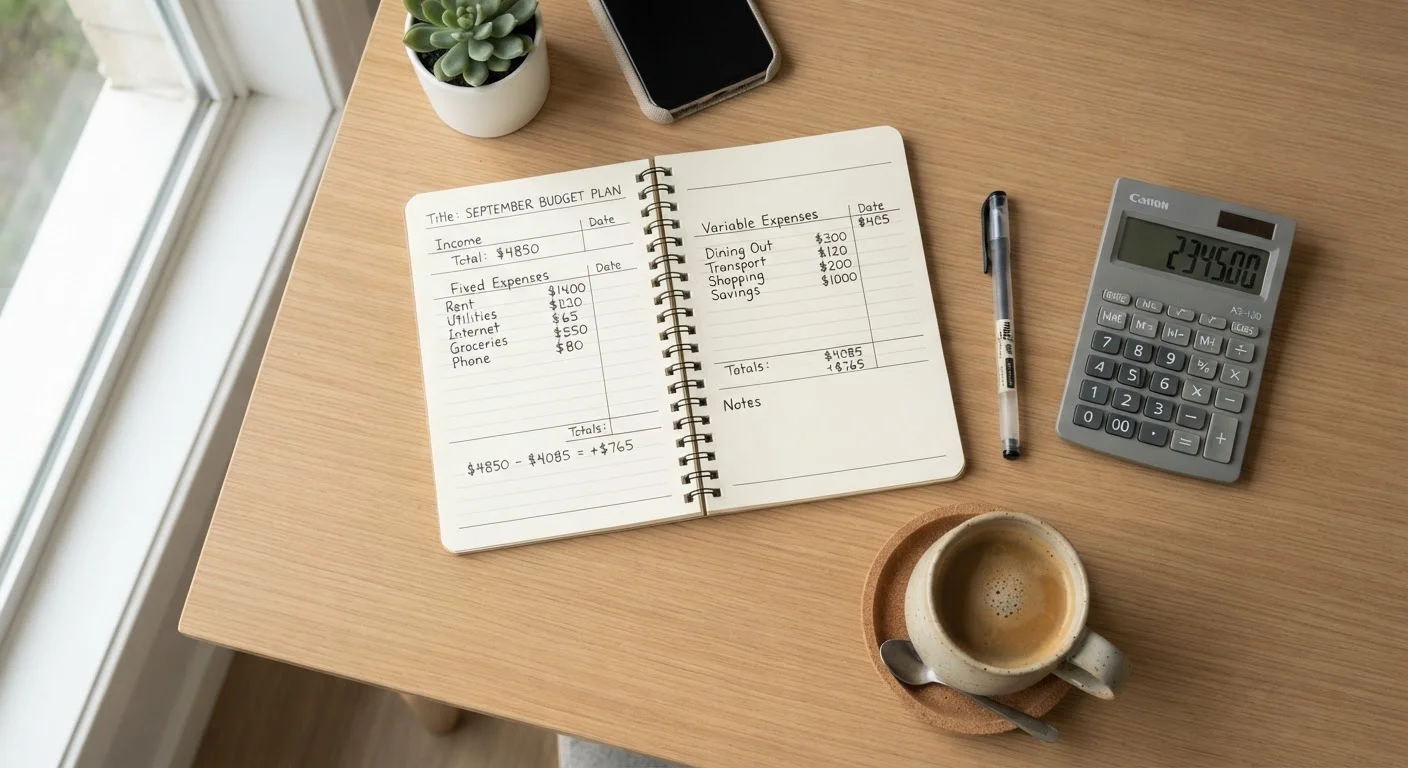
Subtract your total monthly expenses (including savings) from your take-home income. The result will be one of three things:
- Positive: You have a surplus. Decide deliberately where that surplus goes — additional savings, debt payoff, or a specific financial goal.
- Zero: Every dollar has a job. This is intentional and fine as long as you've accounted for savings and irregular costs.
- Negative: Your planned spending exceeds your income. You need to reduce expenses, increase income, or both.
If you're in deficit, start with variable expenses — these are the most flexible. Identify one or two categories where you can realistically cut spending this month, not in theory but in practice. Avoid cutting so aggressively that the budget feels punishing; unsustainable plans get abandoned.
Round Up When Estimating Expenses
When setting spending limits, err on the side of slightly overestimating variable categories like groceries and utilities. A budget that gives you a small buffer is far more likely to survive real-world spending than one built on optimistic minimums. If you come in under budget, redirect the surplus to savings.
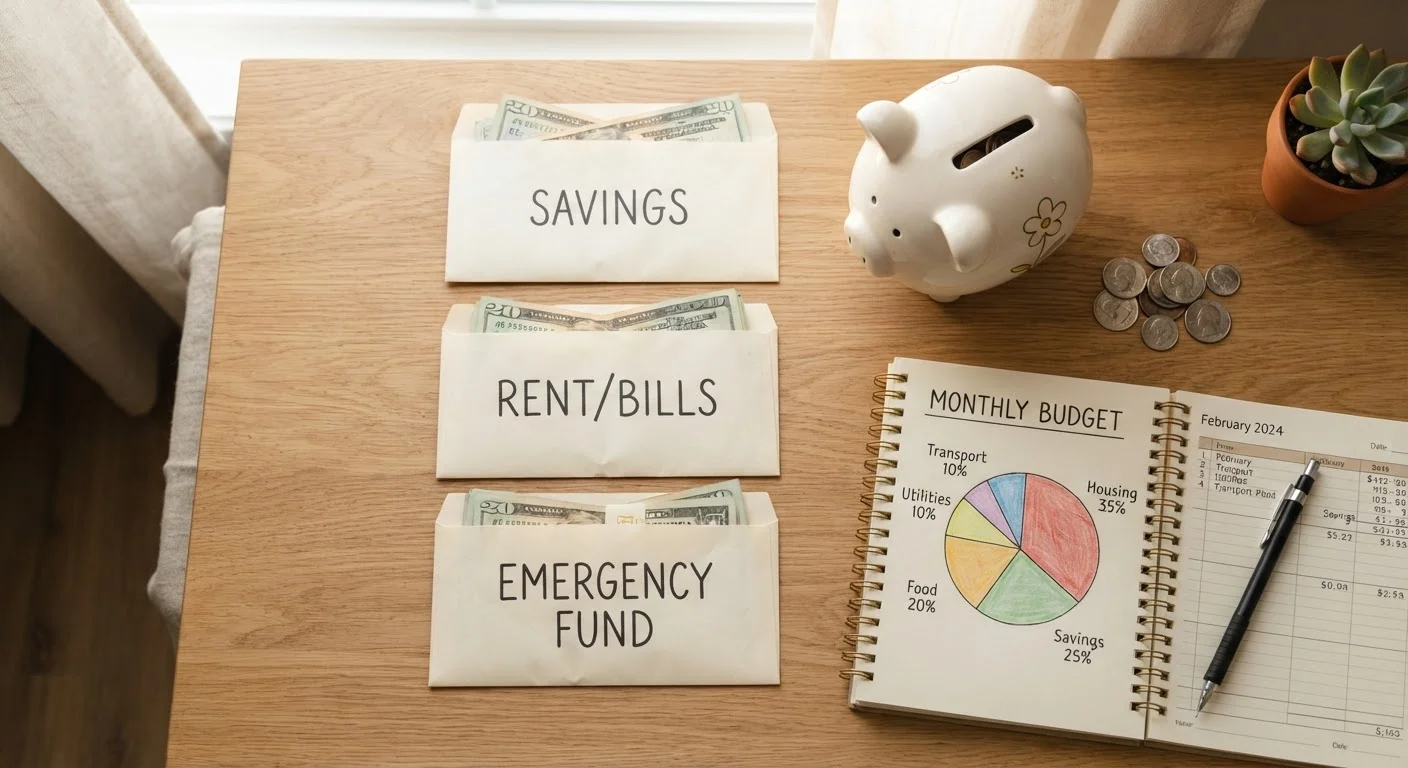
A widely referenced starting framework is the 50/30/20 guideline: roughly 50% of take-home pay toward needs, 30% toward wants, and 20% toward savings and debt repayment. Use it as a rough compass, not a rigid rule — your actual numbers will vary based on where you live and your financial obligations.
Step 4: Track Spending and Adjust Each Month
Writing a budget is step one. Following it requires tracking. Throughout the month, record what you spend in each category — either in a spreadsheet, a notes app, or a dedicated budgeting app. The tool doesn't matter; the consistency does.
At month's end, compare actual spending against your budget line by line. Categories where you overspent are not failures — they're information. Ask whether the limit was unrealistic or whether spending drifted without notice. Adjust the following month's budget accordingly. Use our end-of-month review checklist to make this process systematic.
Expect your first two or three budgets to need significant revision. That's normal. Each month gives you better data, and your budget becomes more accurate and useful over time.
Where to Go From Here
Once you've completed one or two full budget cycles, you'll have a reliable baseline to build on. From here, three directions are worth exploring:
- Refine your method: The simple framework in this guide works, but other approaches — like the envelope method or pay-yourself-first — may suit your personality better. The budgeting methods comparison can help you decide.
- Build an emergency fund: Before focusing on investing, most financial professionals recommend setting aside three to six months of essential expenses in an accessible account. See why an emergency fund comes first for a grounded explanation.
- Start saving and investing: Once your budget is stable and a cash cushion is in place, saving and investing for beginners offers a clear next step.
This article is for general informational and educational purposes only and does not constitute personalized financial, tax, or legal advice. Consult a qualified financial professional before making decisions specific to your situation.