
Why the Emergency Fund Comes Before Investing
A common question among people starting their financial journey is: should I invest first or save first? For most people with no financial cushion, the answer from widely accepted personal finance frameworks is clear — build the emergency fund first.
Without liquid savings, any unexpected expense forces a choice between going into debt, selling investments (possibly at a loss), or simply not covering the cost at all. Each option has consequences that can set back financial progress far more than any investment gain could offset. An emergency fund breaks that cycle by giving you an immediate, cost-free source of funds when life doesn't go to plan.
Before diving into the market, it's worth reviewing your overall financial foundation. Our guide to financial moves to review before you start investing walks through exactly this kind of checklist.
Start Small — Then Scale Up
If three to six months of expenses feels out of reach right now, start with a concrete smaller target: $500 or one month of essential costs. Research in behavioral finance consistently finds that reaching an early milestone reinforces the habit and makes larger goals feel achievable. Once that first milestone is hit, simply raise the target and keep going.
How Much Is Enough? Understanding the 3-to-6-Month Guideline
The most commonly cited benchmark is three to six months of essential living expenses — not total income, but the core costs you must cover each month: housing, utilities, groceries, transportation, insurance, and minimum debt payments.
Why the range? Your ideal target depends on factors like income stability, number of household earners, and whether you have dependents. A two-income household with stable salaried jobs may be comfortable at the lower end. A freelancer, contractor, or single-income family typically benefits from sitting closer to — or beyond — the upper end.
Starting from zero, the full target can feel overwhelming. That's normal and expected. A practical approach is to set a smaller first milestone — such as one month of expenses — and build from there. Progress matters more than perfection at the outset.
~37%
Americans who couldn't cover a $400 emergency with cash
According to the Federal Reserve's Report on the Economic Well-Being of U.S. Households, a significant share of Americans lack the liquid savings to absorb even a modest unexpected expense.
3–6 months
Recommended emergency fund coverage in essential expenses
This benchmark is widely cited by financial educators, including those at the Consumer Financial Protection Bureau, as a general starting framework for most households.
56%
Americans with less than three months of expenses saved
Bankrate's annual Emergency Savings Report has consistently found that more than half of U.S. adults fall below the three-month threshold, underscoring how common this financial gap is.
Where to Keep It and How to Build It
The right account for an emergency fund prioritizes two things: liquidity (you can access it quickly without penalty) and safety (the balance doesn't fluctuate with market conditions). High-yield savings accounts and money market accounts at federally insured institutions are the most common choices. They typically earn more than a standard savings account while keeping funds fully accessible.
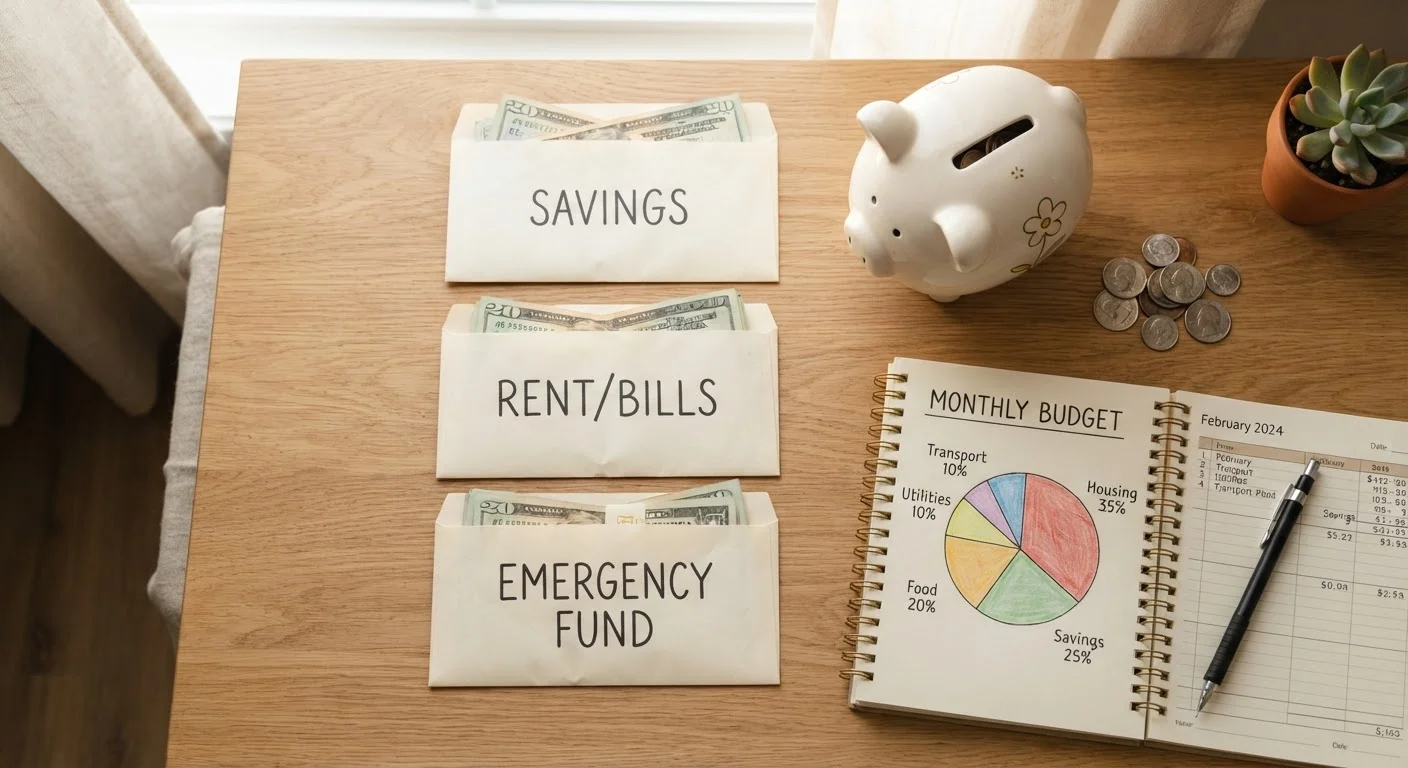
Building the fund consistently is often more important than the amount of each contribution. Automating a fixed transfer — even a modest one — on each payday removes the decision from your hands and makes saving a default behavior rather than an afterthought. If you haven't yet established a broader monthly spending plan, our first budget guide for beginners can help you identify where that savings contribution fits.
Windfalls — tax refunds, work bonuses, or monetary gifts — are also worth directing toward the emergency fund until it reaches your target. For more on building consistent saving habits regardless of income level, see our piece on building a saving habit from zero.
Using and Replenishing the Fund
Knowing when to use the fund is as important as building it. True emergencies are unexpected, necessary, and urgent. A sudden job loss, an unforeseen medical expense, or an unavoidable car repair qualifies. A planned purchase or a non-critical upgrade does not — those belong in separate savings categories.
When you do draw from the fund, treat replenishment as an immediate priority once the crisis has passed. Resume contributions right away, and consider temporarily increasing the amount to rebuild faster. If a job loss is the triggering event, our resource on navigating a job loss in the first 30 days outlines a practical financial response for that scenario specifically.
Homeowners face an additional layer of unpredictability. If you own property, emergency planning extends beyond personal expenses — major repairs and maintenance can demand substantial cash. Our article on building a home emergency fund covers how to think about that reserve separately.
This article is for general informational and educational purposes only. It is not personalized financial, investment, tax, or legal advice. Please consult a qualified, licensed financial professional before making decisions based on your individual circumstances.