
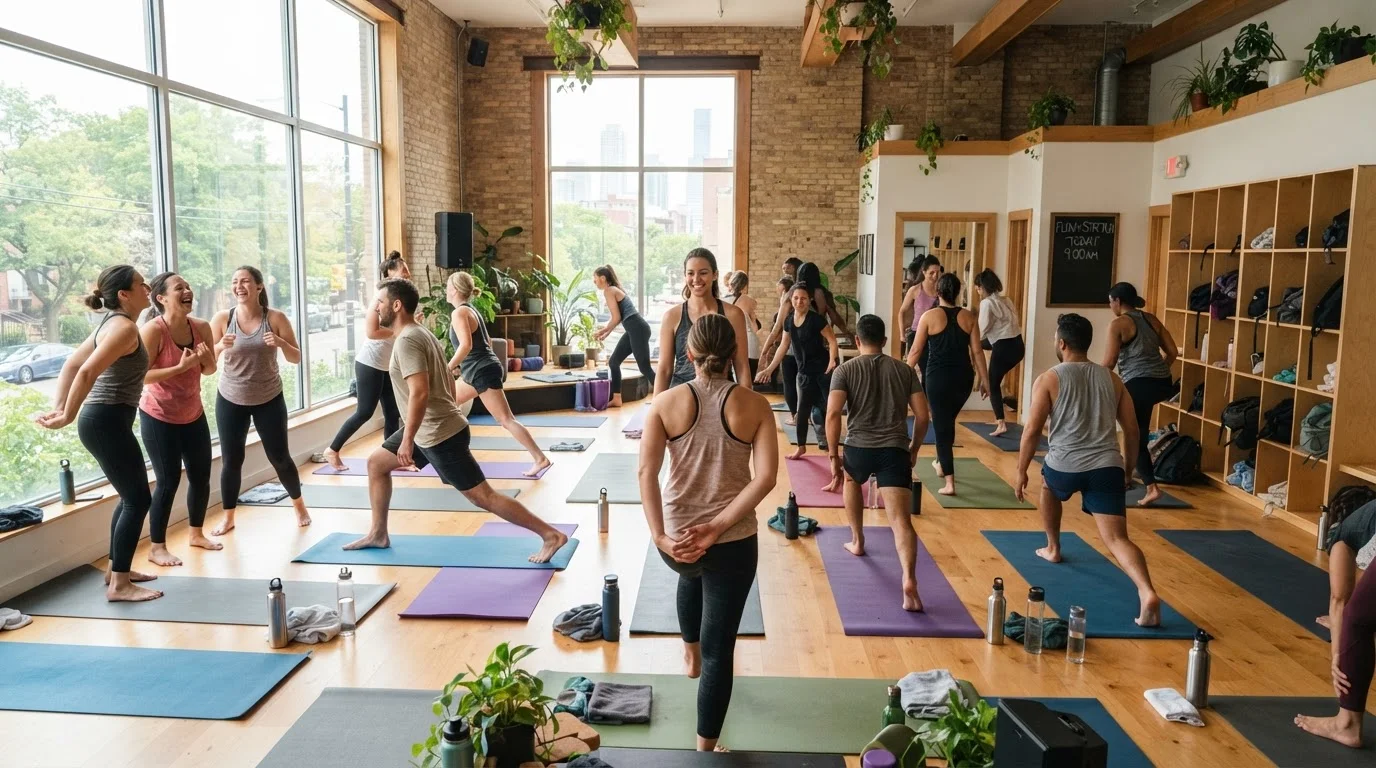
Why Group Fitness Can Feel Intimidating at First
Walking into a room full of people who seem to know exactly what they're doing — and where to stand — can feel like showing up late to a party where everyone else knows the host. That feeling is common, and it fades quickly. Group fitness classes are designed to be repeatable and accessible, which means the format, cueing, and choreography are built to accommodate newcomers.
The real challenge isn't fitness level — it's the unknowns. What do you bring? Where do you stand? Is it rude to leave early? This checklist addresses those practical questions directly so you can focus on moving, not on feeling out of place. If you've navigated other unfamiliar first experiences — like traveling solo for the first time — you already know that a little preparation transforms anxiety into confidence.
What to Bring and How to Prepare
Preparation isn't about having the right gear — it's about removing friction so you can focus on the class itself.
Water Bottle (insulated preferred)
Keeps you hydrated throughout class without needing to use communal equipment or leave mid-session.
Appropriate Athletic Footwear
Supports safe movement patterns and reduces injury risk — the right shoe type varies by class format.
Small Towel
Useful for wiping down shared equipment and managing sweat during higher-intensity formats.
Fitness Mat
Required for floor-based classes like yoga, Pilates, or core circuits — many studios provide them, but bringing your own is more hygienic.
Heart Rate Monitor or Fitness Tracker
Helps you gauge effort and avoid overexertion, especially useful when navigating your first unfamiliar class format.
Beyond equipment, a few logistical steps make your first session much smoother. Checking the studio's website or app for class descriptions, duration, and any listed prerequisites is worth five minutes of your time. If you're returning to exercise after a long break, look for beginner or foundational-level classes rather than jumping into an advanced format.
Your First Group Fitness Class Checklist
Use this checklist before, during, and after your first session. Not every item applies to every class format, but working through these categories will help you feel grounded regardless of what's on the schedule.
Before You Go
During Class
After Class
One note on effort: group settings naturally create a pull toward matching the pace of those around you. Resist it, especially early on. Zone 2 cardio research consistently shows that building aerobic fitness at a sustainable effort — not a maximal one — produces better long-term results. The same logic applies to your first group class.
When to Stop and Seek Help
Muscle fatigue and mild breathlessness during a group class are expected. However, stop exercising immediately and seek medical attention if you experience chest pain, dizziness, difficulty breathing disproportionate to the effort, or sharp joint pain. These symptoms are not normal exercise discomfort. If you have a known cardiovascular condition, chronic illness, or recent injury, speak with your healthcare provider before starting a new class format.
After Class: What to Expect and What Comes Next
Muscle soreness in the 24–48 hours after a new type of exercise is expected — this is called delayed onset muscle soreness (DOMS) and reflects your muscles adapting to unfamiliar demands. It's not a sign of injury, but it is a signal to rest or move gently before your next session.
Take a moment after class to note what you liked, what felt hard, and whether the format suits your goals. Group fitness spans a wide range — spin cycling, HIIT, yoga, Pilates, barre, dance cardio, strength circuits — and your first choice may not be your best fit. That's fine. Exploring formats is part of building a routine that sticks. For comparison, bodyweight versus free weight training offers a useful lens if you're deciding whether group classes or solo strength work better aligns with your goals.
Most people who stick with group fitness cite accountability and energy as their reasons — but those benefits only accumulate if you keep showing up. One session tells you very little. Three to four sessions in the same format gives you a much clearer picture.
This article is for general informational purposes only and is not a substitute for professional medical or fitness advice. Consult a qualified healthcare provider before beginning a new exercise program, especially if you have an existing health condition or injury.