Why Most Meal Plans Fall Apart
Meal planning has a reputation for being either life-changing or completely unsustainable — and the difference usually comes down to design, not discipline. Most plans fail because they're built for an idealized version of the week: one where nothing runs late, energy stays consistent, and motivation holds through Thursday.
Research on dietary behavior consistently shows that rigid, overly detailed plans generate the most early dropoff. When one meal goes sideways, the entire structure can feel broken. The more useful approach treats planning as a framework for decisions, not a schedule to obey. That shift changes everything about how you interact with food on a busy day.
Understanding where plans break down is the first step. The second is building practices that bend without collapsing — week after week, not just in week one.
Core Principles That Actually Stick
These practices are grounded in nutritional science and behavioral research. They're designed to work in real kitchens, not idealized ones.
Build your plan around three to five anchor proteins each week, not full recipes.
Choosing ingredients rather than dishes dramatically expands how many meals you can assemble without additional planning. Proteins are typically the most time-intensive component, so preparing them in advance removes the main bottleneck. This approach also reduces food waste because versatile ingredients appear across multiple meals.
Match meal complexity to your actual energy levels on each day of the week.
Scheduling an elaborate recipe for your busiest workday is a structural flaw, not a motivation problem. Honest planning accounts for when you're most likely to be tired, rushed, or distracted. Simpler meals on high-demand days keeps the plan intact rather than defaulting to takeout.
Keep two or three 'no-plan' meals in reserve every week.
Leaving intentional gaps accommodates the unexpected without creating guilt or a sense of failure. These slots can absorb leftovers, last-minute schedule changes, or simply the desire to eat something different. Plans that allow for flexibility get followed more consistently than those that don't.
Use a rotating set of meal templates rather than inventing new combinations each week.
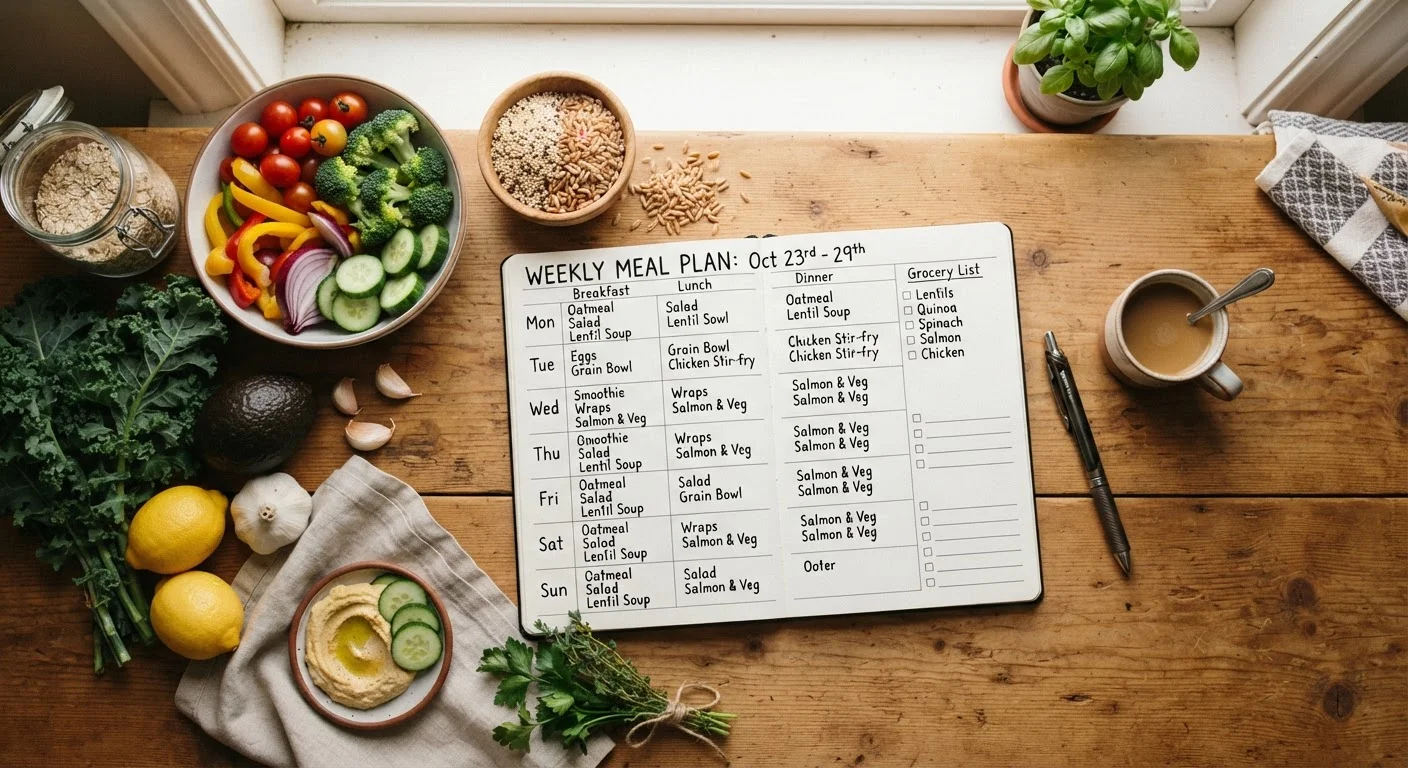
Novelty fatigue is real — when planning feels like a creative exercise, it becomes harder to sustain. Templates (grain bowl, stir-fry, soup, egg-based meal) give structure without locking in specific ingredients, so variety still happens naturally within a repeatable system.
Assess last week's plan before building the next one.
A brief weekly review — noting what got skipped, what worked well, and what produced the most waste — turns each cycle into useful data. Over time, this self-correction makes plans increasingly accurate and sustainable. Most successful meal planners report that their current approach looks nothing like when they started.
Pairing these habits with a reliable shopping routine makes them even more effective. A structured list reduces both overspending and the in-store decisions that derail healthy intentions — see our guide to building a shopping list that sticks for practical strategies.
Balancing Nutrition Without Obsessing Over Each Meal
One of the most freeing insights from nutrition science is that dietary balance is best assessed over days, not individual meals. A lunch that's light on protein matters far less than a pattern of consistently skipping it. This perspective reduces the pressure each meal carries and makes planning feel proportionate rather than perfectionistic.
Affordable, nutrient-dense staples — legumes, eggs, canned fish, frozen vegetables, whole grains — do the heavy lifting across most well-planned weeks. You don't need specialty ingredients to eat well. For a closer look at where nutrition and affordability genuinely overlap, our guide to eating well on a budget is a strong complement to the planning principles here.
Meal planning also connects to broader wellness habits. Consistent routines — including around food — support emotional stability and reduce daily stress load. If you're building other consistent habits, the approach to daily mental wellness routines shares overlapping principles worth considering.
This article is for general informational purposes only and does not constitute medical or dietary advice. Consult a qualified healthcare provider or registered dietitian for guidance tailored to your individual health needs.