Why the 'Healthy Food Is Expensive' Assumption Needs Updating
The belief that nutritious eating requires a premium grocery budget is widespread — and largely unsupported by evidence. While certain specialty health foods do carry high price tags, the foods that nutrition research most consistently endorses are often the same ones that have always been inexpensive: dried legumes, whole grains, eggs, canned fish, and frozen vegetables.
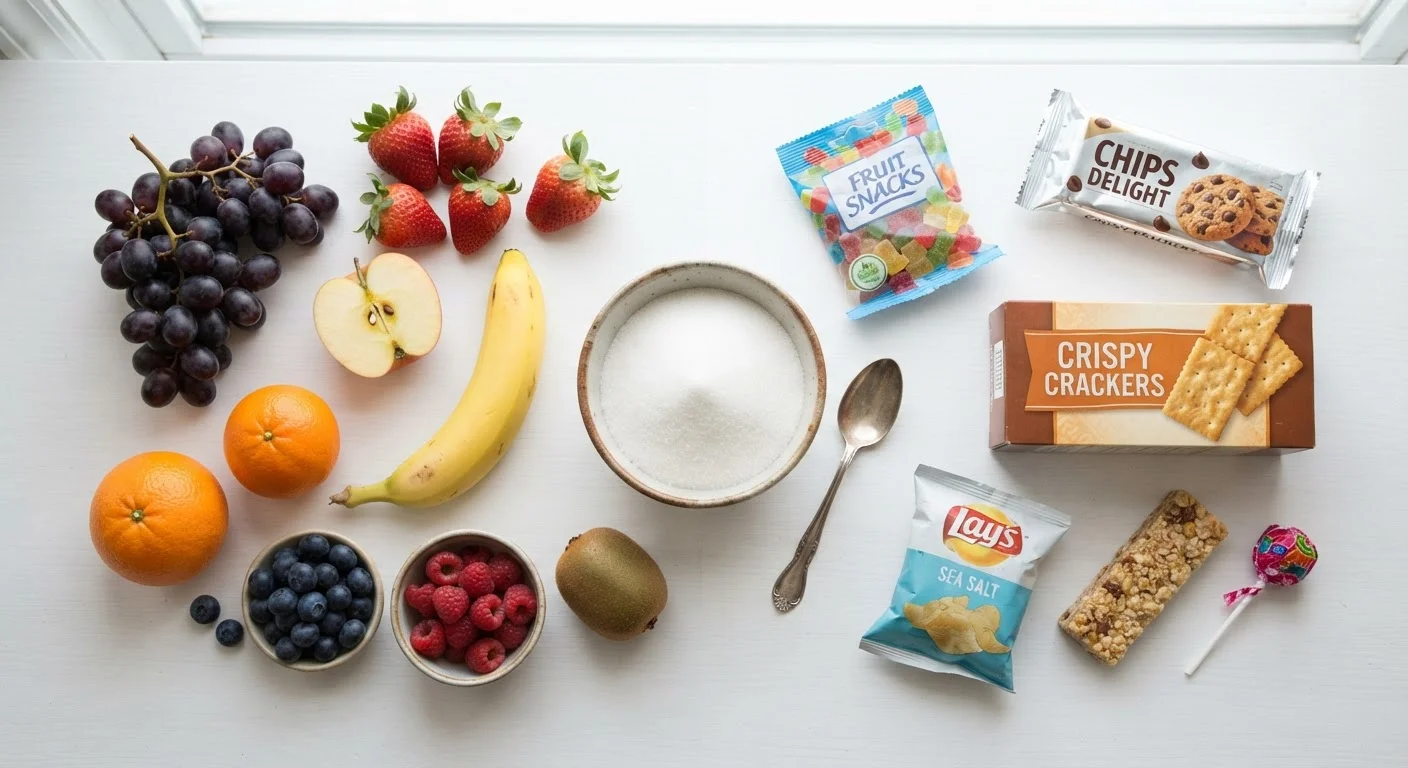
The confusion often comes from comparing packaged health foods — protein bars, cold-pressed juices, superfood powders — with conventional processed items. That comparison makes healthy eating look costly. But compare dried black beans to a bag of chips, or rolled oats to a box of sweetened cereal, and the economic picture reverses entirely.
Understanding which nutrients your diet actually needs is a useful starting point. Our working glossary of nutrition terms explains key concepts like macronutrients, fiber, and micronutrient density in plain language.
Cost Per Serving Is the Right Unit
Grocery sticker prices can be misleading. A bag of dried lentils may cost more upfront than a single-serve snack, but its cost per serving is far lower. When comparing options, divide the price by the number of servings to get a meaningful comparison. This single habit reframes most grocery decisions in favor of whole-food staples.
The Most Nutritious Affordable Staples
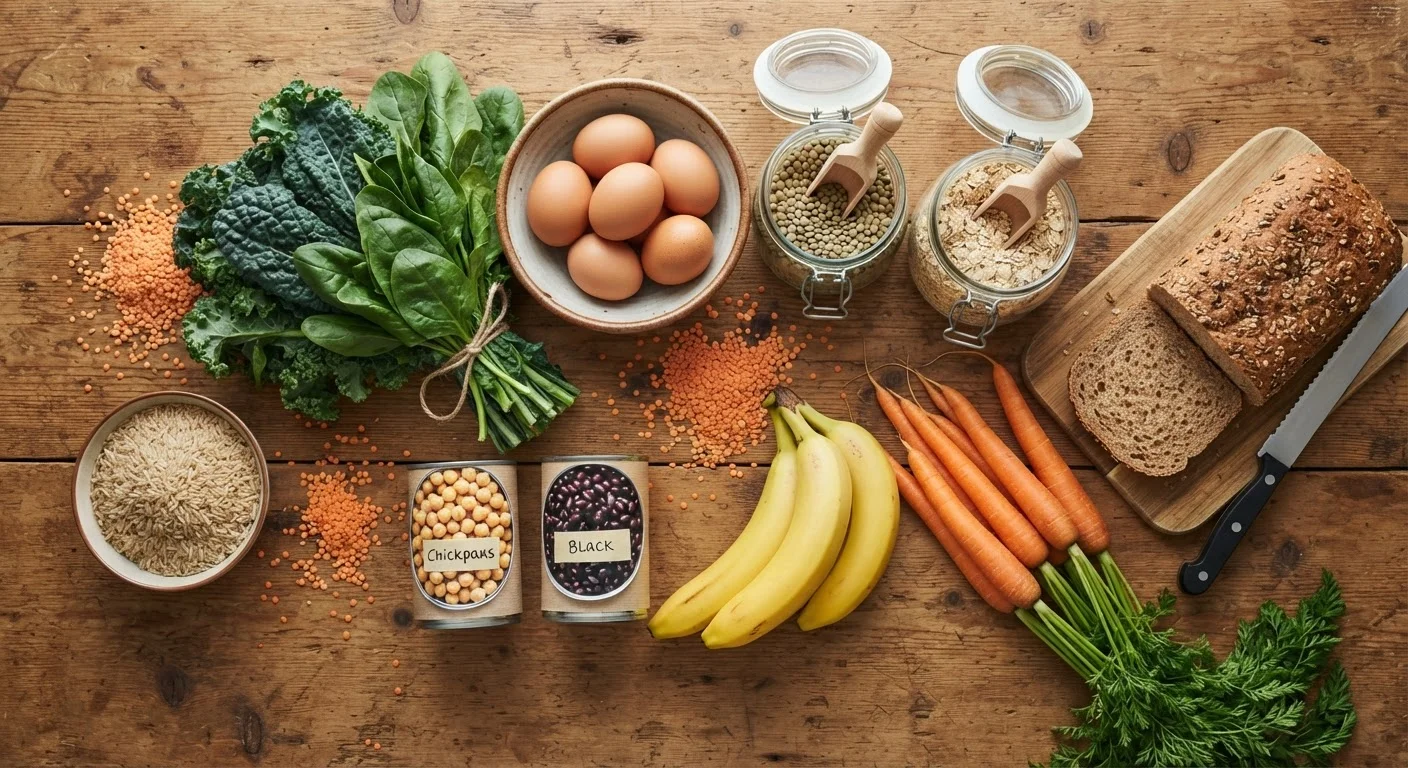
A handful of foods sit at the intersection of low cost and high nutritional return. These are not obscure items — they are available at virtually every grocery store in the country.
- Dried or canned legumes (lentils, black beans, chickpeas): Rich in protein, fiber, iron, and folate. Dried forms are especially economical. Fiber is chronically underconsumed by most American adults, and legumes are among the most reliable sources available.
- Eggs: A complete protein source containing all essential amino acids, along with vitamins B12, D, and choline. Per gram of protein, eggs are consistently among the most affordable options. For a fuller comparison of protein sources, see our side-by-side protein source guide.
- Rolled oats: Provide beta-glucan fiber, manganese, and sustained energy. Plain oats cost a fraction of most breakfast alternatives per serving.
- Frozen vegetables (spinach, broccoli, peas, edamame): Frozen at peak ripeness, these retain most of their nutrient content and are available year-round at stable prices. Research supports that frozen vegetables are nutritionally comparable to fresh in most cases.
- Canned fish (sardines, tuna, salmon): Deliver omega-3 fatty acids, protein, calcium (in sardines with bones), and vitamin D. Sardines in particular are among the most nutrient-dense foods available at a low per-serving cost.
- Bananas and carrots: Two of the most affordable fresh produce options, providing potassium, vitamin A, and fiber. Carrots are especially versatile — eaten raw, roasted, or added to soups.
Many of the micronutrients most Americans fall short on — including potassium, calcium, and vitamin D — can be addressed through these everyday staples.
How to Build Budget-Friendly Meals With These Staples
Knowing which foods to buy is only half the equation. The other half is structuring your approach so those foods actually become meals — consistently, without waste.
Audit Your Current Spending by Food Category
Before changing what you buy, understand where your money currently goes. Review a recent grocery receipt or bank statement and group spending into categories: proteins, grains, produce, packaged snacks, beverages, and convenience items. This audit typically reveals that packaged and processed foods consume a disproportionate share of the budget relative to their nutritional contribution.
Shift One High-Cost Item Toward a Nutritious Low-Cost Alternative
Rather than overhauling your grocery list at once, identify one item you regularly buy that is both expensive and nutritionally limited — a flavored yogurt drink, a bag of chips, a specialty protein bar — and replace it with a staple from the list above. Small substitutions made consistently have more staying power than dramatic overhauls.
Prioritize Dried, Frozen, and Canned Forms
Fresh produce is valuable, but dried, frozen, and canned forms of the same foods are often nutritionally equivalent and significantly cheaper. Buy dried beans over canned when you can plan ahead; stock frozen spinach and broccoli as reliable backups; keep canned fish in the pantry for quick, protein-rich meals. These formats also reduce food waste because they don't spoil quickly.
For context on how convenience-focused purchasing affects your budget over time, understanding the real cost of convenience is a useful companion read.
Build Meals Around the Starch-Protein-Vegetable Framework
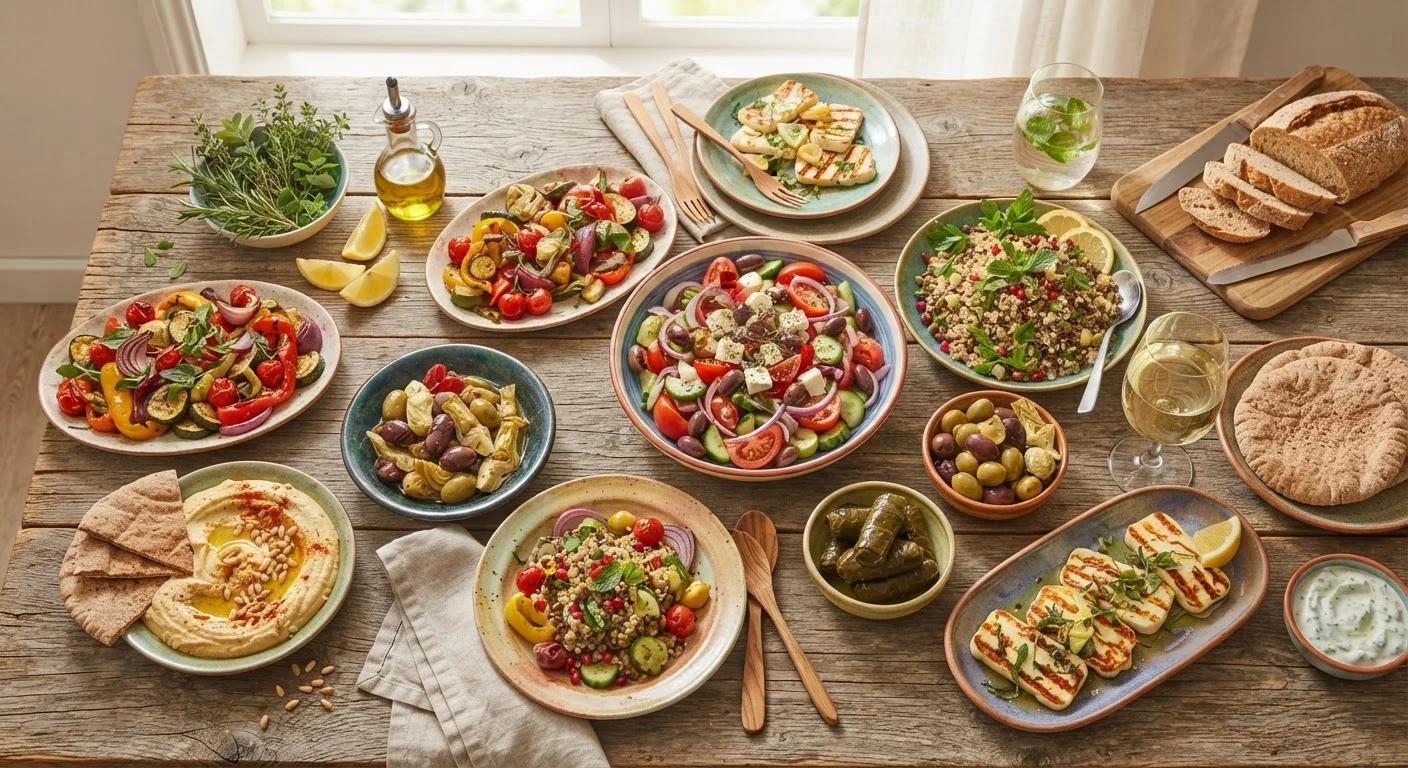
A practical assembly method: anchor each meal with a whole grain or starchy vegetable (brown rice, oats, sweet potato), add a protein source from the affordable staple list (eggs, legumes, canned fish), and pair with a vegetable — frozen, canned, or whatever fresh produce is on sale. This framework maps closely to dietary patterns with the strongest research support, including Mediterranean and DASH-style approaches.
Track and Reduce Food Waste
Food that spoils before you use it is money lost and nutrition missed. Keep perishables visible in your refrigerator, store leafy greens with a paper towel to absorb moisture, and use the oldest items first. A 2023 USDA estimate suggested that American households waste a significant portion of the food they purchase — reducing waste is one of the most direct ways to improve your effective food budget.
For readers interested in expanding toward more plant-forward eating, our guide on plant-based eating outlines how to shift dietary patterns gradually without overhauling your entire routine. And if you want a more structured framework for the week ahead, sustainable meal planning principles offer evidence-informed guidance without rigid scheduling.
This article is for general informational and educational purposes only and is not a substitute for professional dietary or medical advice. Individual nutritional needs vary. Consult a registered dietitian or qualified healthcare provider for personalized guidance.