Why Nutrient Gaps Are Widespread
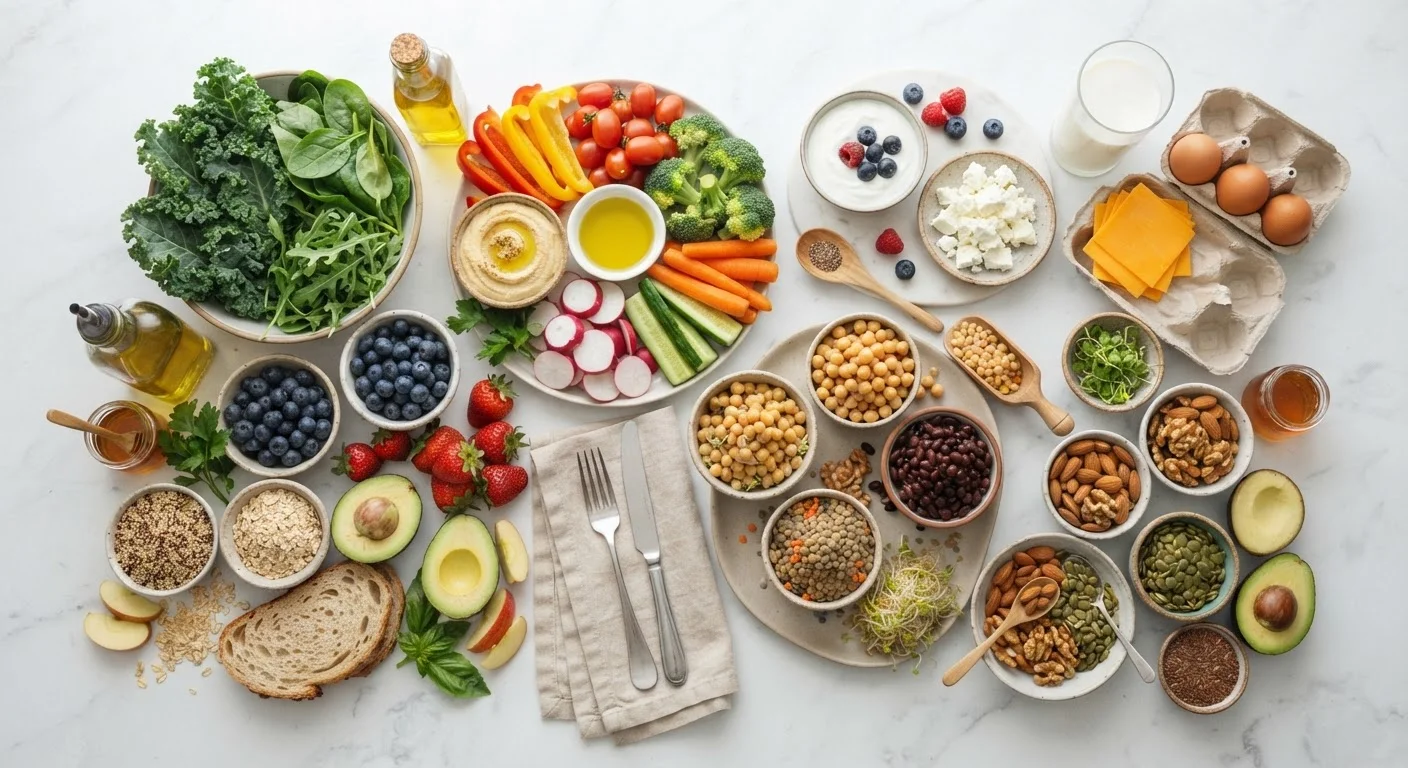
The United States has no shortage of calories. Yet federal nutrition surveillance data consistently identifies a cluster of vitamins and minerals that a majority of American adults consume below recommended levels. These are sometimes called "shortfall nutrients" — not because they're exotic or hard to find, but because the foods richest in them (vegetables, legumes, dairy, whole grains, nuts) tend to be underrepresented in the typical American diet.
Understanding which micronutrients are most commonly under-consumed — and why they matter — is a practical first step toward more informed food choices. If you're new to nutrition terminology, our nutrition glossary offers clear definitions for the vocabulary you'll encounter here.
This article is for general informational purposes only and is not a substitute for personalized medical or dietary advice. If you have concerns about specific nutrient deficiencies, speak with a qualified healthcare provider.
Calcium
Calcium is the most abundant mineral in the body, essential for bone density, muscle contraction, and nerve signaling. The DGA identifies it as a nutrient of public health concern because large portions of the adult population — particularly women and older adults — consume well below the recommended 1,000–1,200 mg per day.
Dairy products (milk, yogurt, cheese) remain the most concentrated dietary sources, but non-dairy options include fortified plant-based milks, canned fish with bones (sardines, salmon), tofu made with calcium sulfate, and leafy greens such as bok choy and kale. Note that spinach and Swiss chard contain oxalates that can reduce calcium absorption, so variety matters.
Large portions of American adults, especially women, fall well below daily calcium recommendations.
Vitamin D
Vitamin D supports calcium absorption, immune function, and muscle health. It's unique because the body can synthesize it through sun exposure, yet deficiency remains common — partly due to indoor lifestyles, sunscreen use, darker skin pigmentation (which reduces synthesis), and the geographic latitude of much of the U.S.
Very few foods naturally contain meaningful amounts of vitamin D. Fatty fish (salmon, mackerel, tuna), egg yolks, and UV-exposed mushrooms provide some. Fortified foods — including most cow's milk, many plant milks, and some cereals — are the primary dietary sources for most Americans. Because achieving adequate vitamin D through diet alone can be difficult, this is one nutrient where a healthcare provider may recommend testing and, if needed, supplementation.
Vitamin D deficiency is common even in sunny climates, driven by indoor lifestyles and limited food sources.
Potassium
Potassium is critical for blood pressure regulation, heart rhythm, and fluid balance. It works in direct opposition to sodium — adequate intake helps counteract the blood-pressure-raising effects of high sodium consumption, which is itself above recommended levels for most Americans.
The adequate intake for potassium is 2,600–3,400 mg per day depending on age and sex, yet most adults consume substantially less. Rich sources include bananas, potatoes (with skin), avocados, beans, lentils, leafy greens, and dairy. Notably, these are exactly the foods that tend to be crowd out by highly processed options in typical diets. Fiber intake and potassium intake often rise and fall together — boosting one tends to improve the other. Our article on why fiber deserves more attention explores this overlap further.
Potassium and sodium work in opposition — most Americans get too much of one and too little of the other.
Magnesium
Magnesium participates in more than 300 enzymatic reactions in the body, including energy production, protein synthesis, blood glucose regulation, and blood pressure control. Despite its central role, surveys suggest roughly half of Americans consume less than the recommended daily amount (310–420 mg depending on age and sex).
The shortfall is largely attributable to low consumption of whole grains, nuts, seeds, and leafy green vegetables — all reliable magnesium sources. Refined grains lose a significant portion of their magnesium during processing. Pumpkin seeds, almonds, black beans, edamame, and dark chocolate are among the more concentrated food sources. Magnesium is also worth noting in the context of sleep and muscle function, though claims about supplementation for these purposes vary in their evidence base.
Roughly half of Americans fall short on magnesium, largely because of low intake of whole grains and leafy greens.
Vitamin K
Vitamin K is a fat-soluble vitamin that exists in two main forms: K1 (phylloquinone), found primarily in leafy green vegetables, and K2 (menaquinone), found in fermented foods and some animal products. K1 plays a key role in blood clotting; K2 is increasingly studied for its role in directing calcium to bones rather than arteries, though research on K2 specifically is still developing.
Adequate intake for vitamin K is set at 90–120 micrograms per day. Leafy greens — kale, spinach, collard greens, broccoli — are the most practical way to meet this target. Because vitamin K is fat-soluble, consuming it alongside a source of dietary fat (such as olive oil or avocado) improves absorption. People taking blood-thinning medications should consult their healthcare provider before significantly changing their vitamin K intake, as it can affect medication effectiveness.
Pairing leafy greens with healthy fats meaningfully improves the body's absorption of vitamin K.
Putting This Into Practice
The encouraging reality is that most of these shortfalls respond well to consistent dietary changes rather than dramatic overhauls. Adding leafy greens to one meal a day, swapping refined grains for whole grains, and incorporating legumes several times a week can collectively address multiple gaps simultaneously. Research-supported eating patterns — such as the Mediterranean and DASH diets — are naturally rich in these shortfall nutrients. Our overview of eating patterns linked to long-term health explains what these approaches have in common.
Cost is a real barrier for many households, but it doesn't have to be prohibitive. Foods like canned sardines, dried beans, frozen spinach, and plain yogurt are among the most affordable and nutrient-dense options available. See our guide on eating well on a budget for practical strategies. It's also worth noting that hydration plays a supporting role: water affects how the body absorbs and transports several of these micronutrients. The link between hydration and nutrition is often underappreciated.
Focus on Food Patterns, Not Single Nutrients
Chasing individual nutrients one by one can make healthy eating feel like an endless checklist. In practice, dietary patterns that emphasize vegetables, legumes, whole grains, nuts, and moderate dairy tend to address multiple shortfall nutrients at once. Small, sustainable shifts — like adding a handful of leafy greens to a meal or swapping white rice for a whole grain — compound meaningfully over time.
This article is for informational purposes only and is not medical advice. Do not start, stop, or change any supplement or medication without consulting a qualified healthcare professional.