Start at the Top: Serving Size and Calories
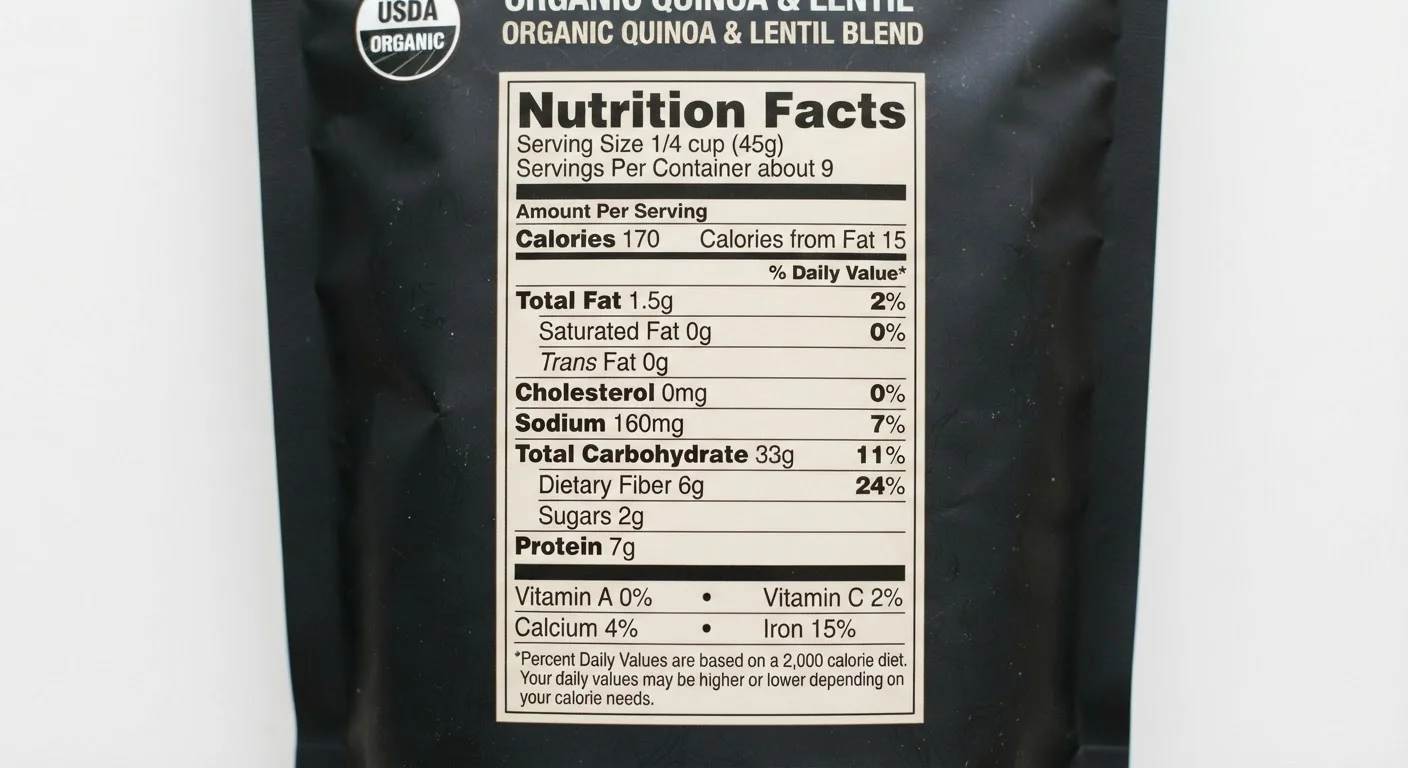
The first thing to read on any Nutrition Facts label is the serving size — not because it tells you how much to eat, but because every single number on the label is based on it. Serving sizes are standardized by the FDA to reflect amounts people typically eat in one sitting, expressed in familiar units like cups or pieces alongside grams.
Directly below serving size is the number of servings per container. A bag of chips labeled "Servings: 3" means all nutrient values listed apply to one-third of the bag. Calories follow immediately after, presented in a larger font by design — they represent the total energy from that one serving, combining contributions from fat, carbohydrates, and protein.
If you want a deeper understanding of how these terms relate to broader dietary concepts, the nutrition terms glossary offers clear definitions for the vocabulary you'll encounter most often.
Nutrients to Limit and Nutrients to Get Enough Of
The label organizes nutrients into two informal groups. The first includes nutrients most Americans tend to overconsume: saturated fat, trans fat, sodium, and added sugars. Eating too much of these over time is associated with increased risk of heart disease, high blood pressure, and type 2 diabetes. The label highlights these so you can make conscious choices about limiting them.
The second group covers nutrients many Americans fall short on: dietary fiber, vitamin D, calcium, iron, and potassium. Adequate intake of these supports bone health, digestive function, immune response, and blood pressure regulation. The goal with this group is to look for foods that contribute meaningfully — ideally with a % DV of 20% or higher per serving.
70%+
Americans exceed recommended sodium intake daily
According to the CDC, most Americans consume more than the recommended 2,300 mg of sodium per day, largely from packaged and processed foods.
17 tsp
Average daily added sugar intake in the US
The American Heart Association reports that Americans consume an average of about 17 teaspoons of added sugar per day — well above the recommended limit of 6–9 teaspoons.
95%
Americans fall short on dietary fiber
Research published in the American Journal of Lifestyle Medicine found that approximately 95% of Americans do not meet recommended daily fiber intake levels.
Added sugars deserve special attention. The FDA requires them to be listed separately beneath total sugars, giving you a clear picture of how much sweetener was introduced during processing versus what occurs naturally in the food. Front-of-package claims like "natural" or "light" often distract from what the actual numbers reveal.
Understanding % Daily Value
The right column of the label shows % Daily Value (% DV) for most listed nutrients. This figure tells you how much of the recommended daily intake for that nutrient is provided by one serving, based on a 2,000-calorie reference diet. The 2,000-calorie baseline is a standard used for labeling purposes — individual calorie needs vary depending on age, size, sex, and activity level.
A practical rule: 5% DV or less means a food is a low source of that nutrient; 20% DV or more means it's a high source. Use these benchmarks to make fast comparisons between products — for instance, choosing the cereal with higher fiber % DV or lower sodium % DV without needing to calculate anything yourself.
Note that trans fat, total sugars, and protein do not currently have an established % DV, so those lines appear without a percentage. For protein, the total grams listed are still useful for tracking intake relative to your own dietary goals.
What the Label Doesn't Tell You
The Nutrition Facts label is a powerful tool, but it has limits. It tells you what nutrients are present and in what amounts — it doesn't tell you about ingredient quality, processing methods, or how individual nutrients interact in your body. Two products can have identical labels but very different ingredient lists.
For that reason, reading the nutrition panel alongside the ingredient list gives a much fuller picture. Ingredient lists follow strict ordering rules that reveal what a product is mostly made of and whether certain additives are present.
Front-of-package claims — "low fat," "multigrain," "made with real fruit" — are also outside the label's scope. These phrases are loosely regulated and can be misleading. The Nutrition Facts label is the regulated, standardized data; everything else on the package is marketing. Learning to read both critically is one of the most practical skills you can bring to the grocery store.
This article is for general informational and educational purposes only and is not a substitute for professional dietary or medical advice. Consult a registered dietitian or qualified healthcare provider for guidance specific to your health needs.