
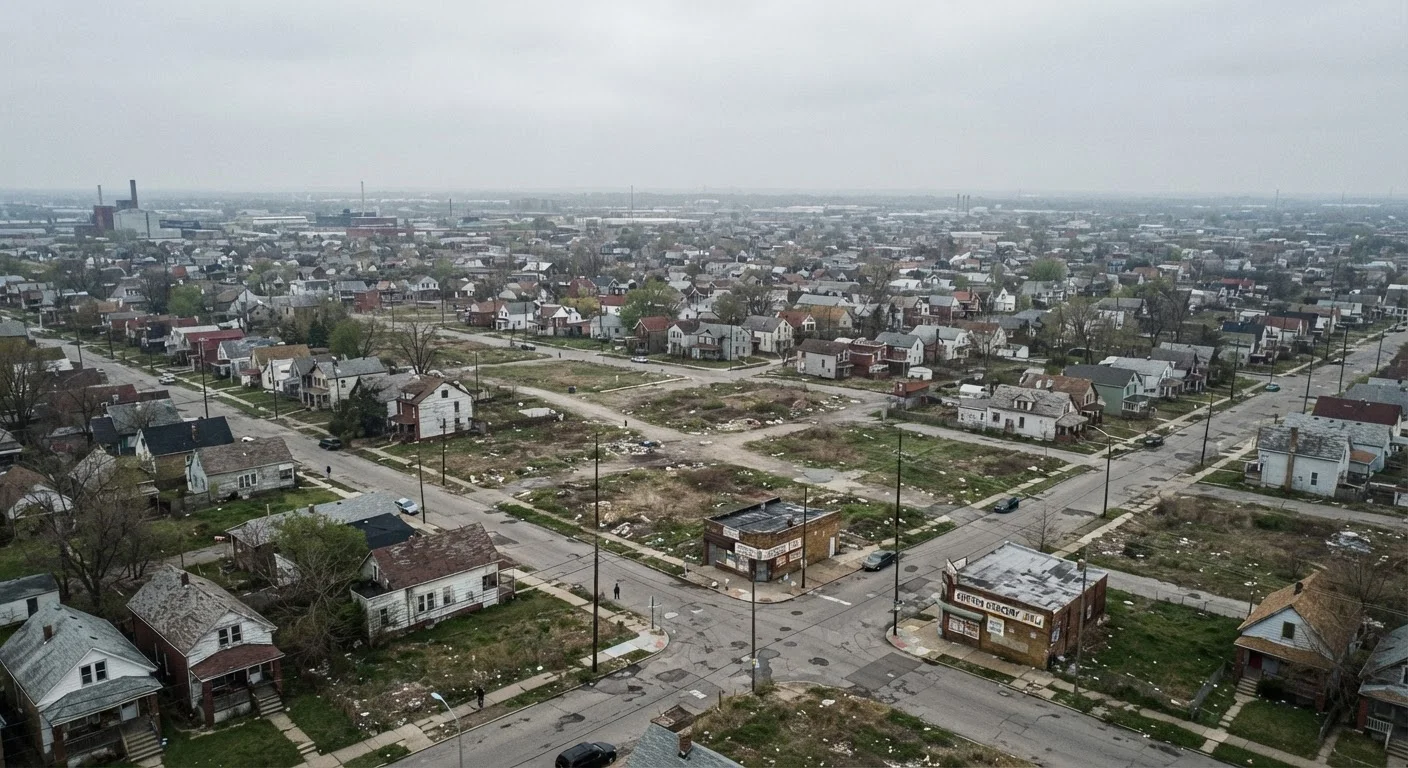
What Makes an Area a Food Desert
The phrase "food desert" entered public policy discourse in the 1990s and has since become a standard lens for examining nutrition equity in the United States. At its core, the concept describes a mismatch between where people live and where nutritious, affordable food can be purchased.
Federal mapping of these areas is conducted through the USDA's Food Access Research Atlas, which overlays census income data with proximity to supermarkets and large grocery retailers. A neighborhood qualifies when low-income status and limited store proximity coincide — meaning both conditions must be present, not just one.
Critics of the term argue that "food desert" is an oversimplification, since the presence or absence of a single supermarket does not capture the full picture of what people eat or what is available to them. Some researchers prefer terms like "food swamp" — areas inundated with fast food and convenience options — to describe a related but distinct challenge. Both concepts reflect real and documented conditions in American communities.
Where Food Deserts Form — and Why
Food deserts do not appear randomly on the map. They cluster in communities shaped by decades of economic disinvestment, demographic change, and policy decisions. Several structural forces consistently explain where they emerge.
Urban disinvestment: Many low-income urban neighborhoods lost major grocery retailers in the latter half of the 20th century as supermarket chains followed higher-income populations to the suburbs. This pattern of "grocery flight" left behind corner stores and fast food chains as the primary food retail options.
Rural store closures: Small-town grocery stores have closed at significant rates due to thin margins, an aging population base, and competition from distant big-box retailers. A single closure in a rural county can eliminate the only full-service option within a 30-mile radius.
Racial and economic segregation: Research has consistently found that predominantly Black and Latino neighborhoods, as well as high-poverty areas of any demographic composition, are more likely to lack full-service grocery access. Historical policies such as redlining shaped neighborhood investment patterns that persist today.
Transportation barriers: Even when a grocery store exists within a nominal distance, residents without a car face a real barrier. Carrying multiple bags of groceries on a bus or walking a mile in extreme weather is not a theoretical inconvenience — it is a practical deterrent that shapes shopping behavior and food choices.
"Food Desert" vs. "Low Access Area"
The USDA officially uses the term "low-income, low-access" (LILA) rather than "food desert" in its research publications, partly to avoid oversimplifying a complex issue. The term "food desert" remains in common use in journalism and advocacy. Readers should be aware that different sources may apply slightly different definitions and thresholds when describing the same phenomenon.
The Health Consequences of Limited Access
The health implications of living in a food desert are well-documented, though researchers continue to refine the causal picture. Communities with low grocery access tend to have higher rates of obesity, type 2 diabetes, hypertension, and cardiovascular disease — conditions strongly influenced by diet over time.
Diet quality in low-access communities often reflects what is realistically available: processed foods high in sodium and added sugar, with limited access to fresh vegetables, whole grains, and lean proteins. The micronutrients most American adults already fall short on — including calcium, potassium, and vitamin D — are even harder to obtain when fresh food options are scarce.
Dietary fiber is another casualty of limited produce access. Fiber, which most Americans already consume in insufficient amounts, is found primarily in fruits, vegetables, legumes, and whole grains — the exact categories underrepresented in convenience and corner stores.
It is important to note that food environment is one factor among many that influences diet. Poverty, stress, time, and food literacy also play significant roles. Researchers generally caution against single-cause explanations for diet-related health disparities.
Policy Responses and Their Limitations
Federal and local governments have pursued a range of strategies to address food desert conditions, with mixed results.
Nutrition assistance programs: SNAP remains the largest federal tool for addressing food insecurity. Expansions that allow SNAP benefits to be used for online grocery delivery have helped some residents bridge distance, though participation and access to online ordering still present barriers for many.
Grocery store incentive programs: Several states and cities have offered tax credits, zoning concessions, or direct grants to attract full-service grocers into underserved areas. The Pennsylvania Fresh Food Financing Initiative, launched in the 2000s, became an early model studied by other jurisdictions.
Farmers markets and mobile markets: Some communities have experimented with mobile grocery trucks and pop-up farmers markets that accept SNAP benefits. These efforts fill gaps but are not substitutes for consistent, permanent retail infrastructure.
Dollar store growth: The rapid expansion of dollar store chains in low-income and rural areas has been a double-edged development. These stores provide some shelf-stable staples but typically carry minimal fresh produce, and some research suggests their presence may actually discourage full-service grocery investment nearby.
Broader economic forces — including supply chain pressures that affect grocery costs nationwide — also complicate efforts to improve food access in already-stressed communities, where rising prices hit hardest.
This article is for informational and educational purposes only. Readers facing food insecurity should contact local food banks, 211 services, or their state's SNAP office for assistance information.