The Invisible Journey From Field to Checkout
Most Americans don't think much about how a box of cereal or a bag of oranges ends up on a store shelf. But behind every grocery item is a chain of decisions, movements, and handoffs involving farmers, processors, freight carriers, warehouse operators, and retailers — often spanning multiple countries.
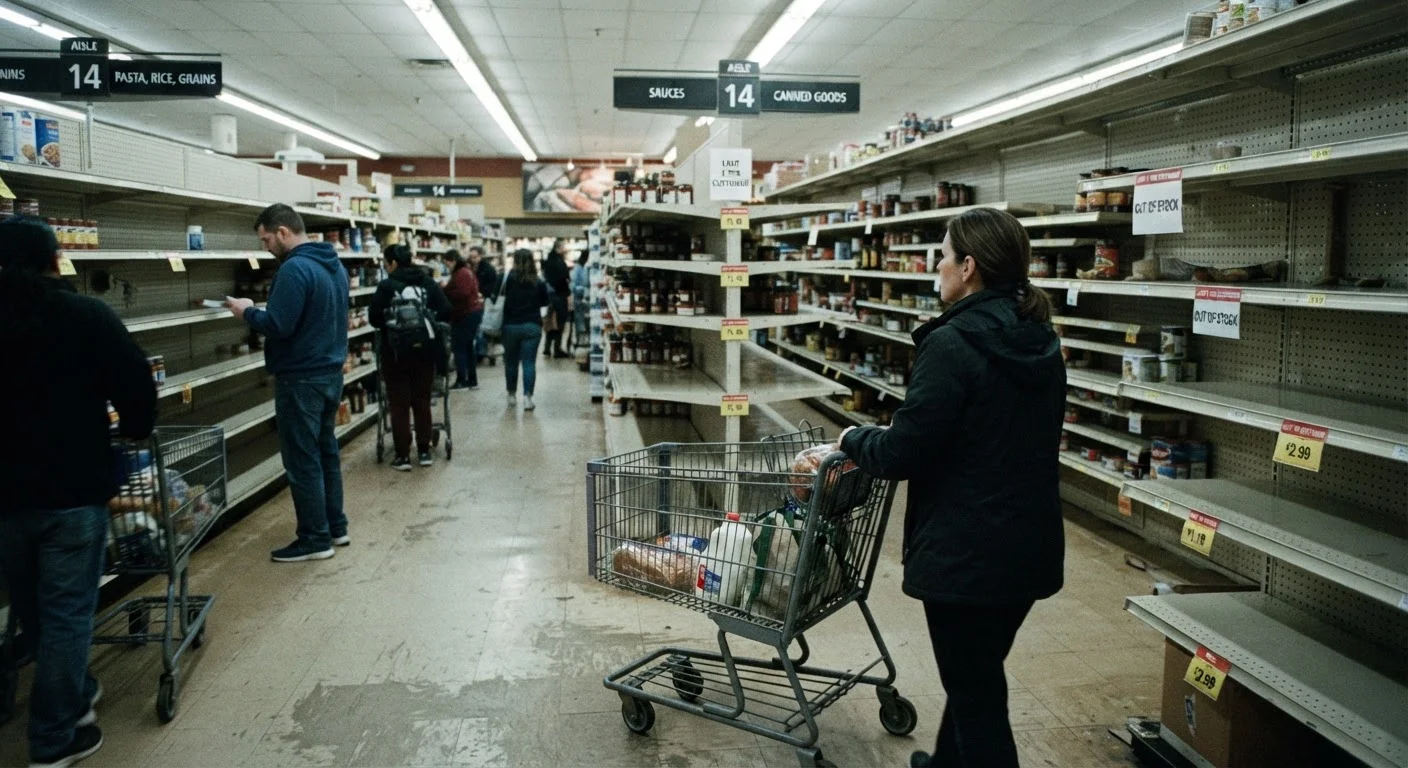
When that chain runs smoothly, prices stay relatively stable and shelves stay stocked. When it doesn't, the effects can show up fast. A drought in a key growing region, a labor dispute at a major port, or a sudden surge in global shipping costs can each nudge the final price of food upward — sometimes significantly.
Understanding how this works doesn't require an economics degree. It mostly requires following the path of a product backward from the store to its source.
~20%
Share of U.S. food supply that is imported
According to the USDA Economic Research Service, roughly one-fifth of the U.S. food supply by value comes from abroad, underscoring dependence on international supply chains.
70%+
U.S. freight moved by truck
The American Trucking Associations reports that trucks carry more than 70% of all freight tonnage in the United States, making fuel price volatility a direct input cost for nearly every grocery product.
$1,000+
Annual grocery spending increase per household during recent inflation
Analyses of Bureau of Labor Statistics data during the 2021–2023 inflation period estimated that many U.S. households spent over $1,000 more annually on groceries compared to pre-pandemic levels.
Where Disruptions Actually Happen
Supply chains for food are not simple straight lines. They branch and loop in ways that make them inherently vulnerable to knock-on effects. Here are the main pressure points:
- Agricultural inputs: Fertilizers, pesticides, and seeds are themselves traded globally. A disruption to fertilizer supply — whether from conflict, sanctions, or export restrictions — can reduce crop yields months before any food shortage appears on shelves.
- Processing and manufacturing: Raw crops must be processed, packaged, and often preserved before they become shelf-ready products. Labor shortages or equipment failures at processing plants can create bottlenecks that have nothing to do with how much was harvested.
- Transportation and logistics: Whether goods move by ship, truck, or rail, fuel costs and carrier capacity drive prices. When diesel prices spike or container ships back up at a major port, freight costs rise — and those costs get passed along.
- Warehousing and distribution: Cold chain logistics for perishables are especially fragile. A breakdown in refrigerated storage or trucking capacity can cause spoilage or regional scarcity even when national supply is adequate.
The compounding nature of these vulnerabilities is what makes supply chain disruptions so powerful. A single event rarely causes a grocery crisis on its own. It is usually the collision of two or three pressure points at once.
How the Cost Reaches Your Cart
Price increases don't appear overnight. Retailers and large food manufacturers often have supply contracts and buffer inventories that absorb short-term shocks. But when a disruption is sustained — lasting weeks or months — the cost eventually travels downstream.
First, producers and processors raise their prices to cover increased input costs. Manufacturers then adjust the prices they charge retailers. Retailers, facing margin pressure of their own, pass at least part of that increase to shoppers. The timeline from a global event to a higher sticker price at the store can range from a few weeks to several months, depending on the category.
Fuel is the most direct transmission mechanism. Because virtually all food products are transported by truck at some point, diesel price increases affect the cost of almost everything sold in a grocery store. This is why fuel price spikes — driven by geopolitical events, refinery outages, or policy changes — often show up in grocery bills faster than most consumers expect.
Rising food prices have already shifted how Americans decide what to buy, with many households trading down to store brands or cutting discretionary food items. Broader consumer trends reflect these pressures across multiple spending categories.
Not All Groceries Are Equally Exposed
Supply chain risk is not spread evenly across the grocery store. Some categories are structurally more exposed than others.
Most vulnerable: Cooking oils (which often have complex, multinational supply chains), imported produce, coffee, chocolate, and packaged foods with many ingredient inputs. These products are sensitive to both agricultural disruptions and shipping cost increases.
Moderately vulnerable: Meat and dairy, which are largely domestically produced in the U.S. but depend on globally sourced animal feed and are sensitive to energy costs for refrigerated transport and processing.
Less vulnerable (but not immune): Locally or regionally grown seasonal produce, and simple staple items with fewer processing steps. These categories still depend on fuel and labor, but have shorter, simpler supply chains.
Understanding this distinction can inform smarter household budgeting, particularly during periods of global instability. Planning purchases in advance becomes especially valuable when prices are volatile and shelf availability is unpredictable.
It's also worth noting that supply chain disruptions can worsen existing access inequalities. Communities already living in food deserts often face the steepest consequences when regional distribution networks are stressed.
Putting It in Perspective
Supply chain disruptions are a structural feature of modern food systems — not a rare exception. Global trade has made food cheaper and more varied over decades, but it has also created interdependencies that are difficult to fully insulate against.
For everyday shoppers, the practical takeaway is straightforward: when major logistics events make the news — port backlogs, container shortages, fuel price surges, major weather disasters — it is reasonable to expect grocery prices to respond, even if the connection isn't immediately obvious. Understanding that link makes it easier to anticipate household budget pressures rather than be caught off guard by them.
Trade-offs between convenience and cost also shift during these periods, as delivery surcharges and service fees can add meaningfully to a household food budget already under pressure. And how Americans shop — whether in-store or online — increasingly shapes how they absorb or avoid these cost fluctuations.