The Persistence of Unplanned Purchases
In a period when many American households report watching their spending more carefully, it might seem logical that impulse buying would decline. Yet consumer data consistently shows that unplanned purchases remain a durable feature of everyday shopping — across income levels, retail formats, and product categories.
The reason is structural, not accidental. Impulse buying is not primarily a symptom of carelessness or poor planning. It is the predictable result of how retail environments — physical and digital alike — are designed to function. Understanding that distinction matters for anyone trying to build a more deliberate relationship with spending. For broader context on how economic pressure has reshaped shopping priorities overall, see our piece on how inflation changed the way Americans prioritize purchases.
~84%
Shoppers who made an impulse purchase recently
Multiple consumer surveys conducted in the early 2020s have found that the vast majority of American adults report making at least one unplanned purchase in any given month.
40%+
Of e-commerce revenue attributed to unplanned purchases
Industry analyses of online retail consistently find that a substantial share of total sales volume originates from products that shoppers did not intend to buy before starting their session.
3–5 seconds
Typical decision window for small impulse buys online
Behavioral research on digital purchasing suggests that low-cost unplanned purchases are often decided within seconds, before deliberate evaluation processes engage.
The Psychology That Powers the Impulse
Impulse purchases are fundamentally emotional events. When a consumer encounters an appealing product — whether on a shelf endcap or a social media feed — the brain's reward circuitry responds before rational deliberation catches up. Anticipated pleasure, not calculated value, drives the initial response.
Several well-documented cognitive patterns reinforce this dynamic. Present bias leads people to weight immediate gratification more heavily than future financial wellbeing, even when they consciously understand the trade-off. Social proof — seeing that others have purchased or approved of an item — lowers hesitation. And scarcity framing, whether real or manufactured, adds urgency that shortcuts careful evaluation.
Budget consciousness does not neutralize these forces. It may redirect them toward lower-priced items, but the underlying mechanism stays intact. Our related explainer on the psychology behind why we buy things we don't need examines these cognitive triggers in greater depth.
“The environment in which a decision is made shapes that decision as powerfully as the decision-maker's intentions. Retail design is fundamentally the design of choice architecture.”
— Richard Thaler, Nobel Laureate in Economics, co-author of 'Nudge'
How Retail Design Keeps the Impulse Alive
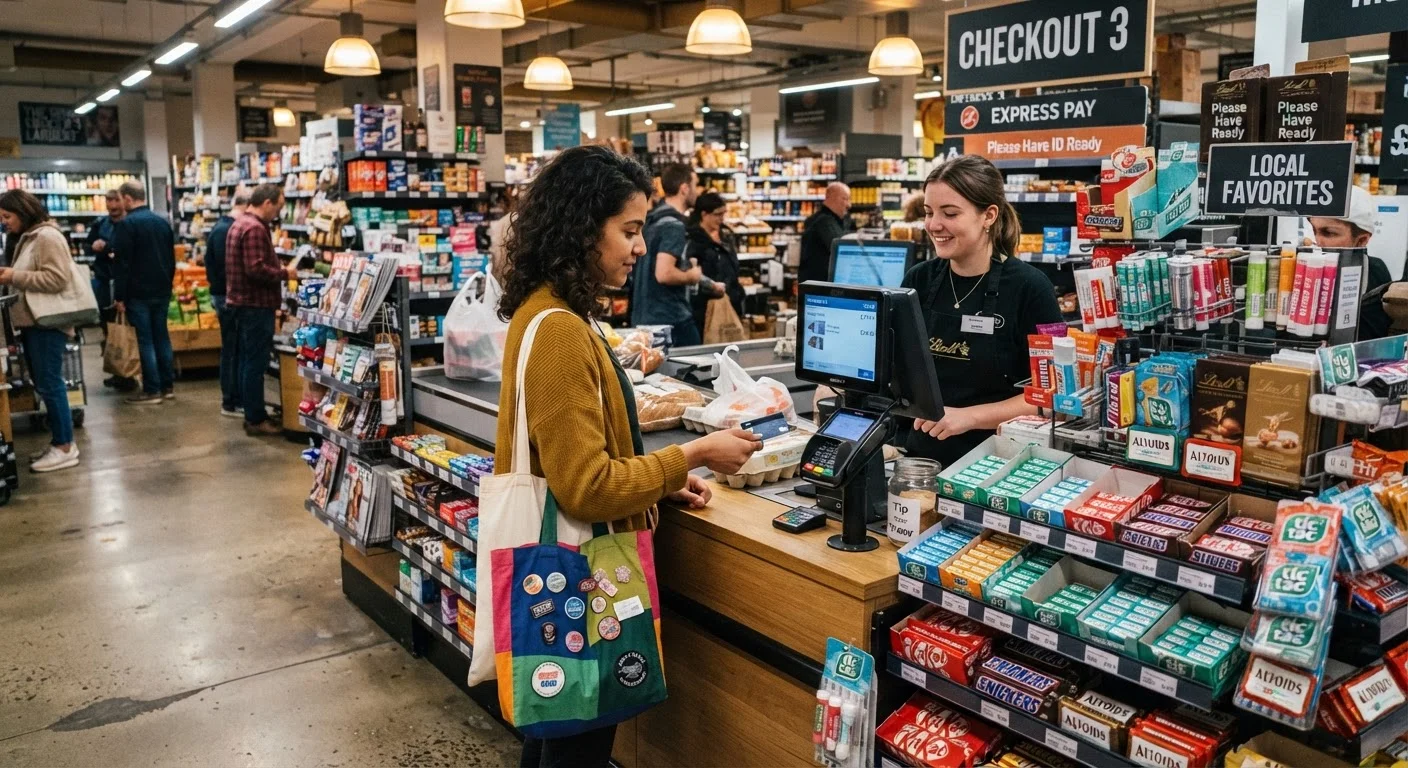
Retailers have refined the architecture of impulse purchasing over decades. In physical stores, high-margin, low-cost items positioned near checkout registers exploit the waiting moment when attention is idle and commitment to a total purchase has already been made. Category breaks — placing a complementary product next to a planned purchase — work on a similar principle.
Digital retail has amplified these mechanisms dramatically. One-click purchasing eliminates the payment friction that once allowed second thoughts to surface. Countdown timers and low-stock indicators inject artificial urgency. Personalized recommendation engines surface items calibrated to a shopper's known preferences at the exact moment browsing intent is highest.
Critically, these techniques are not static. Platforms continuously test and refine them based on behavioral data, meaning the environment consumers navigate is optimized against impulsive resistance. This is a key reason why budget intentions formed at home often don't fully survive the shopping experience — online or off.
Where Budget Pressure Has Shifted the Pattern
Economic pressure does leave a mark on impulse behavior, but it tends to reshape the pattern rather than eliminate it. Consumers under financial stress often shift impulse purchases toward smaller ticket items — a snack, a low-cost app, a discounted accessory — where the psychological cost of justification is lower. The frequency of the behavior may actually hold steady or increase, while the per-item spend drops.
There is also a documented stress-spending link: financial anxiety can paradoxically trigger more impulsive purchasing as a short-term mood regulation strategy. This creates a cycle that budget discipline alone is often poorly equipped to break.
At the same time, some consumers have meaningfully recalibrated. Movements like the growing interest in intentional consumption reflect a genuine cultural counter-current, even if they represent a minority of overall shopping behavior. For perspective on how some of these behavioral shifts are holding up over time, see consumer trends that faded fast and the ones that actually stuck.
What Awareness Can and Cannot Do
Recognizing the psychological and environmental drivers of impulse buying is genuinely useful — but it is not a complete solution on its own. Awareness reduces the element of surprise, which is one of impulse purchasing's core mechanisms. Knowing that a checkout display or a personalized recommendation is designed to elicit an unplanned response gives consumers a small but real window of deliberate choice.
Practical friction — adding steps between desire and purchase — tends to be more effective than willpower alone. Removing saved payment credentials from certain sites, using shopping lists, or applying a 24-hour review rule for non-essential purchases introduces the pause that retail design works to eliminate.
For readers looking to build these habits more systematically, building a smarter relationship with online shopping offers a practical framework. And for those curious about the broader cultural shift toward buying less, the rise of underconsumption core reflects how some consumers are reframing their relationship with acquisition entirely.
Impulse buying thrives not because consumers are irrational, but because the systems surrounding purchasing are sophisticated, data-driven, and built for exactly this outcome. Understanding that is where informed decision-making begins.