Why Most Travelers Still Overpack
Despite years of airline fees and rolling suitcase wrist strain, overpacking remains the default for most American travelers. The problem isn't laziness — it's that packing decisions are made emotionally and under uncertainty. We imagine worst-case scenarios (a cold snap, a fancy dinner invitation, a spilled coffee) and pack for all of them simultaneously.
The result: bags that are harder to manage, slower at security, and expensive when a carrier decides to enforce its weight limits. The principles below aren't about deprivation — they're about building a system that travels as efficiently as you do. Whether you're heading out for a weekend or a three-week adventure, these practices hold up across trip types. Pair them with a solid trip itinerary and the decisions get even easier.
Proven Practices for Packing Smarter
These aren't abstract tips — they're repeatable habits that experienced travelers rely on every time they head out the door.
Write your packing list before you touch a single item of clothing.
Starting a list on paper (or in an app) before opening your closet creates a plan you can audit — and it's far easier to remove an item from a list than to pull it back out of a bag you've already zipped. This mirrors the same logic behind effective grocery shopping: a structured list reduces impulse additions and decision fatigue before you even begin.
Choose your bag first, then pack to fit it — not the other way around.
A bag that's too large is an invitation to fill every corner. Committing to a carry-on or personal item as your hard constraint forces every decision that follows. Check out our deep-dive on personal items vs. carry-ons to figure out which combination makes sense for your trip length.
Build a capsule wardrobe around three to four core colors that mix and match.
Clothing is the weight culprit on almost every trip. A cohesive color palette means every top works with every bottom, doubling or tripling functional outfit combinations without adding pieces. This approach works for casual trips, city breaks, and even modest business travel.
Apply the 'buy or find it there' test to toiletries and bulky gear.
Shampoo, sunscreen, and basic over-the-counter items are available in almost every destination. Packing full-size toiletries is one of the most common weight sins. For specialty gear — rain ponchos, adapters, hiking poles — check whether rental or local purchase is practical before assuming you must bring it.
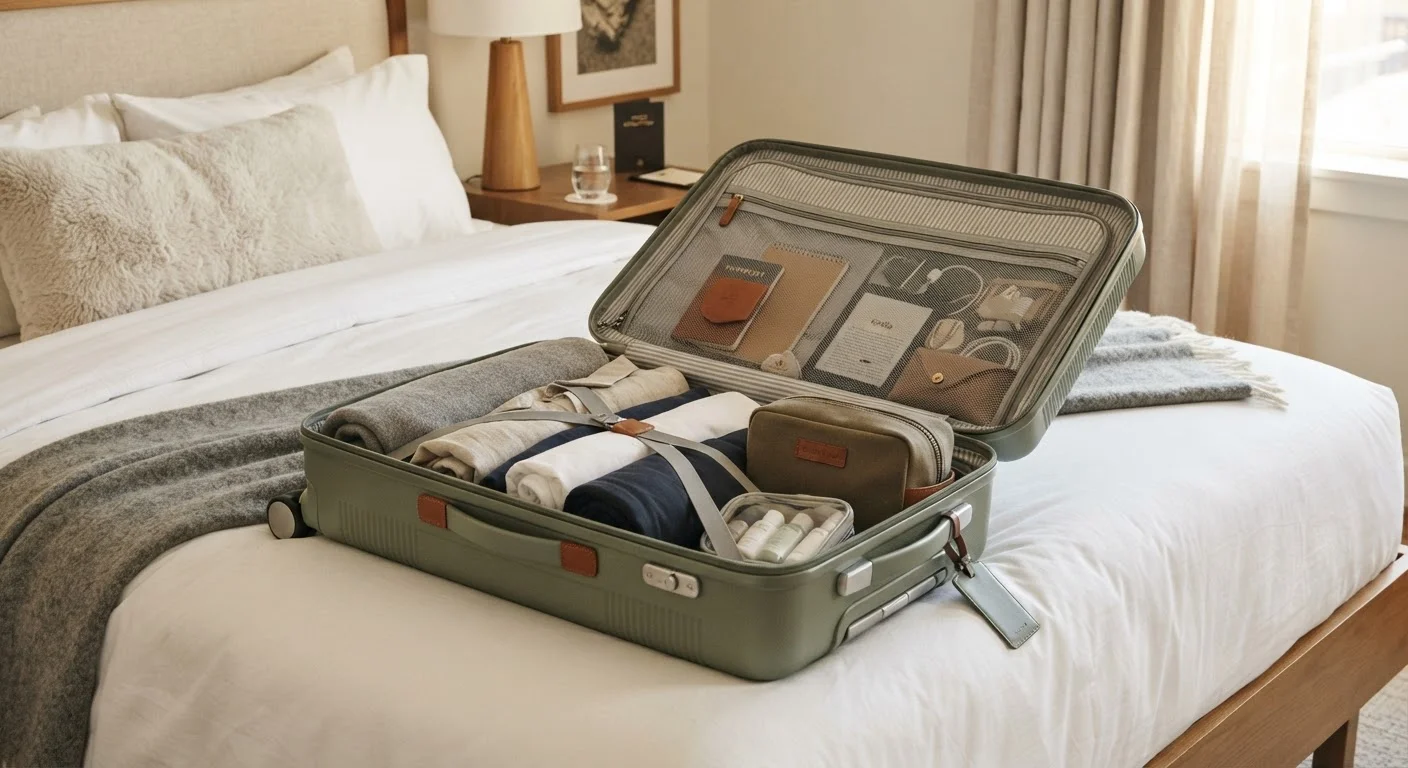
Roll clothes and use packing cubes to organize and compress.
Rolling garments rather than folding them typically reduces wrinkles and allows tighter, more visible packing. Packing cubes add a layer of organization that makes repacking mid-trip fast — a real advantage on multi-stop itineraries.
Airline Carry-On Rules Vary
Carry-on size and weight limits differ by airline and fare class, and they change over time. Always verify current restrictions on your specific carrier's website before you pack. Budget and international carriers in particular tend to enforce limits more strictly than major U.S. domestic airlines.
Quick Wins You Can Act On Today
You don't need to overhaul your entire packing approach before your next trip. Start with one of these high-leverage actions and build from there.
Packing light is a skill that compounds with practice. The more you travel with less, the more clearly you see what you actually use — and what just rides along for the anxiety-driven ride. For a broader pre-departure framework, run through our pre-trip checklist before you zip up. And if you're heading out solo for the first time, our solo travel introduction covers the mindset shifts that make the whole experience more rewarding.